Author: Lori Deschene

  • Interview and Giveaway: Gretchen Rubin of The Happiness Project

    Interview and Giveaway: Gretchen Rubin of The Happiness Project

    Update: The winner for this giveaway has been chosen. Subscribe to Tiny Buddha for free daily or weekly emails and to learn about future giveaways! The winner: +sp.

    I was perhaps the last person on the face of the planet to read The Happiness Project.

    Earlier this year, a friend connected me with Gretchen Rubin, which prompted her to interview me for her blog. After I spent some time exploring her archives, I realized I needed to learn more.

    If you’ve read The Happiness Project, you know Gretchen balances ancient wisdom with contemporary research to create a personal roadmap for happiness that hinges upon everyday choices.

    She spent a year test-driving various “resolutions” for joy in a methodical, measurable way, and chronicled her experiences both on her blog and in her book.

    One thing that drew me to Gretchen’s work is her admission that she was not unhappy before—she simply felt she didn’t appreciate the things in her life that might otherwise have made her happier.

    While we all have different challenges, I suspect this is something we can all relate to.

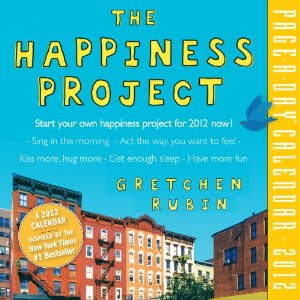
    I’m excited that Gretchen took the time to answer a few questions, and also that’s offered to give away one copy of her 2012 Page-A-Day Happiness Project calendar.

    The Giveaway

    To enter to win:

    • Leave a comment on this post.
    • Tweet: RT @tinybuddha Interview and Giveaway: Gretchen Rubin of The Happiness Project http://bit.ly/tvUOZt

    You can enter until midnight PST on Sunday, November 13th. If you don’t have a Twitter account, you can still enter by completing the first step.  (more…)
  • Tiny Wisdom: Knowing Why We Pull Out Our Gadgets

    Tiny Wisdom: Knowing Why We Pull Out Our Gadgets

    “Self knowledge is the beginning of self improvement.” –Spanish Proverb

    As you may remember from my post on Monday, I recently received an invitation to attend a live taping of an Oprah’s Life Class webcast.

    I knew it was an interactive self-help experience, involving questions from the audience and people who Skyped in. It sounded right up my alley.

    Before the taping, a woman led me and other bloggers to a reserved row and then gave us network information so we could tweet or Facebook from our iPads, iPhones, or laptops.

    I only own a laptop, and I didn’t bring it with me. Particularly because I write for a living, the last thing I wanted to do was distract myself from this experience with a glaring screen. In that moment I felt conflicted: It was obvious I was invited to share on the spot, and I was not delivering.

    Since the first webcast guest was Eckhart Tolle—who wrote the book on being present—I found this conundrum ironic.

    Then I realized this is the challenge of our time. We’re fortunate to have tools that connect us and enable us to spread messages far and wide; and yet we always have to balance our instinct to share with our need to fully focus on what’s in front of us.

    I realize there isn’t a one-size-fits-all solution for this, as there rarely is. I suspect it really comes down to knowing ourselves, and understanding why we’re doing what we’re doing.

    According to Doug Firebraugh of SocialMediaBlogster.com, there are seven psychological needs we may be looking to meet when we log onto a social media site: acknowledgment, attention, approval, appreciation, acclaim, assurance, and inclusion.

    We’re wired to want to be seen, and it’s tempting to chase that instant fix of validation or connection. That’s not to say these are the only motivations, but they’re potential driving forces. If we can check ourselves to understand why we’re tempted to share, we’ll be better equipped to meet our needs beyond the world of tweets and updates.

    Sharing can be a beautiful thing if we’re genuinely inspired to do it. But it’s up to us to know ourselves, so that we connect from a place of wholeness, not from a place of lack.

    Photo by Sarah Depper

  • Tiny Wisdom: Why We Sometimes Don’t Accept Praise

    Tiny Wisdom: Why We Sometimes Don’t Accept Praise

    “Praise is like sunlight to the human spirit: we cannot flower and grow without it.” ~Jess Lair

    There was a time when I could turn almost any positive feedback into something negative.

    I don’t know if this was my attempt to confirm my unworthiness or my belief that people were usually hurtful, but I had a knack for distorting people’s words to avoid accepting praise.

    If someone found me after a play and said I was a talented singer, I wondered if she was really thinking about my subpar dancing.

    If a teacher told me that I showed promise and reminded him of my sister, I assumed he meant that I was a second-rate version of the student he met first.

    In short, I thought very little of myself, and constantly looked for proof that everyone else did, too.

    You might not be able to relate to the low self-esteem that I once had, but maybe you’ve also negated praise before. I hear people do it all the time—and sometimes I find myself doing it, too—with phrases like, “It was nothing,” and “I just got lucky,” and “He was just being nice.”

    We all like and need to feel valued and appreciated, so why is it sometimes so hard to simply smile and say “Thank you”?

    I suspect there are times when we disbelieve what others say; after all, people occasionally say flattering things just to be kind. Other times we may question their motives or downplay our achievements because we’re fishing for more confirmation—or attempting to appear humble.

    But it might also have to do with vulnerability. Accepting a compliment is akin to receiving validation, and no one wants to reveal that validation is something they want or need.

    Whatever the case may be, when we reject positive feedback, we rob ourselves the opportunity to feel valued and appreciated, and deny the other person the joy of honoring us.

    We all need to be on both sides of that coin. We need to see and be seen for the light we have to offer the world—so why not give that gift to ourselves and other people?

    So today I propose a challenge for you and for me: receive all compliments without questioning them, analyzing them, or negating them. Simply accept it, and know that you deserve it.

    Photo by ingridtaylar

  • CD Giveaway, Relax: 6 Techniques to Lower Your Stress

    CD Giveaway, Relax: 6 Techniques to Lower Your Stress

    Update: The winners for this giveaway have already been chosen. Subscribe to Tiny Buddha to receive free daily or weekly emails and to learn about future giveaways!

    The Winners:

    Last year, a representative from More Than Sound reached out to me to share the publishing company’s new mindful driving CD, Awake at the Wheel.

    As someone who frequently deals with Los Angeles traffic, I especially appreciated the opportunity to hear and share a CD focused on making the roads more peaceful.

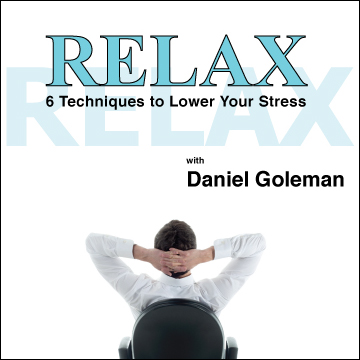
    Recently, More Than Sound connected with me again to introduce their latest offering, a CD by emotional intelligence expert Daniel Goleman titled Relax: 6 Techniques to Lower Your Stress.

    I’m grateful for the opportunity to share it with you and offer 5 free copies as a giveaway!

    The Giveaway

    To win one of 5 free copies of Relax: 6 Techniques to Lower Your Stress:

    • Leave a comment on this post.
    • Tweet: RT @tinybuddha Giveaway – Relax: 6 Techniques to Lower Your Stress http://bit.ly/vr9r6O

    You can enter until midnight PST on Friday, November 11th. If you don’t have a Twitter account, you can still enter by completing the first step.

    About Relax: 6 Techniques to Lower Your Stress

    Chronic stress can disrupt almost all of your body’s processes. It’s been shown to increase the risk of numerous health problems including heart disease, sleep issues, digestive complications, fatigue, depression, anxiety and obesity.

    Daniel Goleman, Harvard-trained psychologist and author of Emotional Intelligence, developed Relax, a 45-minute audio program to help listeners effectively and naturally reduce stress. Since there’s no one universal antidote to stress relief, Dr. Goleman’s guided session offers several exercises to suit a variety of personal preferences:

    • Deep breathing exercises
    • Deep muscle relaxation techniques
    • Guided auto suggestion exercises
    • Relaxation countdown
    • Breath focus and tension release techniques
    • Breath count exercises
    Learn more about Relax: 6 Techniques to Lower Your Stress at More Than Sound. You can also “like” the Facebook page for Relax for stress reduction tips.
  • Tiny Wisdom: It’s You

    Tiny Wisdom: It’s You

    “Make the best use of what is in your power and take the rest as it happens.” -Epictetus

    The one you’ve been waiting for to tell you what to do—it’s you. You’re the only one who knows what’s right for you in this moment.

    The one you’ve been waiting for to fix your problems—it’s you. You’re the only one who has the power to change what isn’t working.

    The one you’ve been waiting for to make the pain go away—it’s you. Whatever you’re holding onto, only you can let it go.

    The one you’ve been waiting for to give you permission—it’s you. You’re the only one who can decide whether you’ll try or hold yourself back.

    The one you’ve been waiting for to love you—it’s you. You’re the only one who can make you feel beautiful and worthy.

    The one you’ve been waiting for to provide something that’s missing—it’s you. You’re the only one who can create and recognize what’s enough for your happiness.

    The one who makes a difference in so many people’s lives—it’s you. Remember that even when you struggle with some of these things, the world is a better place for having you in it.

    Photo by silvihelsinkirocks

  • 60 Life Lessons: Insights from Oprah’s Life Class

    60 Life Lessons: Insights from Oprah’s Life Class

    Call me a traitor to my gender, but I didn’t grow up watching Oprah. I didn’t have parties with other ladies that involved a television and tissues. I didn’t fill my library according to her book club recommendations. And I didn’t live my life around the question, “What would Oprah do?”

    Considering my penchant for drama back then, I was more likely to curl up to Jerry Springer than a show without paternity tests and chair throwing.

    But recently Oprah called to me. Literally.

    It started when the network reached out to my friend Mastin Kipp of The Daily Love to include him in a webcast for Oprah’s Life Class. I read his excited blog posts about receiving this opportunity, and I was thrilled for him, but having never gotten into her first chapter, I didn’t feel drawn to her next.

    I also wondered if sometimes Oprah’s celebrity overpowers the messages.

    Then I watched the webcast, and I realized there is something very powerful going on within this movement.

    I fell in love with Oprah’s Life Class—both because Oprah leads with humility and authenticity, and because she’s attracted a vibrant community of people learning to let go of pain and open up to joy.

    As I absorbed myself in the archives of webcasts, I watched people forming new insights, having mini epiphanies, and most importantly, bonding with each other through their common struggles and potential. I wanted to be part of that.

    Just after my marathon Life Class session, Oprah’s people called and invited me to attend a live taping of her webcast, on Mastin’s recommendation. I’d now have a chance to be part of it, up close.

    While there were certain spiritual conversations that created a bit of a disconnect for me, I walked away from the experience feeling touched, inspired, and eager to share the work they’re doing there.

    I considered giving you the highlights of the webcasts from this season, but you can easily watch those yourself.

    So instead, I’d like to share some of the most profound insights I gleaned from Oprah’s community of “students” in their answers to one of her pre-show questions. (Submitted to her anonymously, unless otherwise indicated): (more…)
  • Tiny Wisdom: When Instincts Aren’t Enough

    Tiny Wisdom: When Instincts Aren’t Enough

    “Never ignore a gut feeling, but never believe that it’s enough.” -Robert Heller

    A while back, a friend of mine called me crying because of a huge disappointment in her life. She made a bold decision based on gut instinct, and then expected that everything would work out as she envisioned it because she felt so certain it was the right choice.

    I think what hurt her most of all was the realization that nothing is certain. Following your instincts to leave something doesn’t guarantee it will be easy to find something else. And knowing that something feels right doesn’t ensure you’ll immediately know the right way to make it happen.

    Our instincts point us in the right direction, but we need know before we take that first step that very few paths are clear and direct. The hardest thing isn’t taking the leap—it’s learning to relax in the free fall when you’re not sure yet where you’re going to land or how.

    I have been in this place many times before.

    I’ve walked out of offices, feeling empowered with my decision to quit—only to later to find myself wondering if I should have followed my father’s advice to “never leave one job without another lined up.”

    I’ve walked away from unhealthy relationships feeling proud of my ability to let go—only to find myself obsessing about whether it was a choice to be permanently alone.

    And I’ve decided to get help to change bad habits—only to find myself feeling unsure of how I’d function without them.

    That instinctive decision to walk away from something, or toward something, or through something—it’s only the very beginning.

    But if we’re brave enough to listen to it and take action, we’re also brave enough to handle the uncertainty ahead. If we have the strength to make that choice, we have the strength to keep honoring it when things get tough, as they often do.

    Today if you’re walking through unfamiliar territory, wondering if you made the right choice, ask yourself: Would you question your decision if things all worked out right away? If the answer is no, then keep learning, keep growing, and keep going.

    You know you want this. Now you just need to be patient enough to let yourself discover how you’ll do it.

    Photo by geishaboy500

  • Tiny Wisdom: It’s OK to Say No

    Tiny Wisdom: It’s OK to Say No

    “Half of the troubles of this life can be traced to saying yes too quickly and not saying no soon enough.” ~Josh Billings

    Sometimes I feel immense pressure to do all kinds of things I don’t want to do. The reality is, I often put this pressure on myself. I think about the things I should do. Or the things I think I should want to do. Or the things other people might expect me to do.

    And all this thinking can drain me—before I’ve gotten a chance to do anything. This is basically choosing to create anxiety where there could be peace and joy. It’s wasting precious time, feeling conflicted, restricted, and full of angst.

    So today I invite you to join me in remembering it’s OK to say no, and our world won’t fall apart because of it.

    It’s OK to say no if you don’t feel moved by an opportunity—no matter how exciting it might sound to someone else. Happiness is a choice, but it’s made up of lots of smaller choices we need to make based on what we actually want.

    It’s OK to say no if you’d rather relax than go out—no matter how many other people think you should be social. Only we know when we need to recharge and take care of ourselves, so it’s up to us to recognize and honor that.

    It’s OK to say no if you’d need to sacrifice your needs to help someone else—even if a part of you feels a little guilty about it. People are always going to have requests. Sometimes we’ll be able to help; sometimes we won’t. We’re still good people regardless.

    It’s OK to say no because you don’t have time—even if you don’t know right in this moment when you’ll be more available. We’re allowed to say no without hinting toward a future yes.

    It’s OK to say no without a detailed excuse—even if you feel like you should offer one. “This doesn’t feel right for me right now” is a perfectly valid reason.

    Lastly, it’s OK to say no even if you’ve already said yes, if you realize you weren’t being true to yourself. It’s far better to make the right decision late than follow through with the wrong one because you think you should.

    Photo by permanently scatterbrained

  • Tiny Wisdom: Letting Go of the Stress of Rushing

    Tiny Wisdom: Letting Go of the Stress of Rushing

    “Half our life is spent trying to find something to do with the time we have rushed through life trying to save.”  ~Will Rogers

    It was like a scene in a movie. I was waiting to cross the street while pedestrians were crossing the perpendicular one. A number of cars were piled up, with drivers waiting to turn when the people made it to the sidewalk.

    Several impatient drivers honked, as if they didn’t understand why the first one wasn’t going. So that first guy stuck his head out his window and yelled at the pedestrians, “Come on—hurry up!”

    Then one of them yelled back, “I’m &%*#ing pregnant %$*hole. So shut up!” (No swearing here—this is a family friendly place!) She was pregnant—visibly. Meaning that first driver either didn’t actually look at her, or knowingly yelled at a pregnant woman because people behind him were applying pressure.

    This got me thinking about an accident I read about many years ago. Several cars were stopped, and a woman behind them couldn’t see why, so she sped into the left lane to pass them—fatally injuring a third grader who was crossing the street.

    Both situations boil down to urgency—that need to keep moving, and quickly. This not only fills us with anxiety and compromises our judgment, it also affects everyone us.

    It can cause us to be careless in ways that directly impact others, and it creates an environment of tension that creates stress for everyone within it.

    It’s when the person serving customers feels the need to run because he can sense people in line are getting impatient (or worse, he’s responding to criticism from them). It’s when you don’t really hear what someone’s saying to you because you’re too busy thinking about what you want to get done—not later, but right now, instead of having to listen.

    We might gain five minutes we could otherwise have lost. We might get a sense of accomplishment for finishing one extra item on the to-do list. We might feel a sense of control instead of having to stand still and feel stuck or unproductive.

    But we might also lose our peace, our composure, and opportunities to really connect with other people.

    Wherever we are, this is life—it’s happening right now. Do we really want to rush through it?

    Photo by j / f / photos

  • Tiny Wisdom: Sharing Moments with Strangers

    Tiny Wisdom: Sharing Moments with Strangers

    “If a man be gracious and courteous to strangers, it shows he is a citizen of the world.” -Francis Bacon

    The other day, I visited a new doctor, and noticed the nurse who took my vitals seemed somewhat withdrawn. He didn’t make eye contact while taking my pulse, or engage in conversation. While I realize a medical appointment is not a social outing, I got the sense he was going over something in his head, and I found myself wanting to connect a little.

    So while he was taking my blood, I asked, “Do you ever get squeamish when doing this? I think I’d pass out!”

    He laughed and told me he’d gotten used to it. After all, he’d been in his job for 15 years.

    His smile touched me, because I realized there was a good chance I could have left without seeing it. I could have sat there, said nothing, and then went along my merry way, knowing him only as the man who put a needle in my arm.

    I realized then how much I appreciate sharing little moments with strangers—and how grateful I am when I get the opportunity to view people outside the context of our labels.

    It’s when you bond with the person behind the counter at a coffee shop because he recognized you both have the same phone. Or when you laugh with the crossing guard because you both know what it’s like to be around rowdy kids.

    It’s when all of a sudden we aren’t limited by the roles we play, but instead see each other as people just like us.

    The other day I read that connecting isn’t the cure for loneliness—intimacy is. I suspect this is true. You can have countless acquaintances and yet still feel like no one really knows you. We need to really see and be seen by people, but we can also give and receive a lot from these brief encounters with strangers.

    Every day, we come into contact with hundreds of people without ever knowing them beyond faces in the crowd. It’s tempting to bunch people into groups—your people, and the people you don’t know.

    But there’s something immensely gratifying about blurring the lines a little. It’s not possible to get to know everyone. But it’s possible to know you shared a real moment, and made a difference in each other’s day.

    Photo by goat_girl_photos

  • Tiny Wisdom: Being Honest About What You Want

    Tiny Wisdom: Being Honest About What You Want

    “Our lives improve only when we take chances and the first and most difficult risk we can take is to be honest with ourselves.” -Walter Anderson

    One of the biggest challenges in my life has been understanding when I’m doing something because I want to, and when I’m doing it because I’m scared to do what I really want to do.

    I am someone who can easily spend huge chunks of time alone. I enjoy eating out by myself, sitting solitary in parks to people-watch, and roaming around my neighborhood with only my internal monologue for company.

    As a writer and a naturally inquisitive person, solitude often suits me.

    Except for when it doesn’t.

    Once upon a time, I isolated myself to hide from life and its inevitable pain. If I want to live a fulfilling, balanced life, I need to be highly self-aware about when and why I choose to be alone. I need to ask myself, “Am I choosing this for joy, or is it coming from fear?”

    I suspect we all need to ask ourselves this question from time to time.

    Are you choosing not to go out to that networking event because you’d genuinely rather do something else—or is it because you get nervous when you have to talk about your business? Did you decide to drop out of that class or club because you didn’t like it—or did you quit because you felt like you were out of your league?

    It’s tempting to lie to yourself, especially when it allows you to stay in our comfort zone. It’s much easier to believe you just don’t want something than it is to acknowledge you’re really terrified.

    But we owe it to ourselves to ask the probing questions that stretch us outside our safe boundaries.

    We deserve to experience all the situations and adventures we dream about. But we can only do that if we’re honest with ourselves about what we really want—and if we’re brave enough to challenge our instinct to do what feels easy and safe.

    Photo by McD22

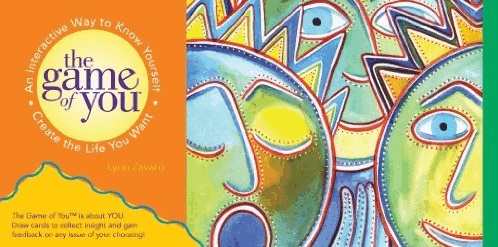
  • Interview and Giveaway: The Game of You by Lynn Zavaro

    Interview and Giveaway: The Game of You by Lynn Zavaro

    Update: The winners for this giveaway have already been chosen. Subscribe to Tiny Buddha for free daily or weekly updates and to learn about future giveaways!

    The winners:

    Lynn Zavaro has very quickly become one of my greatest role models.

    When she first submitted a post to Tiny Buddha (50 Creative Questions to Help You Create the Life You Want) I felt like she was living inside my head.

    Lynn realizes that the most important factor for our happiness is coming to know ourselves—and she also understands the internal blocks that hold us back from living the lives we dream about. Why? Because she’s human and imperfect, just like everyone else, and she’s lived a bold life of self-discovery, authenticity, and adventure.

    An artist, writer, and teacher, Lynn holds a Masters degree in Counseling Psychology. This combination of experience gives her a unique insight into human nature—and she leveraged it to create a fun, creative book and card deck set called The Game of You.

    I received my set a few weeks back, and I’ve become addicted. The Game of You provides a simple, enjoyable way to understand and stretch yourself, little by little, every day.

    I’m excited that Lynn took some time to share a little about herself and her work, and also that she’s generously offered to give away 5 sets of The Game of You.

    The Giveaway

    To win 1 of 5 free sets of The Game of You:

    • Leave a comment on this post.
    • Tweet: RT @tinybuddha Giveaway and Interview: The Game of You by Lynn Zavaro http://bit.ly/tEit98

    You can enter until midnight PST on Friday, November 4th. If you don’t have a Twitter account, you can still enter by completing the first step.

    The Interview

    1. Many Tiny Buddha readers may know you as an insightful, giving writer and artist, as you’ve contributed a wide range of inspiring, thought-provoking posts to the site! Can you tell us a little more about yourself?

    First off I have to say what an honor it is to contribute to Tiny Buddha. I have personally received so much from it–so a big thank you to you Lori and to the Tiny Buddha community! (more…)
  • Tiny Wisdom: There’s More Right Than Wrong

    Tiny Wisdom: There’s More Right Than Wrong

    “Joy is what happens to us when we allow ourselves to recognize how good things really are.” -Marianne Williamson

    Every now and then, I ask Tiny Buddha Facebook friends to share things they’re grateful for. I do this because I know that I sometimes forget how many things I’ve valued and appreciated throughout the course of my day–especially if I feel I’ve dealt with a lot of stresses and worries.

    It can happen to any of us: Even one especially difficult encounter or situation can overpower all the good things if we’re not deliberate about recognizing them, and realizing how fortunate we really are.

    Psychologists refer to this as negativity bias–the phenomenon by which we give more weight to negative experiences than positive ones. It’s an evolutionary development from a time when everyday threats could be matters of life-or-death. According to neuropsychologist Rich Hanson, “the brain is like Velcro to negative experiences and Teflon to positive ones.”

    It’s when you move into a new house, and even though almost everything went smoothly, you can’t stop feeling annoyed about that one vase the movers chipped. Or you have a fantastic interview, but you can’t stop obsessing about that one question you didn’t answer as well as you could have.

    In short, we sometimes fixate on the bad things–judging them, rehashing them, maybe even reliving them. It generally comes down to fear of pain, and more specifically, loss.

    If we can become aware of what’s going on in our brains, we can actively choose to recognize how few real threats there are, and then create positive feelings by honoring all the good things we sometimes take for granted.

    The reality is that there is often more right than wrong with our lives. There are people looking out for us. There are needs that are consistently met. There are pleasures that we often get to enjoy. It’s not a perfect world, but there’s a lot of beauty, if only we’re willing to see and appreciate it.

    Look around today. Choose to see the good things. And don’t let the tiny things that went wrong detract from your pleasure. Joy isn’t just knowing that you should be grateful for your blessings–it’s allowing yourself to actually enjoy them.


    Photo by JOPHIELsmiles

  • Tiny Wisdom: Focusing in the Middle of Chaos

    Tiny Wisdom: Focusing in the Middle of Chaos

    “Concentrate all your thoughts on the task at hand. The sun’s rays do not burn until brought to a focus.” –Alexander Graham Bell

    I’m sitting smack dab in the middle of chaos. There are half-packed boxes, plastic bags full of clothes, and an assortment of decorative items I’ve yet to pack scattered around my living room.

    There’s a stack of random items on my kitchen table—toiletries, paint brushes, marbles, things that don’t belong. For some reason I can’t recall, I rested a number of soup cans on the floor in front of two beach chairs that now lean against my kitchen wall.

    My moving process has not been organized, which is highly unlike me. Since I’m juggling quite a bit of work right now, I’ve only been able to pack in spurts. This means I’ve needed to surrender to disorder.

    Though I’m sure I could have been more methodical, appeasing my Type-A tendencies, I’m actually glad I chose not to. My messy apartment is now a microcosm for life, and I have a chance to find focus within it.

    That’s not always an easy thing to do.

    Have you ever felt like you couldn’t think straight until you cleaned your house? Or you couldn’t fully listen to what your friend was saying until you completed a few more items on your to-do list? Or you couldn’t relax until you received responses to important emails you sent?

    It’s tempting to want to fix and finish everything before being there, for yourself or someone else, but there are certain things that are never solved or done.

    If people are living in your house, it will never be totally clean. If you have goals and responsibilities, your to-do list will likely never be completed. And as much as we may like to control what other people do, that’s just not an option.

    Life is chaos. It’s messy. We can create order in different systems—I’m a huge proponent of that. Being organized certainly makes things simpler and easier. But sometimes the simplest and easiest way to focus is to accept that things will rarely be simple and easy.

    Sometimes the best we can do is focus on just one thing, knowing full well there are lots of other things that will just need to wait.

    Photo by ms amutha

  • Introducing the Tiny Buddha Book Store

    Introducing the Tiny Buddha Book Store

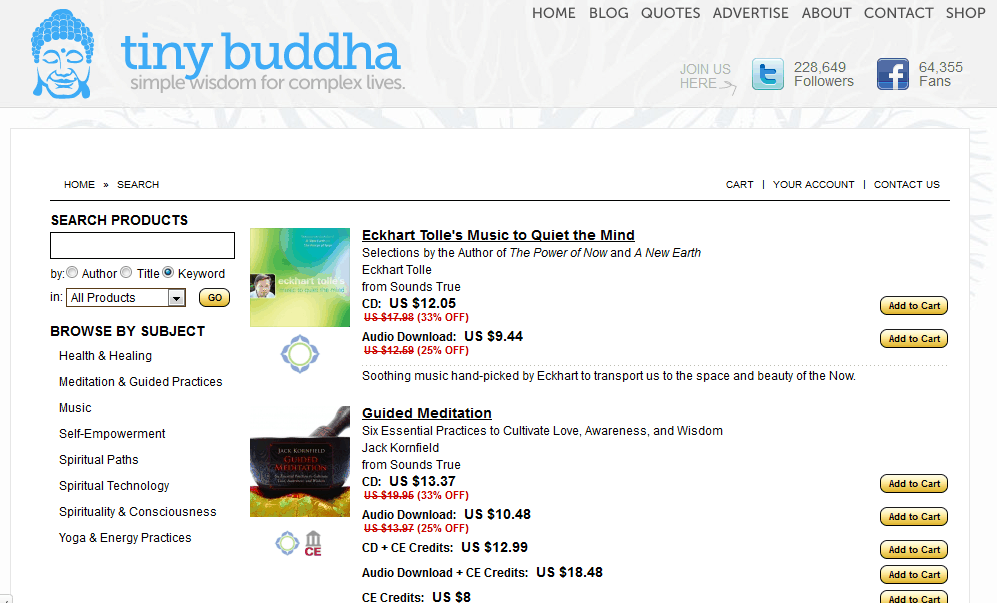
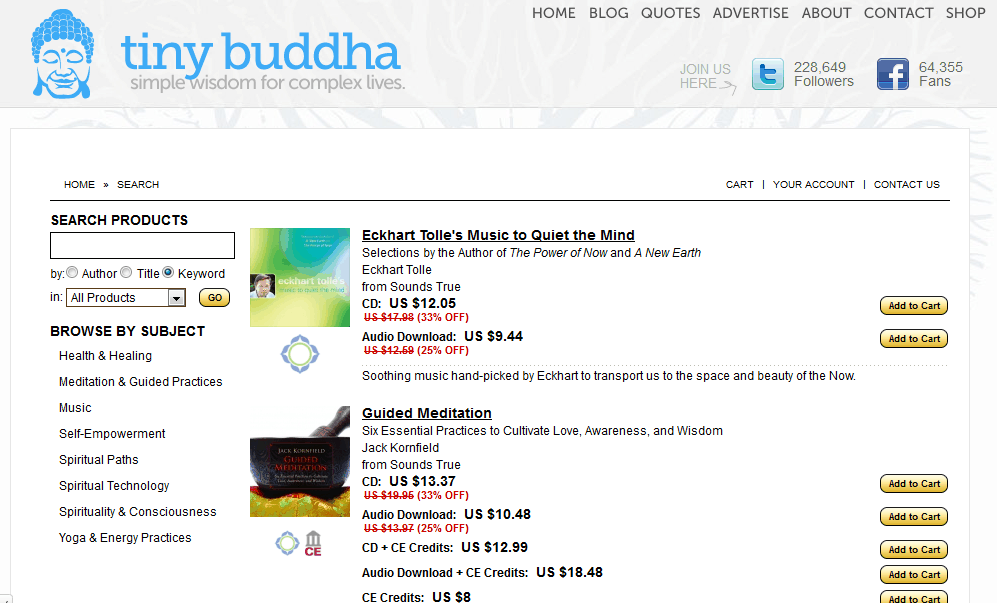
    I’m pleased to announce that Tiny Buddha now has a book store! We’ve partnered with Sounds True to offer a wide range of inspiring books, instructional DVDs, and audio learning courses that support personal growth and spiritual awakening.

    A percentage of all sales made through this store will support Tiny Buddha’s continued growth.

    Tiny Buddha Book Store

    Sounds True was founded in 1985 by Tami Simon with a clear mission: to disseminate spiritual wisdom. This independent multimedia publishing company now features a library of more than 600 titles by such well known spiritual teachers as Eckhart Tolle, Pema Chödrön, and Jon Kabat-Zinn.

    Categories include:

    • Health and Healing
    • Meditation and Guided Practices
    • Music
    • Self Empowerment
    • Spiritual Paths
    • Spiritual Technology
    • Spirituality and Consciousness
    • Yoga & Energy Practices

    You can access this new store by clicking on “Shop” in the menu, on the top right-hand side of the page—or you can click here to shop the Tiny Buddha Sounds True store. Sounds true offers a secure check-out process and a 100% satisfaction guarantee

    Sending you love and light friends =)

  • Tiny Wisdom: All Is Never Lost

    Tiny Wisdom: All Is Never Lost

    “In this world of change, nothing which comes stays, and nothing which goes is lost.” -Anne Sophie Swetchine

    I used to make a wish whenever it turned 11:11. It was something I started doing with friends in high school, and I kept doing it in college, a time when I depended on magical thinking to get me through difficult days.

    I remember when my first long-term relationship ended, after three tumultuous years. I felt like I lost a part of me—the best part, to be more specific. My saving grace was the hope that we’d eventually get back together, if only I never gave up.

    Night after night, at 11:11, I’d wish that he’d come back. I don’t know if I really believed this would influence what happened, but it made me feel a little less powerless. Ironically, every time I expressed this longing, it was like adding another two-ton link to the chain that kept me stuck.

    One night, out of nowhere, I wished for happiness instead.

    While I recognize that wishing for happiness and creating it are two different things, this was an epiphany for me. Suddenly, I realized that what I really wanted wasn’t my old relationship. I wanted to feel good, and until that moment I assumed I needed to be in that relationship to do that.

    I thought I’d lost my chance. I hadn’t—I just lost that one possibility.

    There’s something incredibly empowering about realizing that what we really want doesn’t require us to cling to specific people and things—that we can experience the feelings we want over and over again in different relationships and circumstances.

    Suddenly, the world seems more expansive and individual losses seem less catastrophic, because we know that no matter what, all is not lost. We can and will feel happy again.

    Instinctively, we are going to get comfortable with the people and situations we love. And we’re going to want to fight for them. That’s not necessarily a bad thing. It keeps us passionately committed to who and what we believe matters.

    But loss is undeniable part of life. Embracing that means realizing that every time we let go, we make room for something else. All is never lost.

    Photo by mbstock

  • Tiny Wisdom: The Sacrifices That Lead to Happiness

    Tiny Wisdom: The Sacrifices That Lead to Happiness

    “As long as you make an identity for yourself out of pain, you cannot be free of it.” -Eckhart Tolle

    This weekend, a reader presented an interesting question about letting go of old beliefs and attitudes to make room for happiness and open up to a relationship.

    He suggested that this would require a lot of sacrifice on his part, and would leave him humbled and lost—as if he’s somehow “giving in” and losing touch with who he really is.

    He asked how he can reconcile the instinct to change with his resistance to becoming something he is not.

    I suspect a lot of us struggle with this. We know we want to transform our lives, but we’ve thought and behaved in certain ways for so many years that we identify ourselves with those ideas and actions.

    For a long time, I believed people were basically selfish, which made me feel constantly defensive. I thought I “earned” this belief because I had been hurt. Letting go of it felt like letting the people who’d hurt me off the hook—like saying they didn’t cause my pain, I did.

    But the reality was that my defensiveness hurt me more than anything anyone else had ever done—and for far longer. Sacrificing it might have been humbling, but the alternative was (and is) to sacrifice my potential for joy.

    We are not the beliefs that we, at one point, decided serve and protect us. We are not the thoughts that, if we’re honest, we know only cripple us. We are not the sum of our internal workings.

    Of course letting go of these will feel like giving in if we believe they define us. It will feel like a sort of death—like acknowledging there’s something wrong with us, and the only way to find happiness is to essentially rid ourselves of ourselves.

    Freedom is realizing that letting go isn’t losing anything—it’s gaining everything. It’s stepping into the present moment free from limiting thoughts, beliefs, memories, fears, and judgments, to see what’s in front of us with clear eyes.

    We have the potential to become anything—in fact, if we learn to let go, we will never stop becoming. But that means we need to want presence and happiness more than we want to cling to the past and our pain.

    Photo by Aschaf

  • Tiny Wisdom: What Wise Ambition Means

    Tiny Wisdom: What Wise Ambition Means

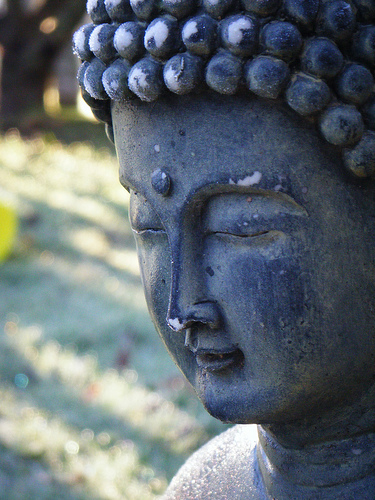
    Buddha

    “Of course there is no formula for success except, perhaps, an unconditional acceptance of life and what it brings.” –Arthur Rubinstein

    Can ambition and wisdom coexist? Can you simultaneously want something specific and drive yourself to create it while accepting that what will be, will be?

    The other day, a reader emailed asking this question—if he can motivate his team at work to “do whatever it takes” to reach their goals, and also teach them to embrace the idea of surrendering.

    At first glance, these two ideas seem conflicting. Implicit in the suggestion to “do whatever it takes” is the idea that there is a way—it’s just a matter of finding it. Surrendering, on the other hand, implies an understanding that the future is uncertain and not entirely within our control

    So what does it mean to persevere, and believe fully in your vision, while knowing that there are no guarantees? How can you motivate yourself to keep plowing ahead toward a specific goal, while also detaching from the outcome?

    If you surrender to the unknown, will you lose that sense of urgency—that drive, that hunger that propels you toward your dreams?

    A teacher once told me that successful people act as if they can’t fail—that the outcome they want to create is a given, so all they need to go is keep going until they find their way through the maze of obstacles between now and then.

    I understood his intention. If we believe we can’t fail, we won’t doubt ourselves or lose confidence when we inevitably stumble.

    But this teaches us to ignore our instincts when they tell us we no longer want to do something; or that it would be smartest to cut our losses and do something else. The reality is that there will be times when it’s wisest to change directions or give up.

    Surrendering is recognizing that this is always a possibility—and then being open to the signs that tell us when to persist and when to change course.

    Ambition without wisdom is inflexibly attaching to a specific goal, even if it means making foolish decisions that conflict with your values, beliefs, intentions, and instincts.

    Wise ambition is the knowledge that you can still “succeed” and be happy, even if you need to change your goal or adjust your action steps.

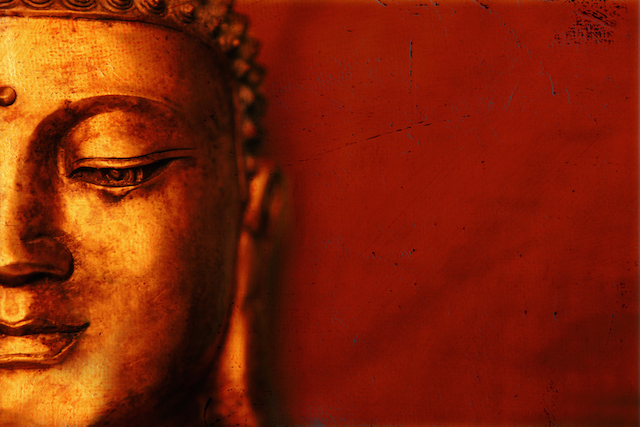
    Buddha image via Shutterstock

  • Tiny Wisdom: The Best Disappointments

    Tiny Wisdom: The Best Disappointments

    “Remember that sometimes not getting what you want is a wonderful stroke of luck.” -Dalai Lama

    Opportunity often hides in the most unlikely places, but it isn’t easy to see it when you’re disappointed life didn’t meet your expectations.

    Michael Jordan’s high school coach cut him from the basketball team, which may have pushed him to work harder and become an NBA superstar. Soichoro Honda wanted to be an engineer at Toyota until he was rejected, inspiring him to start his own company.

    You never know when a disappointment might pave the path for something great. What wonderful stroke of luck have you had lately, and what can you do to benefit from it?

    This post was originally published in September, 2009. Photo by LisaRoxy.

  • Tiny Wisdom: Addicted to Change

    Tiny Wisdom: Addicted to Change

    “You change your life by changing your heart.” -John Porter

    I’m addicted to new and different.

    I’ve been like this all my life. In my mid-20s, I toured the United States with marketing companies, in large part because everything was always new.

    New cities. New work venues. New yoga studios. New restaurants. New hotels. New beds. New people. And I thought, a new me in each new environment.

    It felt much easier to be present in my daily life when my surroundings and circumstances were constantly changing.

    If ever there was something that weighed on me, I could metaphorically leave it behind with the heap of towels on the bathroom floor. If I ever did something I wasn’t proud of, I could release my negative feelings like exhaust from my rental car as I fled one town for another.

    I thought of this the other day I explored my new apartment community, where my boyfriend and I will move at the end of the month. This is my seventh home since moving to California four years ago.

    In my defense, I’d had valid reasons for changing apartments each time—from moving closer to work, to downsizing, to cohabitating. But there’s no denying the excitement I’d felt with each massive change.

    Change can be seductive, particularly if you’re hurting, or feeling frustrated, and looking for a distraction.

    Change can create the illusion of progress where really there’s just resistance to doing what actually needs to be done.

    Like sticking with a solid plan. Or sitting in the discomfort of an emotion. Or working on a strained relationship. Or challenging an instinctive response. Or recognizing what you really want to change, in your situation or in yourself.

    It’s a big world out there, and there’s a lot to see, explore, and enjoy. It never benefits us to stagnate in a routine that’s only holding us back. But sometimes we need to ask ourselves: Do I really want big change, or is there some greater need underneath it?

    Photo by iBrotha