Author: Lori Deschene

  • Tiny Wisdom: Do You Believe?

    Tiny Wisdom: Do You Believe?

    “The outer conditions of a person’s life will always be found to reflect their inner beliefs.” –James Allen

    Do you believe you can do work you love? If you don’t believe it, you likely won’t try for it.

    Do you believe you can be in a happy relationship? If you don’t believe, you likely won’t open up to it.

    Do you believe you can adopt that healthier habit? If you don’t believe it, you likely won’t stick to it.

    Do you believe you can fully release your anger toward that person who hurt you? If you don’t believe it, you likely won’t let go of it.

    Do you believe you should be treated with respect? If you don’t believe it, you likely won’t require it.

    Do you believe this moment is good enough? If you don’t believe it, you likely won’t enjoy it.

    Do you believe you deserve happiness? If you don’t believe it, you likely won’t let yourself feel it.

    It’s not true that anything is possible—I can say with absolute certainty that none of us will grow wings tonight and fly out our bedroom windows. But it is true that far more is possible than we often realize.

    It starts with what we believe. And beliefs are thoughts that aren’t fact—meaning we can change them if we really want to.

    We can change the stories we tell ourselves. We can change the limits we’ve set for ourselves. Most importantly, we can change what we do for ourselves, starting right this moment. Every passing second is a new opportunity to be who we want to be, if we believe we can.

    I may not always have believed the best about and for myself, but in this moment, I choose to believe and act on it. Do you?

    Photo by Augapfel

  • Tiny Wisdom: Time to Enjoy

    Tiny Wisdom: Time to Enjoy

    “Don’t count every hour in the day, make every hour in the day count.” -Unknown

    The other morning I hopped out of bed and made a beeline for the laundry room. Although it contains numerous washers and dryers, unlike the room at my old apartment complex, far more people use it.

    This means I might as well camp out in from of the building a la Black Friday if I hope to get my clothes in at some point in the AM. That morning, as luck would have it, two of the washers were still empty three seconds after the door opened.

    Since I work from home, I try to be army-style efficient when doing household chores, so I generally know the precise moment when I’ll need to switch my loads into the dryer.

    That morning I somehow arrived back at the room with seven minutes to spare. I considered returning to my apartment to squeeze in a few emails; after all, I had a ton to do. Then I realized how absurd that was. It was only seven minutes. Was it really that big a deal to simply wait it out?

    Out the window, I noticed a swing set without any children enjoying it, and I realized that while I was worried about wasting time, I was wasting an opportunity for fun.

    So I swung. And then I started humming. And then I started singing softly. And then I got a little louder. Then someone walked out of the laundry room, huffing because all the machines were full, until he saw me, a bizarre looking adult singing and swinging alone.

    His laughter in that moment reminded me: there is no better use of time than the choice to smile and share it.

    I realize we can’t always play with the world, with all the abandon of children. But what if we thought of unexpected breaks less as time to kill and more as time to enjoy?

    What if we didn’t think about what we could squeeze in and instead allowed ourselves to forget for a minute that there’s so much to do?

    What if we took the opportunity to lose ourselves, even if just for a few minutes, without pressure, stress, or an overwhelming sense that there’s something else we should accomplish?

    There will always be more to do. But sometimes the best use of time is choosing to forget about that.

    Photo by wonderlane

  • Interview and Book Giveaway: Epiphany by Elise Ballard

    Interview and Book Giveaway: Epiphany by Elise Ballard

    Note: This winners for this giveaway have been chosen. Subscribe to Tiny Buddha for daily or weekly emails and to learn about future giveaways!

    The Winners:

    In my experience, meaningful transformation always starts with some type of epiphany—a realization that suddenly puts life in a new perspective and informs what you need to do from this point forward.

    I’ve always been fascinated by these moments, when something suddenly makes sense in a way it didn’t before and change seems much more possible.

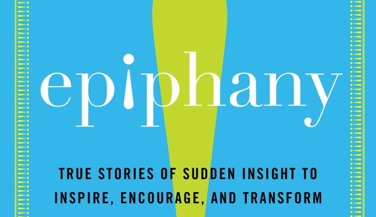
    With this in mind, I was thrilled to receive a copy of Elise Ballard’s book Epiphany: True Stories of Sudden Insight to Inspire, Encourage, and Transform.

    From Amazon:

    “Inspiring, thought-provoking, and eye-opening, Epiphany shares deeply intimate stories of people from all walks of life, from public figures like Maya Angelou, Deepak Chopra, Ali MacGraw, and Barry Manilow, to personal acquaintances and lifelong friends, to new contacts made in the most unexpected and serendipitous of circumstances.”

    Since this is a long interview, I’m going to jump right in! But first…

    The Giveaway

    To enter to win 1 of 2 free copies of Epiphany:

    • Leave a comment below.
    • Tweet: RT @tinybuddha Interview & Book Giveaway: Epiphany by Elise Ballard http://bit.ly/rK4uQG

    If you don’t have a Twitter account, you can still enter by completing the first step. You can enter until midnight PST on Friday, December 2nd.

    The Interview

    1. How do you define the word “epiphany”?

    In the dictionary, the simplest definition is “a moment of great or sudden revelation.” Since I am asking about people’s greatest epiphanies in life—the biggest ones, the ones that have had the greatest impact—I say an epiphany is “a moment of sudden or great revelation that usually changes your life in some way.”

    But when I’ve asked people for their definitions, people define it a myriad of beautiful and accurate ways, such as an opening; a realization; a portal to the Divine; a moment that changes the lens through which you view your life; a clarifying direction; and I love Maya Angelou’s definition: “the occurrence when the mind, the body, the heart and the soul focus together and see an old thing in a new way.” (more…)

  • Tiny Wisdom: 3 Truths for Purpose and Success

    “Great acts are made up of small deeds.” -Lao Tzu

    “‘Tiny’ is the new big. I’ve seen this phrase used in context with iPods, cell phones, purses, cars, businesses, and even houses. It might not be a phrase you’d think to apply to purpose and success, but I’ve found that the smallest of things can sometimes have the most power. Today I’d like to share with you a little of my journey to Tiny Buddha, as well as three tiny truths for a meaningful, successful life.”

    And thus began my presentation for Bonfire Heights in September. I’ve been waiting to share this video because my name is misspelled in the opening, but I’ve decided to embrace my inner Lorie and share it with you now. If you’ve been struggling to create a sense of purpose, these three tiny truths may help:

    (Note: This is around 23 minutes, so it might be best to watch later if you’re at work!)


    Parts of this presentation came directly from my book Tiny Buddha: Simple Wisdom for Life’s Hard Questions.

  • 50 Ways to Show Gratitude for the People in Your Life

    50 Ways to Show Gratitude for the People in Your Life

    “Feeling gratitude and not expressing it is like wrapping a present and not giving it.” –William Arthur Ward

    The holiday season generally brings us closer to people. Sometimes that closeness reminds us how much we love each other. Sometimes it reminds us that we drive each other crazy, as family often does.

    At the heart of it, Thanksgiving in particular calls us to see people with the deepest appreciation for the gifts they’ve given us. Some gifts are more immediately obvious than others—the type that come with praise, affection, and genuine esteem.

    Others push us, stretch us, test us, and make us wonder if there’s anything to be grateful for at all.

    There’s no denying that certain relationships are more challenging than others, but through each we have an opportunity to grow and help others do the same. Every relationship teaches us something about loving, trusting, forgiving, setting boundaries, taking care of ourselves, and taking care of each other.

    From the people who love you, to the people who challenge you, to the people who support you at work, here’s how to show your gratitude.

    Show Gratitude to People Who Love You

    1. Share a specific example of something they did for you and how it made a difference in your life.

    2. Do something little but thoughtful for them—like clean up after Thanksgiving dinner!

    3. Give a long, intimate hug; or if you know they don’t like hugs, stick out your hand for a handshake to cater to their preferences and make them smile.

    4. Tell them you’re there if they have anything they want to talk about—and let them know they have your full attention.

    5. Give them something of yours that you think they would enjoy, and let them know specifically why you want them to have it.

    6. Invite them to do something you know they’ve always wanted to do.

    7. Encourage them to try something you know they want to try but haven’t yet because they’re scared.

    8. Offer to do something you know they don’t enjoy doing, like organizing their closet or mowing their lawn.

    9. Compliment them on a talent, skill, or strength that you admire.

    10. Look them straight in the eyes and say, “You make the world a better place.”

    Show Gratitude to People Who Challenge You

    11. Fully listen to what they have to say instead of forming your rebuttal in your head and waiting to speak.

    12. Thank them for introducing you to a new way to look at things, even if you still don’t agree.

    13. Pinpoint something you admire about their commitment to their beliefs—even if you don’t hold them as well.

    14. Resist the urge to tell them they’re wrong.

    15. Challenge them right back to be the best they can be, with love and positive intentions.

    16. If they inspired you to push outside your comfort zone, thank them for inspiring you to take a risk, and let them know how it paid off.

    17. Write a blog post about how they helped you see things differently and dedicate it to them.

    18. Use the lesson this person teaches you through your interactions, whether it’s patience, compassion, or courage.

    19. Introduce them to someone who may challenge them and help them grow, as they’ve done for you.

    20. Let them know how you appreciate when they challenge you in a loving, non-confrontational way—and if they don’t do that, be calm and kind when you ask them to do that going forward.

    Show Gratitude to People Who Serve You

    21. Give a larger tip than usual.

    22. If they have a tip jar, include a thoughtful note of appreciation along with your coins or bills.

    23. Smile when you order or enlist their assistance. Smiles are contagious, so give one away!

    24. If they serve you regularly, acknowledge something they always do well—like work efficiently or stay calm under pressure.

    25. Exhibit patience, even if you’re in a hurry.

    26. Let their supervisor know they do an outstanding job.

    27. Keep their workplace clean—for example, at a coffee shop, clean up after yourself at the sugar stand.

    28. Offer to get a coffee for them, if it’s someone working in or outside your home.

    29. If you have their contact information, send an email of appreciation—and let them know you just wanted to express your gratitude, so they don’t need to write back.

    30. Praise them in a review on Yelp and/or recommend them to people you know.

    Show Gratitude to People Who Work with You

    31. Write a handwritten thank-you note, acknowledging things you value about them and their work.

    32. Offer to lighten their workload in some way if you are able.

    33. Bring back lunch for them if you know they’re working hard and likely haven’t had a chance to grab something.

    34. If you’re running a meeting, keep it short to show them you appreciate and respect their time.

    35. Ask them about their lives instead of always being all business. This doesn’t mean you need to pry into personal matters; it just means showing an interest in who they are as people.

    36. Be the calm, light voice in a stressful situation.

    37. Give them flowers to brighten their desk.

    38. Let their boss know how they’re doing a great job and contributing to the company.

    39. Listen fully if they’re having a difficult day, and recognize if they need space to figure things out on their own, not advice or help.

    40. Remember that the little things can make a big difference!

    Show Gratitude for Yourself

    41. Make a list of ways you’ve impressed yourself lately.

    42. Treat yourself to something you enjoy, like a pedicure or a massage.

    43. If someone compliments you, thank them and let them know you’re proud of that skill, talent, or accomplishment.

    44. Compliment yourself—say it while looking in the mirror, write it in a journal, or jot it on a sticky note and put it on your refrigerator.

    45. Give yourself time to enjoy a passion you’re sometimes too busy to fit in.

    46. Take an inventory of all the good things you’ve done for other people and the world.

    47. Write yourself a love letter. Seriously, start with “Dear Lori” (but insert your own name) and describe all the things you admire about yourself.

    48. Let go of any conditions you have for being kind to yourself—meaning you appreciate even if you didn’t accomplish or do anything specific.

    49. Schedule a date with yourself—an afternoon or evening that’s all about you.

    50. Share the beauty that is you with the people around you, knowing they’re fortunate to have you in their lives.

    I am fortunate to have you in mine. You make the world a better place!

    **Update: Since I wrote this post, I launched a gratitude journal/coloring book that people seem to be really enjoying! If you’re interested, you can learn more here.
  • Tiny Wisdom: Not Choosing Is a Choice

    Tiny Wisdom: Not Choosing Is a Choice

    “When you have to make a choice and don’t make it, that is in itself a choice.” -William James

    “I don’t know—what do you think?”

    Recently I find myself asking this when my boyfriend asks what I want to do—what movie I want to see, where I want to eat, or how I’d like to spend an off-day.

    At first I thought this was just a residual people-pleasing tendency from a time when I measured my worth in approval. But when I look at this more closely, I realize it’s actually about relinquishing the tiny decisions, since inevitably there are lots of large ones that I simply have to make.

    Every day we make countless choices that affect our lives in major ways. Do we stay with a job or take a risk and follow our dreams? Do we tell someone how we feel, or do we wait for a better time?

    Then there are the decisions we make by making no choice at all—when we remain in a relationship that we really want to end, or we stay in a location even though our heart’s pulling us somewhere else.

    Life is a constant stream of choices. That can be overwhelming and sometimes downright exhausting—if we put pressure on every decision, in fear of doing the wrong thing, or making a choice and then somehow missing out because of it.

    These big life choices may seem completely divorced from the tiny decisions we make about how we spend our time, but it all comes down to the same question: Do we want to take responsibility for now?

    We’re the only ones who can identify what we want and then do something about it, whether it’s what we do with our evenings, what we do with our vacations, or even what we do with our lives.

    We can see this as something stressful, and wait it out, hoping someone or something else will tell us what’s the best course of action. Or we can tune into what we want in any given moment, knowing that no matter how things turn out, we will be happy for finding the strength to follow our instincts and choose.

    Photo by David Offf

  • Tiny Wisdom: Make the Most of Yourself

    Tiny Wisdom: Make the Most of Yourself

    “Make the most of yourself, because that’s all there is of you.” -Ralph Waldo Emerson

    I recently started yoga again after an extended period of time away from my mat. People once knew me for my flexibility and my passion for downward dog; but over the past couple of years, I somehow reduced my practice from six days per week, to four, to two, to sporadically deep breathing while touching my toes.

    When I learned my new apartment community offers classes by the pool, I decided to jump back in. I felt excited to start again, but I imagined I’d feel frustrated in realizing my core had weakened, my balance had become shaky, and my overall endurance had decreased.

    Yet, when I moved into warrior two and felt my legs trembling, I found myself thinking, “Thank you.”

    In that moment, I remembered all the things my legs have allowed me to do over the years. I thought about how miraculous it is that every day, I am mobile—I can stand, and walk, and bring myself to places I enjoy, and run toward people I love, even when I haven’t exercised regularly.

    From there, I felt grateful for my mind. As a lifelong pusher who once exhausted and dehydrated myself into the ER, I appreciated that I’d somehow developed the mental capacity to value my body for what it does for me instead of always berating it for how it fails me.

    We live in a world that often promotes unrealistic physical standards while simultaneously encouraging the type of busyness that can leave little room for self-care.

    Sometimes it can feel near impossible to be satisfied with ourselves in mind and body. It can feel like there isn’t enough time to fit everything in—to do the work we love, spend time with the people we cherish, and do what we need to do to feel healthy and comfortable in our skin.

    We’re always going to want to stretch a little further and do more with the time we have. But maybe making the most of ourselves isn’t about how much we do or how well we do it.

    Maybe it’s about allowing ourselves to feel good about where we’re at and what we’ve done. When we honor ourselves, we don’t need to push quite as hard, because we’re motivated less by dissatisfaction and more by a deep self-love that reminds us just how much is possible.

    Photo by collegekid

  • Giveaway: Leela – Meditation through Your Xbox or Wii

    Giveaway: Leela – Meditation through Your Xbox or Wii

    Update: The winners for this giveaway have already been chosen. Subscribe to Tiny Buddha for daily or weekly emails and to learn about future giveaways!

    The Winners:

    You may know Deepak Chopra for his many inspiring books, including The Seven Spiritual Laws of Success and The Ultimate Happiness Prescription. A world-renowned expert on mind-body healing, Deepak Chopra has dedicated his life to helping people create joy and equanimity.

    You might not know, however, that Deepak Chopra also makes video games. Well, sort of. 

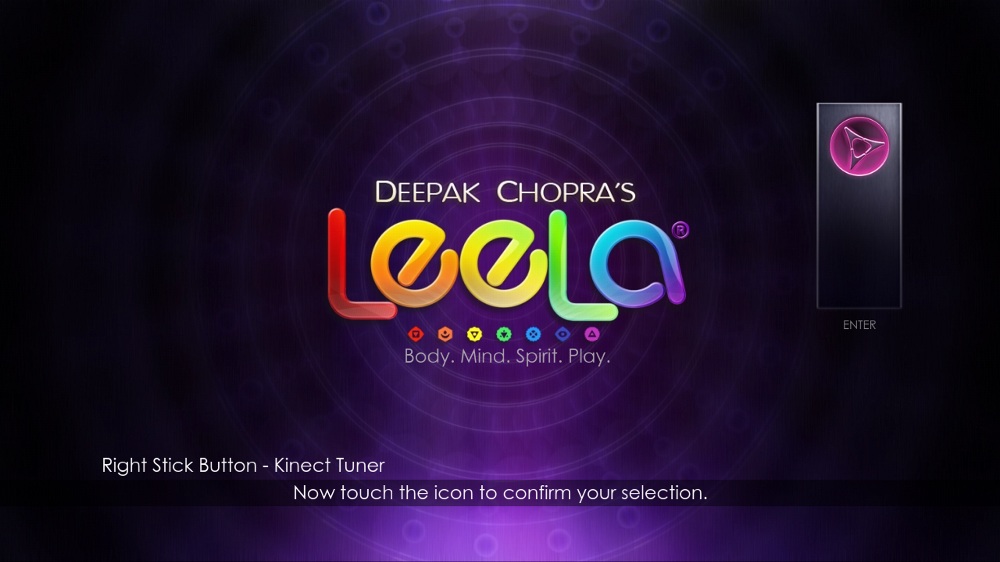
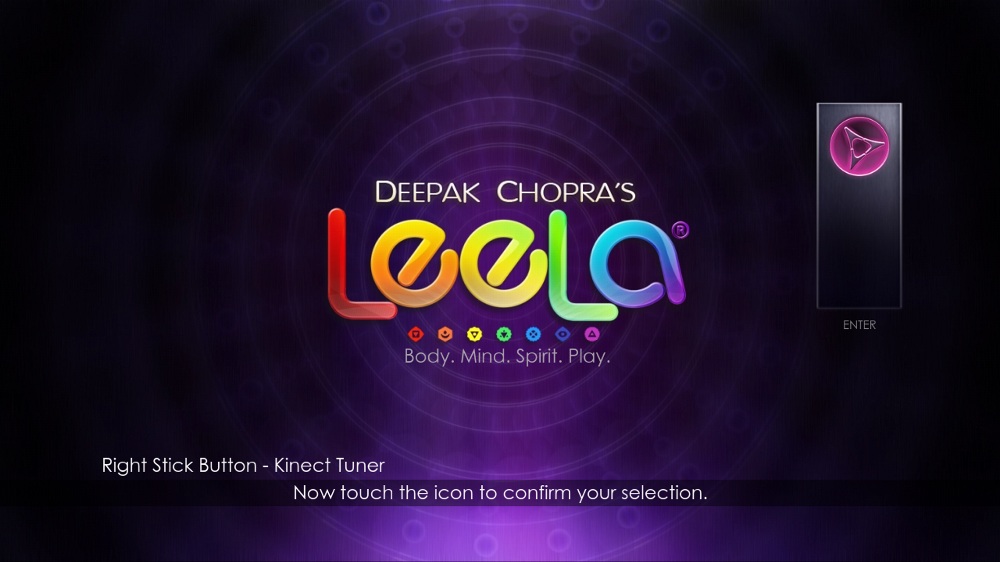
    Recently Deepak Chopra partnered with the gaming company THQ to create a creative, fully interactive meditation and relaxation journey called Leela™.

    From the email I received:

    “Leela is the first of its kind to transform a popular gaming platform into a fully interactive mind-body experience. The program includes seven different meditations based on the seven chakras. Using Kinect’s hands-free system, Leela monitors your breath and offers feedback to help you refine your technique, deepen your relaxation and enhance your overall wellness.”

    Since I don’t own a gaming system, I wasn’t able to try the game to provide an official review. However, I jumped on the opportunity to provide two games as a giveaway for you! This clearly isn’t traditional meditation, but it could be a fun way to relax regardless.

    Leela’s Key Features:

    Rebalance and Revitalize. Leela invites you to utilize natural full body gestures to completely relax. 

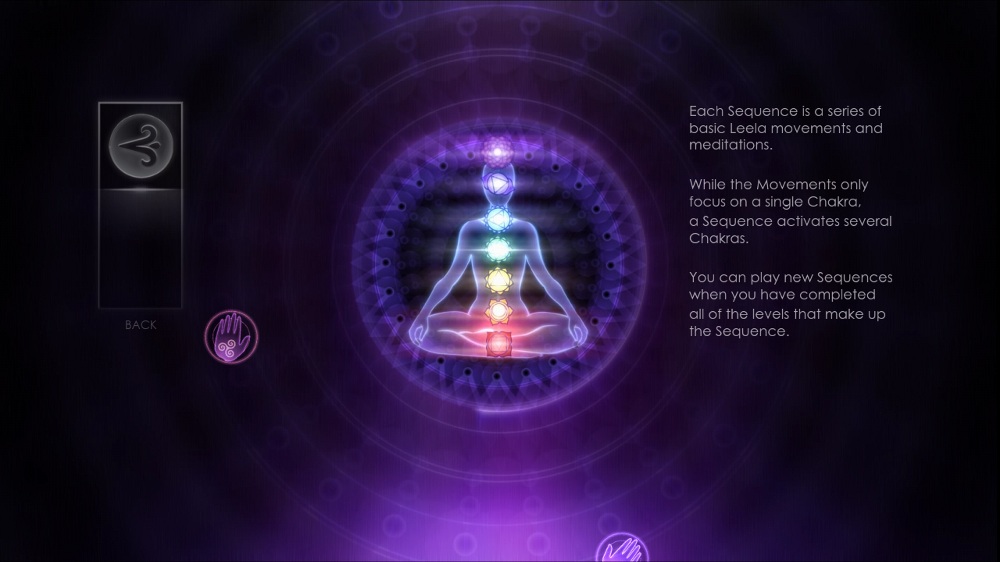
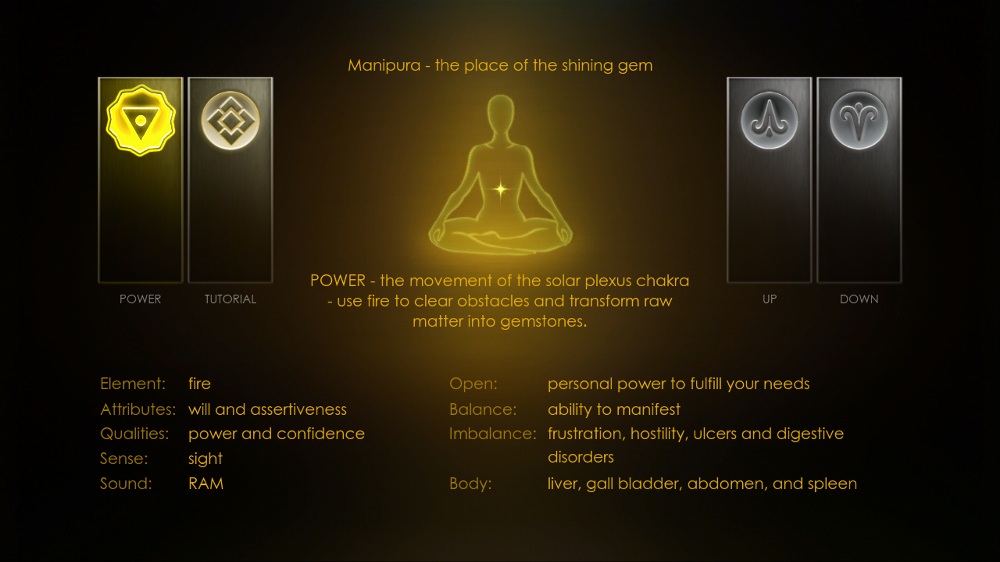
    Chakra-based meditation. Through seven meditations and movements, Leela helps you focus and connect with specific areas of the body to relax and enter into your personal flow site.

    Stillness in motion. Now for the first time ever, you can actually see and measure your breathing using Kinect technology. Leela displays the movement of your breath and provides gentle feedback and encouragement to enhance your meditation practice.

    Create. Customize. Connect. Create and customize your own personal mandala—artwork that expresses and individual’s unique essence and intentions. The personal mandala is a visual meditation woven throughout Leela that can be shared with friends on Facebook.

    Wellness made personal. Leela encourages us to explore our natural rhythms and thoughts to cultivate a more creative, harmonious and balanced life through play.

    The Giveaway

    To enter to win 1 of 2 free copies of Leela:

    • Leave a comment below.
    • Tweet: RT @tinybuddha Giveaway: Leela, Meditation through Your Xbox or Wii http://bit.ly/vo1KUg

    If you don’t have a Twitter account, you can still enter by completing the first step. You can enter until midnight PST on Tuesday, November 29th. Please note you will need to have a Kinect sensor for the Xbox version.

    Learn more about Leela here. You can also use the Leela Mandala app on Facebook and enter to win prizes through the Leela Mandala Creativity Contest, which goes until December 9, 2011.

  • Tiny Gratitude from Tiny Buddha to You

    Tiny Gratitude from Tiny Buddha to You

    “I would maintain that thanks are the highest form of thought; and that gratitude is happiness doubled by wonder.”  -G.K. Chesterton

    Thank you for being you, and being here. Happy Thanksgiving friends! 🙂

    Photo by CarbonNYC

  • Tiny Wisdom: Dealing with Public Criticism

    Tiny Wisdom: Dealing with Public Criticism

    “Do not look for approval except for the consciousness of doing your best.” -Andrew Carnegie

    I used to follow a popular blog ran by a woman who’d lost a lot of weight and wrote about maintaining a healthy lifestyle.

    One day, she saw a teenager smoking a cigarette on the street. She decided to walk up to him and let him know this was dumb—and then she blogged about it.

    Her followers unanimously agreed it was judgmental and righteous to harshly criticize someone who didn’t ask for her opinion, especially since she had no way of knowing if he might have been trying to quit. Dozens of people chimed in, many suggesting they no longer respected her and may even stop reading her blog.

    I could understand her reaction to seeing a young person smoking, and I could understand their perspective that it was unnecessary to call him out.

    What interested me the most was the next day’s post. She apologized to her readers for not being more sensitive to the teenager—as if she somehow owed them something for her reaction to him.

    I empathized with her, because there have been many times when I’ve felt judged by a group, and felt a need to restore their respect for me.

    I’m not suggesting she didn’t actually regret what she did; as I’m sure she seriously considered everything people wrote. But I imagined she also felt a lot of pressure to defend her good nature after receiving so much criticism in a public forum.

    We’re all living increasingly public lives, with audiences on various social media platforms, and negative commentary just a Google search away, if your work in any way opens you to personal or professional review.

    When an attack suddenly seems public, we can easily lose track of what we genuinely want to learn from the experience while trying to minimize the embarrassment and any damage to our reputations.

    The wider our reach, the more we open ourselves to criticism. It always benefits us to consider helpful feedback, but it’s easy to grow dependent on mass approval when we focus on pleasing everyone and avoiding judgment.

    The reality is people will always judge. It’s exhausting to try to control public perception, but we can do our best to create our reputations by acting with honesty, integrity, and a genuine commitment to growth.

    Photo by Wonderlane

  • Tiny Wisdom: The Lessons That Hurt

    Tiny Wisdom: The Lessons That Hurt

    “Don’t postpone joy until you have learned all of your lessons. Joy is your lesson.” -Alan Cohen

    There have been times when I’ve hurt tremendously and then felt a strong need to punish myself for my part in causing that pain. Usually it’s when I’ve made a mistake, and I feel ashamed, like I should have known and done better.

    This is kind of ironic when you think about it—clearly I wanted to know and do better to avoid hurting, and yet instead of letting it go, I’ve continued to make myself feel bad.

    When I was younger, someone once told me the more we hurt, the more we learn. While I agree that pain can be one of our greatest teachers, I’d like to challenge the presumption that there’s a direct correlation between learning and pain.

    I think a better belief about pain is that each time we hurt, we learn a little about hurting less. I’m not suggesting there will ever be a time when we stop experiencing pain. We’re human, and we will always feel the full range of emotions—which is a good thing, since there would be no light without a little dark.

    But every time we deal with something painful, we have an opportunity to learn how to decrease our suffering.

    With each difficult experience we can learn how to more effectively let go, forgive ourselves, and move on.

    With each challenge, we can learn how to think about things a little more positively and respond a little more proactively.

    With each struggle, we can learn to attach to our feelings less so that they do not define or control us.

    We can live our lives feeling frustrated with ourselves for having room for improvement, or we can accept that life is constant growth and give ourselves as much room as possible for joy.

    Photo by Esme_Vos

  • Giveaway: The Book of Holiday Awesome

    Giveaway: The Book of Holiday Awesome

    Note: The winners for this giveaway have already been chosen. Subscribe to Tiny Buddha for free daily or weekly emails and to learn about future giveaways!

    The Winners:

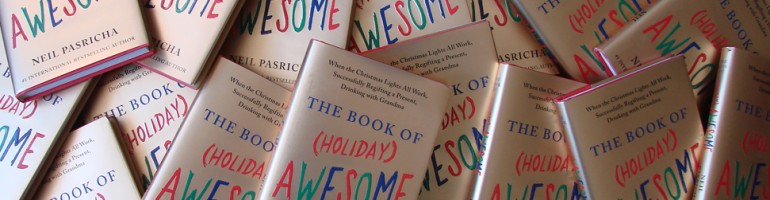
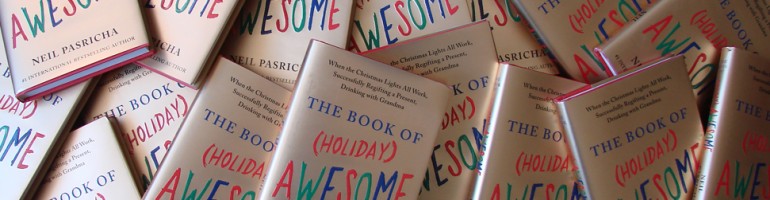
    It’s no secret: I am a hugeNeil Pasricha fan. It’s impossible to visit his site 1000 Awesome Things and not feel good about the world. He has a gift for identifying the small, simple pleasures and treasures that make life beautiful and fill us with joy, if we take the time to notice and appreciate them.

    In case you’re not familiar with Neil, a little background info: Neil started counting down—you guessed it—1000 awesome things in June of 2008. Since he first shared his amusement at learning about broccoflower— “a bizarre misfit child from two of nature’s most hideous vegetables”—Neil’s identified nearly 900 things and experiences that inspire laughter, smiles, and maybe even happy tears.

    He’s extolled the ordinary, like flossing, taking off your glasses at the end of the day, and not bumping your head on something that you usually bump your head on.

    And he has a gift for identifying as extraordinary things we may often take for granted—like when a stranger takes the time to help you parallel park, or when you cuddle really close to someone you love and hear their heartbeat.

    Reading the ever evolving list of awesome is like watching one of those feel-good movie montages full of poignant, magical moments that remind us it truly is a wonderful world.

    Previously, I reviewed The Book of Awesome and interviewed Neil when he launched The Book of (Even More) Awesome. When I saw on his site that he was about to launch a holiday edition called The Book of (Holiday) Awesome, I couldn’t email him quickly enough!

    The Book of (Holiday) Awesome encompasses all kinds of holidays, from Thanksgiving, Hannnukah and Christmas to Father’s Day, Mother’s Day and beyond. Some of the awesome experiences include:

    • Plugging in the Christmas lights from last year and having them all work
    • When the in-laws leave
    • Successfully regifting a present to someone who actually wants it
    • Drinking with Grandma
    • Just barely wrapping a gift with that tiny scrap of leftover wrapping paper
    • Knowing Kwanzaa is worth more Scrabble points than Hanukkah or Christmas

    From Neil’s introduction: (more…)

  • Tiny Wisdom: Learning to Read What We Need

    Tiny Wisdom: Learning to Read What We Need

    “Information is not knowledge.” -Einstein

    It’s an interesting time to be a publisher. Before magazines had online counterparts, choosing articles to feature was a much more selective process, as there was no need to solicit more pieces than you could feasibly fit in an issue.

    Now that page views are dollars, quality hasn’t necessarily become less important, but publishers are certainly more focused on providing more to readers—more links to click on, more posts to tweet, and more places to get involved in conversations.

    Recently, I’ve received a few requests from larger sites asking if I’d like to participate in content share programs—meaning they’d republish Tiny Buddha posts to keep readers on their sites, and I could do the same with their content to keep readers here.

    I realize that larger publishers have greater needs, since they have a product to sell and employees to pay. But still, I can’t help but feel that providing content readers could find elsewhere solely to increase page views—particularly when it’s related to personal development or happiness—somehow misses the point.

    I’d even go so far as to say it’s contrary to the intention, since we’re generally happiest when we read what we need and then focus on applying what we’ve learned (as opposed to continually searching for more answers outside ourselves).

    Still, I think the new era of information overload provides benefits as well as challenges. For one, it gives us countless opportunities to practice choosing what information we simply don’t need.

    Conventional wisdom says that knowledge is power, which implies that the more we learn, the better equipped we are to make positive changes in our lives and the world. But sometimes not needing new information is power.

    There is power in knowing when to stop reading and start doing. There is power in learning to recognize when you actually need guidance, and when you’re seeking answers solely to avoid doing what you know in your heart is right. There is power in learning what to tune out and what to allow in.

    The web will continue to grow, and more and more sites will compete for our attention. This means we have countless opportunities to practice using information instead of letting information use us, and limitless chances to expand our awareness instead of focusing on learning more.
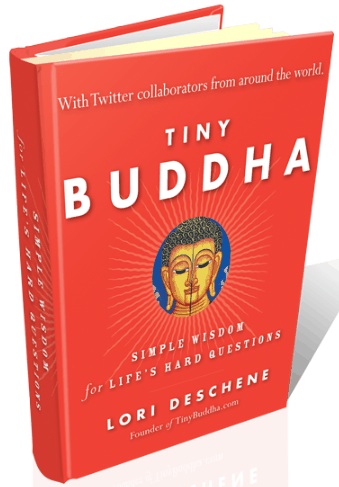
    Photo by Big Mind Zen Center

  • Tiny Wisdom: Taking Things Away

    Tiny Wisdom: Taking Things Away

    “Beware the barrenness of a busy life.” -Socrates

    If there’s one thing I’ve learned from writing, it’s that knowing what to remove is often just as important as knowing what to add.

    Surprisingly, it sometimes take just as much time to write something short as it does to write something long because it entails rewriting and editing to capture the most important points with the most specific words.

    I’ve found that this same idea applies to other things in life: sometimes creating peace, happiness, or satisfaction has everything to do with what we choose to take away.

    You can love the work you do, but if you overextend yourself, even the greatest passion can start to feel stressful and overwhelming.

    You can adore your significant other, but if you spend all your time together, you’ll likely start to appreciate your relationship less and wonder what else there is.

    You can value your spiritual practice, but if your life becomes all about contemplation and self-reflection, you may start to feel somewhat removed from other people and the physical world.

    There are definitely times when need to do more; but sometimes the best thing we can do is scale back on what we’re already doing, create a better sense of balance and space to just be, and then see how we feel.

    Last year, a writer named Allison Miller contributed a blog post about an aerial acrobatics accident that put her out of commission for months. A friend of hers suggested that this was a gift. Though she initially resisted this idea, she ultimately realized she previously stayed busy to mask her loneliness, insecurity, and emotional pain.

    It was only when she couldn’t do anything that she realized what she wanted to do, and what she didn’t want to do anymore.
    I’m not suggesting we should all take a hiatus from our lives, a la Eat, Pray, Love; I’m proposing that sometimes the answer has nothing to do with more and everything to do with less.
    When Michelangelo finished sculpting the David, many people asked him how he created this masterful work of art. His response: “It’s simple. I took away everything that wasn’t the David.”

    Our lives can be our masterpieces if we can learn to chisel away at the thoughts and choices that don’t contribute to our sense of authenticity and balance.

    Photo by geishaboy500

  • 4 Myths about Doing What You Love for Work

    4 Myths about Doing What You Love for Work

    “Your work is to discover your world and then with all your heart give yourself to it.” ~Buddha

    “Big flud strikes Revere!”

    That was the headline of the newspaper I made with my sister when I was six. I hadn’t yet honed my skills as an editor, but I knew a good fake story when I heard it.

    Eight years later, while wading through my anger toward several people who’d hurt me, I wrote a short book called The Line of the Virtues about the grey area between good and bad. An older coworker at my afterschool job asked, “Are all kids this deep these days?”

    Somewhere between six and fourteen, I’d found my calling: I was a writer who liked to tackle weighty topics. Though I took a lot of detours between realizing that and pursuing writing as a career, ultimately, it brought me to Tiny Buddha—my sweet spot for personal and professional fulfillment.

    Looking back, I realize I took those detours solely because I was scared. I thought writing was one of those careers that only a few people get to do. I figured it was better not to try than to try and fail, because then I could pretend I wasn’t writing by choice.

    I remember the first time I realized I was hiding from my passion. I was twenty-six years old, and part of a marketing team that was walking across the country to promote a number of fitness products.

    A coworker and I got into a ridiculous fight over the meaning of a word. She’d formerly worked as a comedy writer for radio shows—and, for the record, she was right about the meaning. Defending her stance, she shouted, “Don’t you think I’d know? I’m a writer!”

    I responded, “Me too!”

    Then she argued, “Not really!” Further drilling the point home, she continued, “Just wait ‘til you move to San Francisco and call yourself a writer there. Your MySpace blogs just aren’t going to cut it!”

    Since I’d held nothing back from Tom, this hurt—until later when I realized she’d given me a gift. She’d smothered me with the truth, and I had no choice but to acknowledge she was right yet again.

    I got a writing job the second day after I arrived in San Francisco. I was writing about senior care, a topic that interested me about as much as the mating habits of ants. But it was a decision to step onto a new path, knowing full well that, at that point, I had no idea where I was going.

    This is true for all of us whenever we start doing something new. There are never any guarantees about where it will lead, and that can be a scary thing, particularly if your current situation allows you to comfortably meet your responsibilities.

    There simply isn’t a one-size-fits-all formula for discovering what you’re passionate about and then transitioning to a new career. That being said, I’ve learned a few things about doing what you love for work—and I’ve learned that a lot of what I previously believed simply is not true. (more…)

  • Tiny Wisdom: What We Choose to See

    Tiny Wisdom: What We Choose to See

    “It’s not what you look at that matters, it’s what you see.” -Henry David Thoreau

    Yesterday while driving home from the dentist, I listened to this CD my boyfriend made with theme songs from various movies.

    While I generally would rather do a low crawl down a muddy sidewalk than sit in LA traffic, I couldn’t have been more blissful lost in the tunes of my favorite films.

    I noticed something interesting during this peaceful drive.

    While listening to The Pirates of the Caribbean theme song, I recognized all kinds of exciting things happening around me. This kid did a Back to the Future-style skateboard jump while crossing the street at the walk signal; and several yards away in the park, I saw a group of girls doing back flips. I realize these events aren’t as riveting as Johnny Depp escaping death, but in that moment, I felt their energy.

    After the light turned green, I switched to the Forrest Gump theme song, and noticed numerous poignant moments in the moving picture outside my window—a little boy running and jumping into his mother’s arms, and a woman bending down to help a homeless man on the sidewalk. With the simple change of a song, I felt transported to a Lifetime special.

    Suddenly I wondered: How often did the soundtrack in my head dictate what I chose to see?

    At any given moment, there’s a lot of life happening around us. It’s far too much to take in all at once, which means we need to consciously choose where we place our attention—and how we perceive the things that we allow to hold our focus.

    This is usually influenced by our mental state. When we’re angry, we’re more apt to find people annoying. When we’re hurt, people can seem insensitive. And when we’re happy, all of a sudden, the world seems like a kind and beautiful place.

    Essentially, we narrate the world based on our moods, just like those pithy voiceovers, usually delivered by Morgan Freeman.

    But there is another way to go about it—we can instead create our moods by consciously choosing to see the good around us. It’s always there. It’s just a matter of whether or not we’re willing to look and see.

    Photo by The Wandering Angel

  • Tiny Wisdom: People Who Want Attention

    Tiny Wisdom: People Who Want Attention

    “You validate people’s lives by your attention.” -Unknown

    For as long as I can remember, wanting attention has seemed like a shameful thing.

    “She’s only doing that for attention.” “He’s only telling that sob story for attention.” “She only volunteered to help for attention.”

    Have you ever said or heard something like this? I know I have. Many times throughout my life, I’ve analyzed people’s words and actions and essentially judged whether or not their intention was to hoist themselves into the spotlight.

    Every time I’ve done this, somewhere inside me I’ve thought, “It’s bad to be desperate for attention.” And somewhere underneath that, “I hate that I’ve been desperate for attention.”

    Call it second child syndrome, but I came out of the womb screaming, “Look at me!” And then “What are you looking at?”

    That’s the thing about insecurity—you simultaneously crave an audience and fear what they might be thinking.

    I have a healthier sense of self these days, but I can still be triggered by (what I might believe is) attention seeking behavior—and it’s generally because I’m subconsciously judging many of my former choices.

    Not everyone acts out to gain approval, but no matter how you slice it, the desire for attention is a call for love. What would happen if we started seeing it that way, instead of turning attention into a four letter word?

    I’m not talking about enabling people when they’re doing dangerous things, or condoning disrespectful, inconsiderate choices.

    I’m talking about shifting our perceptions so that we’re less apt to judge and more likely to understand. That doesn’t mean we need to be pulled into drama. It just means we look a little below the surface to empathize before responding–and in this way, we’re better able to recognize when attention seeking is actually a cry for help.

    We all look for validation every now and then. We’re all people who want attention. And we can all choose to be compassionate when we see a call for love instead of judging the need.


    Photo by sarniebill

  • Tiny Wisdom: The Myth of the After Picture

    Tiny Wisdom: The Myth of the After Picture

    “Life is a process of becoming. A combination of states we have to go through. Where people fail is that they wish to elect a state and remain in it. This is a kind of death.” -Anais Nin

    It’s a seductive image—the idea of when you “get there.” What you’ll look like when you lose the weight. How your life will change when you achieve success. How everything will improve when you’re finally happy.

    I first began chasing “after pictures” when I was a chubby 12 year old kid. I was convinced that slim felt like peace, and I found lots of photographic confirmation—particularly in advertisements.

    I remember buying 7 mammoth bottles of weight loss juice for $100. The “before” picture in the ad didn’t just show a larger woman; she also had messy hair, a disheveled appearance, and an overall air of despair.

    The woman in the “after picture,” however, seemed to have everything together. It was like she’d arrived at perfect, and now there was nothing that hurt. I wanted that. I wanted permanently better.

    Years later, when I recognized I was attaching to “someday” to avoid being in today, I unintentionally shifted to another “after picture”—the day when I’d become perfectly present. It was the same self-rejection, just disguised as something spiritual.

    I now realize the “after picture” is an illusion, as it pertains to weight loss, success, enlightenment, or anything else we think is permanent happiness. And it’s not because we can’t make major changes in our lives. It’s because even when we do, we are constantly transforming and evolving, inside and out.

    Our bodies are constantly changing—even if we’re healthy, our weight fluctuates at least a little, and we inevitably age.

    Our minds are constantly changing—we learn, unlearn, and then relearn over and over again as we discover more about ourselves and the world.

    Our feelings are constantly changing. We hurt, we’re humbled, we heal, we’re strengthened, and then we do it all over again, because that’s what it means to be human.

    Not only is there nowhere to get to, there is nowhere we will stay. There is just the choice of this moment: to be present and comfortable in our skin, to forgive ourselves if we struggle, and to remember that as long as we’re breathing, there is always a new opportunity to choose.


    Photo by iBrotha

  • The Tiny Buddha Book, Bonus Gifts, and Win a Kindle or DSLR Camera

    The Tiny Buddha Book, Bonus Gifts, and Win a Kindle or DSLR Camera

    UPDATE: Please note that the pre-order bonus promotion described in this blog post ended on December 8, 2011.

    This is a post that’s been a year and a half in the making, and I couldn’t be more thrilled to finally write these words!

    Today is the official pre-order launch day for my first print book, Tiny Buddha: Simple Wisdom for Life’s Hard Questions, and I have some exciting promotions to share with you!

    In this post you’ll find:

    -Information about Tiny Buddha: Simple Wisdom for Life’s Hard Questions

    -A description of the pre-order bonuses (totaling more than $150 in value) that you will receive if you purchase between now and December 8, 2011

    -Instructions to enter the “Life’s Hard Questions” contest for a chance to win:

    • A Canon DSLR Camera
    • 1 of 2 Kindles, each with a free digital version of my book
    • 1 of 10 free hard copies of my book

    About Tiny Buddha: Simple Wisdom for Life’s Hard Questions

    You may have previously seen information about my eBook, Tiny Buddha’s Handbook for Peace and Happiness. This is a compilation of my most popular posts from the first year of the site, and it’s only available as a digital product.

    Tiny Buddha: Simple Wisdom for Life’s Hard Questions is entirely original, available both in print and as an eBook, distributed through Conari Press. And it started as a collaborative project.

    Last year, I asked @tinybuddha Twitter followers a number of challenging questions, including “What’s the meaning of life?” “What does it take to be happy?” and “How can you make each day count?

    I received more than 1,000 tweeted responses, and narrowed them down to 200 that form the backbone of this book. Tiny Buddha is a combination of their insightful answers, stories from my life, and lessons from wise teachers around the world and throughout time.

    I wrote this book because I lived much of my life feeling paralyzed by pain and uncertainty. While there is much that may always be unknown, we can still empower ourselves to live peaceful, purposeful lives based on what we do know.

    The Pre-Order Bonuses

    Tiny Buddha, Simple Wisdom for Life’s Hard Questions, will ship from Amazon on December 8, 2011 (and will be available in stores by January 1, 2012). (more…)

  • Tiny Wisdom: Getting Our Own Approval

    Tiny Wisdom: Getting Our Own Approval

    “A man cannot be comfortable without his own approval.” –Mark Twain

    I currently have three inch dark blond roots growing into my golden hair because I’ve decided to go natural after a decade of consistent coloring.

    I’m wearing large pink flower earrings that make me smile, even though they don’t really go with the yoga pants and tie-dyed hoodie I also felt like wearing.

    I’m viewing my laptop through slightly crooked glassed because I sat on them two weeks ago, but they’re still functional, and I’d rather spend my money on new initiatives for this site.

    In the past, I would never have gone out if I didn’t think I looked perfectly together. I cared far too much about other people’s perceptions for that.

    This goes back to elementary school when my 4th grade teacher frequently made me stand in front of the class while he described my dress and called me “Miss Prim and Proper.”

    My perfect image imploded in high school, when I started playing with goth and grunge, but even that was a ploy for acceptance.

    I would like to say I’ve evolved beyond concerns of what other people think, but the reality is I still care—I just know now that I am happiest when I focus on what makes me feel good, regardless of how it looks.

    Earlier this week I wrote a post about our need to receive and accept praise; which begs the question: what’s the difference between needing appreciation and seeking approval?

    I suspect it comes down to intention. A healthy need for appreciation comes from the desire to be loved by others. An unhealthy need for approval comes from the desire to compensate for the love we’re not giving ourselves.

    It might not be possible to completely stop caring about what other people think, and that might not be a bad thing. Because we care, we look out for others and consider their feelings before we act. But it is possible to honor our own needs and values above appearances and public perception.

    It’s possible to take the road less traveled, even if it others might judge. To do what we think is right, even if others might disagree. And if you’re like me, to wear those crooked glasses, knowing what’s most important is not how it looks, but how we see ourselves and what we do as a result.

    Photo by nickyfern