Author: Lori Deschene

  • Tiny Wisdom: Avoiding the Urge to Numb Pain

    Tiny Wisdom: Avoiding the Urge to Numb Pain

    “Suffering is not caused by pain but by resisting pain.” -Unknown

    The other day I was watching TV when one of those pharmaceutical commercials came on.

    You know, the kind that shows a blissful looking woman running through a field of flowers while a voiceover extols the virtues of some drug—and then concludes with a list of possible side effects, including tremors, agitation, drowsiness, nausea, diarrhea, hair loss, blurred vision, night sweats, blood clot, stroke, and in some cases, death.

    It might have been for psoriasis or restless syndrome; regardless, I found myself wondering if solving one of these unpleasant but non-life threatening problems was actually worth the risk of so many more uncomfortable, and in some cases, dangerous ones.

    Then I started to think about how this type of thinking often prevails in everyday life, when a drink, a cigarette, or a bucket of chicken can seem like a quick fix for an unpleasant feeling.

    While any of these things might provide relief in the present, they open us up to a great deal of potential pain in the future.

    I’ve turned to all of these crutches at different points in my life; and despite making tremendous progress over the years, sometimes it still takes a conscious effort to resist instant gratification when I’m hurting.

    It can feel like a reflex—I want this feeling to end, and I know exactly the fix that will numb it.

    What we don’t always remember in that moment when we reach for the pill—whatever it may be—is that dulling the symptom rarely removes the cause. It’s really just an avoidance tactic. It’s a way to feel better right now without doing anything to help you feel better on the whole.

    It may dull the pain of a fight, but it doesn’t change that there’s conflict. It may soften the blow of a loss, but it doesn’t change that someone or something is gone.

    It may cloud the reality of what is, but in no way makes it different.

    Oftentimes we feel the need to do something to make pain go away, but most often what we really need is to sit with it, learn from it, and then act on what we’ve learned.

    It might be uncomfortable to go against what we usually do, but it’s the only way to create the possibility of feeling better than we usually feel.

    Photo by Wonderlane

  • Tiny Wisdom: When It’s Best to Stay Out of It

    Tiny Wisdom: When It’s Best to Stay Out of It

    “Never let your sense of morals prevent you from doing what’s right.”  -Isaac Asimov

    Last week a woman emailed me to let me know she holds the copyright for a photo someone submitted for the Life’s Hard Questions contest.

    She told me she took the picture of an ex-friend, who we’ll call Tina, using Tina’s camera when they were on vacation, before they had a falling out—and now she wants the photo removed and Tina disqualified from the contest.

    She also let me know her computer crashed, so she no longer has the original file. Still, she demanded I take it down or she’d be forced to take further action.

    I couldn’t help but feel she reached out to me solely to spite Tina, now that they’re on bad terms. Tina confirmed my hunch when she let me know this ex-friend was harassing her in every possible way on the web.

    I asked this woman to send some type of proof that she holds the copyright, but I have to admit a part of me hoped that she could not.

    This scenario got me thinking about the speech I heard from Dr. Phil Zombardo, when he talked about what it means to be a hero; a big part of it is speaking out against injustice and not ignoring our instincts when we believe something is not right.

    I believe it’s not right to intend to hurt someone—and I always feel compelled to do something when I see someone being mistreated. But I’ve learned that sometimes, even when we believe something is wrong, it’s just not our place to do anything about it.

    When two friends are fighting, for example, and it’s tempting to take sides and get involved. But all this does is create more drama.

    There are going to be things we feel adamantly are wrong, and sometimes there will be absolutely nothing we can do but offer our support where it’s needed.

    Tina’s friend ultimately could not supply proof, so I didn’t need to take the photo down. But if she did, I would have been legally obligated to do just that. Regardless, it wasn’t my friendship to heal.

    Sometimes the right thing to do is to let other people make things right.

    Photo by nickyfern

  • Tiny Wisdom: Peacefully Imperfect

    Tiny Wisdom: Peacefully Imperfect

    “Don’t let the perfect be the enemy of the good.” -Voltaire

    Last week I got sick. Really sick. Head-spinning, stomach-retching, body-trembling sick, and just before the holidays, while visiting my family.

    I completed a radio interview for my book through a brain fog so thick my thoughts felt trapped in quick sand. Needless to say, I got behind with freelance work, and come Christmas Eve, I hadn’t yet prepared anything for this week on the site.

    Since I knew the next several days would be busy, with holiday festivities, wedding dress shopping with my engaged sister, and last-minute get-togethers with friends before I return to California, I realized that morning was my last chance to prepare three days worth of content.

    So I decided to focus solely on what’s important: preparing the blog posts other people had previously submitted. Usually, I spend a great deal of time looking for the “perfect photo” to go with each post—but I decided instead to find a good one and go with it.

    I generally go through each post and insert multiple links back to other posts on the site. But I decided to skip that too since it wasn’t completely necessary.

    These details may seem inconsequential from an outside perspective, but for me, they fall under the umbrella of the “right way” to do things—and oftentimes my perfectionism tells me it’s that way or nothing.

    It’s a limiting way of operating that does nothing but create unnecessary stress, and yet it takes a conscious effort for me to fight this perfectionist instinct.

    Ironically, you as a reader may not even have noticed the things I didn’t do if I didn’t point them out—which is just another reminder that generally speaking, we are the only ones who know how things “should” be or look. Sometimes the best thing to do is do our best and resist the urge to judge it.

    So today, on the tail-end of this sickness I’ve been struggling to shake, I share with you this, my highly imperfect blog post. It didn’t involve deep thought or research. I didn’t spend a ton of time self-editing this.

    And yet, as always it’s my truth. I’ve decided that’s good enough.

    Wishing you a peacefully imperfect day and the capacity to recognize and appreciate the good.

    Photo by Two Roses

  • Tiny Wisdom: The Urge to Make Other People Wrong

    Tiny Wisdom: The Urge to Make Other People Wrong

    “You have your way. I have my way. As for the right way, the correct way, and the only way, it does not exist.” ~Friedrich Nietzsche

    Recently, a blogger I admire wrote a long note on a social media site identifying blogging practices he finds annoying—and referring to bloggers who utilize them as “fundamentally wrong.” Some of them are things I also choose not to do, but not all of them.

    As I read through his list of “blogging mistakes,” recognizing some of them here, I found myself getting defensive. I thought it was wrong of him to call other bloggers fundamentally wrong, implying everything he chooses to do is right, and then I realized the irony.

    I was making him wrong for making me wrong. How was I any different?

    I shared this story with a friend of mine, and she told me that sometimes, it is black and white. She said we sometimes need to identify other people as wrong, because this is how we learn what we believe to be right—which is a precursor to acting on it.

    What I realized amid all of this is that there is a difference between identifying something as right, and identifying it as right for you. And most often, what matters is that we do the latter.

    When you believe something is right, you may be tempted to tell other people what they should and shouldn’t do. When you believe something is right for you, you honor that belief, but accept what other people choose to do without feeling the need to negate it.

    When you believe something is right, you may be tempted to judge other people if they don’t support your belief. When you believe something is right for you, you realize it isn’t a threat when someone else thinks differently.

    When you believe something is right, you may be tempted to fight for it. When you believe something is right for you, you feel at peace whether someone else agrees with you or not.

    And now again, a little irony: clearly I believe it’s right to understand that what’s right for you might not be right for everyone. This feels right for me because it helps me understand and accept people while taking care of my own needs.

    What do you believe is right when it comes to identifying other people as wrong?

    Photo by jumpinjimmyjava

  • Tiny Wisdom: Why We Harshly Label People

    Tiny Wisdom: Why We Harshly Label People

    “Everything that irritates us about others can lead us to a better understanding of ourselves.” ~Carl Jung

    The other day someone I love, who we’ll call Tania, got in a massive fight with her boyfriend. She called me to explain the situation, and ultimately got frustrated because I wouldn’t agree that he was not only wrong, but also a jerk.

    The next day, she and I had a disagreement that ended with her yelling at me. When I discussed this with someone else who loves us both but frequently clashes with Tania (not my finest decision), she quickly turned on Tania, calling her a jerk.

    One hour later, I received an email from someone who wanted to let me know she got my book as a gift, but would never have bought it for herself because it wasn’t about Buddhism and was, therefore, pathetic.

    It was an emotionally draining day, but in this moment I stepped outside it to think about the reductionist instinct.

    It’s when we fail to consider complex factors, and instead reduce a situation to one simple explanation—in these cases, one harsh judgment.

    Maybe you’ve been there before. Someone hurts you deeply, and you decide they did it because they’re a bad person. Or someone says something that threatens a belief you hold dear, so you decide they’re ignorant.

    It’s easier to label a person or a thing than it is to look below the surface, and look within to understand why we’re reacting so strongly. That’s not the most comfortable thing to do.

    I know I’ve been there before. For me, it often happens when I feel someone isn’t prioritizing me. This can make me start doubting myself—but it’s far easier to label that person as selfish or inconsiderate than it is to acknowledge that I’m feeding into old insecurities.

    Other people aren’t perfect. None of us are. People will make mistakes sometimes. At other times, they’ll do things we simply don’t agree with, and it will be tempting to make them wrong so that we can feel good about being right or better about being hurt.

    But all this does is create a world of people accusing each other to avoid looking within. Ultimately, those are our choices: assume the worst in other people, or understand why we feel the instinct to do it, and in doing so, bring out the best in ourselves.

    Photo by AlicePopkorn

  • Tiny Wisdom: All the Fun You Missed

    Tiny Wisdom: All the Fun You Missed

    “Don’t let the past hold you back; you’re missing the good stuff.” -Unknown

    There have been times when I’ve regretted that I missed out on so much when I was younger.

    Because I held onto pain so tightly, I missed out on countless opportunities for fun while sitting alone and feeling bad for myself.

    Because I felt so insecure for so long, I missed out on the chance to make strong friendships while shutting down and assuming people would hurt me.

    And because I was afraid of failing, I missed out on all kinds of professional opportunities while doing what felt easy and safe.

    Now, in my early 30s, it’s tempting to look back and feel bad for squandering those years when I was so full of potential. Then I remember: I still am.

    The other night, I attended a family function with many of the amazing, interesting people who I didn’t fully appreciate when I was caught up in my personal dramas. I planned to leave early because I was somewhat tired, but I ended up dancing until the last song with my big fat Italian family.

    I remember looking around at my cousins, ranging in age from 11 to 35, my aunt in her 50s, and friends of all ages in between, and recognizing that we were all the same on the dance floor.

    We were all losing ourselves in the music, likely thinking about nothing, simply choosing to be together and move. It was almost as if in that moment, we were ageless. What had come or what was coming didn’t matter right then.

    All that mattered was that we all had the same choice to make: sit it out, or dance (yes, like in the song).

    That’s the choice we’re faced with every day.

    We can focus on the fun things we could have done but didn’t, or we can do something fun right now.

    We can dwell on the mistakes we made in past relationships, or we can focus on enjoying the relationships we’re in right now.

    We can think about all the opportunities we missed out on, or we can focus on embracing possibilities right now.

    There will always be something we didn’t do yesterday, but we get to choose right now how yesterday looks when we get to tomorrow. Right now, whatever age we are, this is our chance to live.

  • Tiny Wisdom: The Ideal Time to Appreciate Each Other

    Tiny Wisdom: The Ideal Time to Appreciate Each Other

    “Before someone’s tomorrow has been taken away, cherish those you love, appreciate them today.” -Michelle C. Ustaszeski

    Familiarity can sometimes seem like permanence. Oftentimes the more comfortable we are with someone, the less effort we put into our time with them.

    As I’ve mentioned before, I visit my family on the east coast several times each year for two weeks at a time. Every time I leave California, it’s bittersweet because I’m leaving my boyfriend Ehren to go see people I love.

    And every time I leave Massachusetts, I’m leaving my family for even longer to resume my life with someone else I love.

    Because I spend more time with Ehren, I go through phases where I don’t fully see him for the gift that he is. I might assume that I know what he’s talking about instead of fully listening. Or fail to fully appreciate the qualities that drew me to him, because I’m accustomed to them.

    I don’t always recognize when I’m doing these things, but when I do, I remember the airport.

    In that transient state between there and there, I’ve learned a lot about what it really means to be here—to recognize that everything changes and appreciate it all while it lasts.

    When Ehren drops me off for a flight, I look him in the deeply in the eyes and realize how fortunate I am for the time we get to spend together. When my family brings me to Logan, I do the same with them. And while I’m in the air between them, I remember to appreciate the time I spend with myself.

    The reality is that nothing in life is permanent–not even our closest relationships–meaning this moment is the ideal time to pay attention to each other, understand each other, forgive each other, and be honest with each other.

    Occasionally, we may take each other for granted, or get caught up in little squabbles that we wouldn’t choose to hang onto if we knew our time together was running short. We never get to know when that will happen; we only know it eventually will.

    Every moment we have together is valuable. Whether or not it feels that way is entirely up to us.

    Photo by Luciano Meirelles

  • Giveaway and Interview: Meditation – The Complete Guide

    Giveaway and Interview: Meditation – The Complete Guide

    Note: The winners for this giveaway have been chosen. Subscribe to Tiny Buddha for free daily or weekly emails and to learn about future giveaways!

    The Winners:

    Growing up, I was a black-and-white thinker—it was always all or nothing. This way of being rarely served me well when it came to healthy habits, because the little things really do all add up; and usually, something is better than nothing.

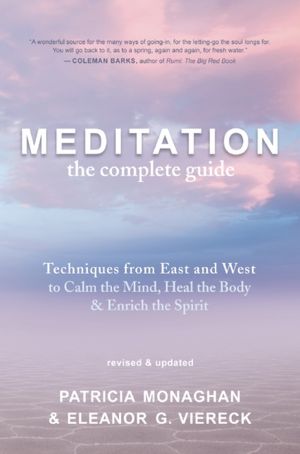
    This is what I most appreciated about Patricia Monaghan’s book, Meditation – The Complete Guide (recently revised and celebrating its 10th anniversary). It’s not a book that lays out a specific, rigid system entailing an hour of consistent daily practice.

    It’s a book that explores 50 different ideas to help us live more fully in the present, including a few that may surprise you.

    From New World Library:

    An easy-to-use self-test on personal habits and preferences directs readers to choose a practice to fit their tastes and circumstances. The authors describe all the major forms of Eastern and Western religious practice—from Christianity, Judaism, and Islam to the traditions of India, Japan, China, and Tibet.

    Readers can explore techniques derived from Asian and African customs or meditations simply found in life practices such as sports, gardening, and creative arts. Meditation – The Complete Guide is designed for all readers, from the beginning meditator to the healing professional, with chapters on practices to heal physically, emotionally, and mentally.

    The Giveaway:

    To enter to win 1 of 2 free copies of Meditation – The Complete Guide:

    • Leave a comment below
    • Tweet: RT @tinybuddha Book Giveaway & Interview: Meditation – The Complete Guide http://bit.ly/rA8af0

    If you don’t have a Twitter account, you can still enter by completing the first step. You can enter until midnight PST on Sunday, December 18th.

    The Interview:

    1. What motivated you to write this book?

    When the American Medical Association accepted meditation as a treatment for hypertension, insomnia, and chronic pain, my co-author and I became aware that many people attempt meditation but then give up.

    In many cases, they attempted a practice that was the wrong “fit” for them for religious, physical or other reasons. We began gathering information about multiple forms of meditation for such people and then found the information could enrich even those who already have a favored meditative practice. (more…)

  • Tiny Wisdom: Little Everyday Challenges

    Tiny Wisdom: Little Everyday Challenges

    “Kites rise highest against the wind, not with it.” –Winston Churchill

    Have you ever purposely chosen to do something you felt resistant to doing? I do this occasionally because I recognize I sometimes limit myself by being inflexible.

    I can be a creature of habit, particularly when it comes to situations that make me feel in control.

    For example, I have one specific spot where I like to sit when I work in the Starbucks near my apartment. It’s right by the window and sufficiently removed from the chaos of the line.

    It’s the best lit spot, and it’s both private and ideal for people-watching, since I can see the entire room and the passersby outside. When this seat is taken, I sometimes feel hesitant to stay.

    Yet I consistently make myself sit and work wherever there is open space, despite my instinct to leave, because this is a mini test in acceptance—and there are many areas of my life where my controlling instinct affects far more than where I work.

    Every time I simply sit wherever there’s space, instead of indulging black and white thinking, I release my rigid grip on the ideal and get better at accepting and making the best of what’s in front of me.

    Not everyone deals with my control issues, but we all have areas where we limit ourselves in life.

    Maybe you avoid certain situations if you think you’ll have to wait because you know you get impatient. Or maybe you steer clear of events where you’d meet new people because you know you’ll feel vulnerable or awkward.

    If you don’t feel the desire to improve in these areas of your life, then by all means do what you always do. But if a part of you wants to feel less limited, you can likely find abundant opportunities to practice doing things differently.

    Life presents us with countless mini tests if we’re willing to take them. Each one is an opportunity to let go of the way we usually react and embrace a new way of being.

    Today I challenge my instinct to be rigid and controlling. What test will you accept today?

    Photo by Ton Haex

  • Tiny Wisdom: We Can Choose Right Now

    Tiny Wisdom: We Can Choose Right Now

    “You are your choices.” -Seneca

    It sounds like such a cliché to say that most of what we’re seeking is already within us, but nonetheless, it’s true.

    Happiness doesn’t only exist in some perfect tomorrow when our circumstances look ideal. It’s a moment-to-moment choice that has to do with how we perceive and respond to what’s in front of us. We can choose happiness right now.

    Peace doesn’t only exist in some time without obstacles or troubles. It’s something we can feel by accepting what is, doing our best, and believing that’s good enough. We can choose peace right now.

    Love doesn’t only exist in a storybook relationship with the perfect person. It’s something we can nurture within ourselves in any moment and then share with the people and the world around us. We can choose love right now.

    Success doesn’t only exist in epic achievement, some day down the road. It’s what we feel when we honor the things that matter to us instead of making excuses why we can’t. We can choose success right now.

    We can choose what we think. We can choose what we believe. We can choose how we react. We can choose how we act.

    This moment is all there is—and while we can’t control everything about it, we can choose who we are and what we do within it.

    What do you choose right now?

    Photo by memsahib 313

  • Tiny Wisdom: How Far We’ve Come

    Tiny Wisdom: How Far We’ve Come

    “Always concentrate on how far you’ve come, rather than how far you have left to go.” -Unknown

    Though I write a lot about mindfulness, focusing on here and now, I think there’s something empowering about looking back and realizing how far we’ve come. I’m not just talking about our big accomplishments. I’m referring to the many tiny personal victories we often achieve without taking time to honor them.

    The other day, after I arrived at my local coffee shop to work, my computer died. No battery, no power from the cord, no explanation—and no backed up files.

    I have an entire unpublished book in my saved documents. Forget for a minute how foolish it was to not have saved this somewhere else. (I know!)

    What mattered to me in that moment was that I did not freak out. I did not catastrophize as if it were a person I love who died, not just a computer. I didn’t need someone else to drive me to Office Max so I could have a panic attack in the passenger seat. At one point, I would have.

    Once upon a time, when anything went wrong, I fell apart.

    Responding calmly, for me, is a huge victory. So I decided to stop and celebrate that, to rejoice in how far I’ve come.

    Life is always going to entail challenges, both expected and unforeseen. We can choose to measure our progress based on the circumstances we’ve improved—the benchmarks, the goals, the professional successes. There’s nothing wrong with recognizing the big external changes we’ve created.

    But we can also celebrate our many personal successes—those times when we respond better and more wisely to a difficult situation than we would have years ago—and in doing so increase our odds of finding a solution.

    My computer wasn’t completely dead. It turns out the battery and the cord both need to be replaced. There was a solution, but I was prepared to accept and deal if there wasn’t one, instead of getting down on myself.

    So today I honor how far I’ve come in maintaining my composure when things go wrong. In what area of your life have you made significant progress, and have you taken time recently to celebrate it?

    Photo by Jan Kromer

  • Tiny Wisdom: Authentic Connections in a Networked World

    “We cannot live only for ourselves. A thousand fibers connect us with our fellow men.” -Herman Melville

    We spend so much time trying to improve ourselves and our lives. Is it possible that maybe we could accomplish those things more effectively if we focused on improving the quality of our relationships?

    This is the question I posed when I spoke at the Wanderlust Yoga and Music Festival this past summer.

    I just received the link to my presentation, Authentic Connections in a Networked World, and I’m excited to share it with you! It’s roughly 20 minutes long, with 10 minutes of Q&A. (Email subscribers, click through to view the video!)

  • Tiny Wisdom: The Success You Actually Want

    Tiny Wisdom: The Success You Actually Want

    “Try not to become a man of success but rather a man of value.” –Albert Einstein

    As I was getting my coffee the other morning, I thought about this article I once read on a popular news site about a man who lost his big corporate job and accepted a barista position at Starbucks.

    When he decided to don a green apron, he’d lost everything in life—including his marriage, his livelihood, and his health. Through his experience in the hospitality industry, he gained a sense of humility and peace, away from the hectic world of professional ambition.

    When I read this article, I remember thinking it was interesting that, as a society, we’re fascinated with people who fall from grace and then learn to love a simpler life—and yet we don’t generally attribute the same awe to people who choose that from the get-go.

    I know many people who’ve chosen to work as waiters and retail sales associates, only to find themselves the recipients of well-intentioned advice from friends who think they should aim higher in life.

    From a very young age, we’re taught to reach for the stars and believe in our potential—and to be careful not to become complacent underachievers.

    We learn that ambition is a sign of self-confidence, competence, and intelligence, and the ultimate indicator of success in life. We also learn to associate a lack of ambition with laziness, aimlessness, and indolence.

    A lifelong blue collar worker, my father once told me that drive is not a measure of worth, and that we all have a right to honor our different temperaments and preferences.

    I had never thought of it this way. I assumed that if I consciously chose to do less, it would mean that I was thinking small, selling myself short, or generally hiding behind fear.

    But maybe he was onto something. We each have the same number of hours in the day to fill—and we have a right to decide what might make them feel valuable and meaningful to us individually. The money and attention those activities generate only dictate our success if we define it that way.

    There’s nothing wrong with wanting to achieve and strive in life. But happiness is generally a byproduct of doing what we genuinely want to do, not what we think we should do based on what we’ve been told.

    Photo by pearlbear

  • Book Giveaway and Interview with Rick Hanson: Develop a Buddha Brain

    Book Giveaway and Interview with Rick Hanson: Develop a Buddha Brain

    Update: The winners for this giveaway have already been chosen. Subscribe to Tiny Buddha for free daily or weekly emails and to learn about future giveaways!

    The Winners:

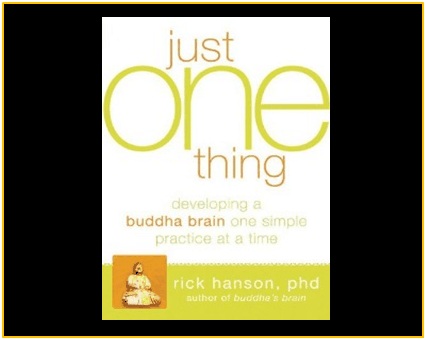
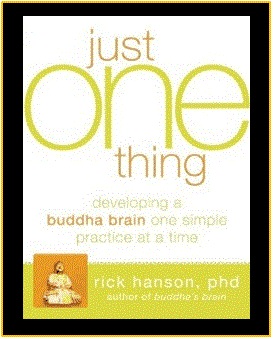
    I read a lot of books about mindfulness; this was by far one of my favorites. In his book Just One Thing: Developing a Buddha Brain One Simple Practice at a Time, Rick Hanson offers practical, daily practices, backed by the latest in brain research, to help us avoid stress, improve our mood, enjoy life more fully, and develop emotional resilience.

    This is not merely a book of mindfulness exercises; it’s a guide that helps us rewire our brains for increased happiness and overall well-being. I highly recommend Just One Thing to anyone who’s felt overwhelmed by disempowering, negative thoughts.

    The Giveaway

    To enter to win 1 of 2 free copies of Just One Thing:

    • Leave a comment below.
    • Tweet: RT @tinybuddha Book Giveaway & Interview with Rick Hanson: Develop a Buddha Brain http://bit.ly/rW3u3N

    If you don’t have a Twitter account, you can still enter by completing the first step. You can enter until midnight PST on Sunday, December 11th.

    The Interview
    1. Your work is based on the idea that meditation and mindfulness can change the brain. Can you expand on this?

    Actually, I’d put this a little more broadly: my work—and that of many other scholars and clinicians—is grounded in the general fact of “experience-dependent neuroplasticity,” which is the capacity of mental activity to change neural structure.

    For example, researchers studied cab drivers who must memorize London’s spaghetti snarl of streets, and at the end of their training their hippocampus—a part of the brain that makes visual-spatial memories—had become thicker: much like exercise, they worked a particular “muscle” in their brain, which built new connections among its neurons.

    Similarly, another study found that long-term mindfulness meditators had thicker cortex in parts of the brain that control attention and tune into one’s body.

    In the saying from the work of the Canadian psychologist, Donald Hebb: “neurons that fire together, wire together.”

    Fleeting thoughts and feelings leave lasting traces in neural structure. Whatever we stimulate in the brain tends to grow stronger over time.

    A traditional saying is that the mind takes the shape it rests upon. The modern update would be that the brain takes its shape from whatever the mind rests upon—for better or worse. The brain is continually changing its structure. The only questions are: Who is doing the changing: oneself or other forces? And are these changes for the better?

    In this larger context, my focus is on how to apply these new scientific findings: how to use the mind to change the brain to change the mind for the better—for psychological healing, personal growth, and (if it’s of interest) deepening spiritual practice. I’m especially interested in: (more…)

  • 9 Reasons to Order the Tiny Buddha Book: Last Day for Bonus Items!

    9 Reasons to Order the Tiny Buddha Book: Last Day for Bonus Items!

    UPDATE: Please note the pre-order promotion for the Peace and Purpose Bonus Pack has now expired now that the book is officially available for purchase.

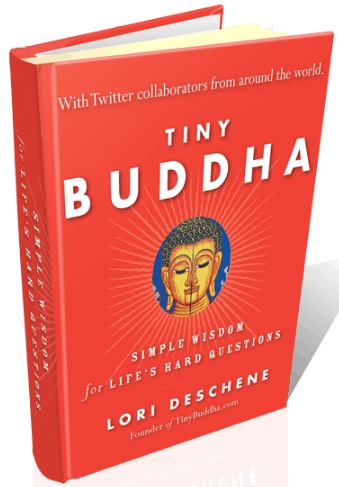
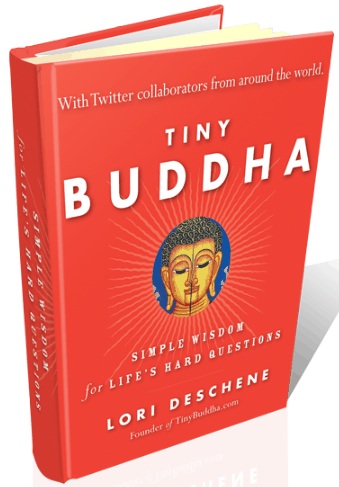
    As you may have noticed from the various ads, tweets, and Facebook updates, I’ve been running a promotional campaign over the past month leading up to today—the official on-sale date for my first book Tiny Buddha: Simple Wisdom for Life’s Hard Questions.

    Thank you for being part of this journey with me! It’s my first book, and there have been lots of lessons and surprises along the way. For example…

    Originally I understood that books would officially ship from Amazon starting today, but it turns out they’ve been shipping over the last week. That means some of you may have already received your books.

    If you did, be sure to forward your confirmation email to bookbonus(AT)tinybuddha(DOT)com to receive the free digital bonus items! I apologize if this wasn’t clear in the email I sent last week (which included the 9 reasons listed below).

    If you’d like to write a review on Amazon, I would greatly appreciate that!

    If you haven’t ordered yet, today (December 8, 2011) is the last day to receive the digital items in the Peace and Purpose Bonus Pack ($150 value) for free.

    For those of you who didn’t receive this email last week, I’d like to share with you these 9 reasons to order Tiny Buddha: Simple Wisdom for Life’s Hard Questions today:

    1. If you pre-order today, you will receive the Peace and Purpose Bonus Pack (a $150 value) for free. I made it a point to include bonus items that support the content in the book, including several workbooks and meditations. This means you won’t receive dozens of long eBooks you likely don’t have time to read. Instead you’ll find useful tools that directly relate to the issues I explored in my book. Please note these files are delivered electronically. To receive them, you need to forward your confirmation email to bookbonus(AT)tinybuddha(DOT)com.

    2. This is the first book of its kind—with tweets woven throughout. Last year, I asked @tinybuddha followers a number of the most challenging questions in life, like:

    • Why is there suffering in the world?
    • What’s the meaning of life?
    • What does it take to be happy?
    • Why are relationships hard?

    Since there are very few concrete answers to the big questions, I wanted to explore many varied perspectives to create a guide of possibilities for joy, purpose, and connection.

    3. Tiny Buddha is honest, candid, and rooted in reality. Although these tweets shaped the book, I also included a great deal of my own struggles, successes, and insights—far more than I’ve ever revealed on the blog.

    From my former battle with depression to my struggles with relationships, I shared how these questions have played out in my own life—and what I’ve learned at each step of the way.

    4. This book includes entirely original content. This is not a compilation of posts from the site. Tiny Buddha: Simple Wisdom for Life’s Hard Questions covers many similar themes and issues, but I was able to explore each topic far more in-depth than I can in any one blog post.

    5. The book includes countless action-oriented tips that you can apply at any time to improve your state of mind. It wouldn’t be a Tiny Buddha book without practical suggestions for healing and happiness.

    6. Tiny Buddha has received wonderful advanced reviews. Neil of 1000 Awesome Things wrote, “There’s nothing tiny about the extra-large dose of awesome stuffed into Lori’s writing. Read it and feel good about the world.” And according to Jonathan Fields, “Tiny Buddha is a moving and insightful synthesis of evocative stories and ancient wisdom applied to modern life. Great read!”

    7. This book makes a great holiday gift. If you know anyone who enjoys Tiny Buddha—or who is searching for meaning and happiness in life—this book would be a great fit. (And it’s somewhat tiny, so it may even fit in a stocking!)

    8. Through this book, you’ll learn a few ideas to:

    • Let go of pain from the past that’s been weighing you down and holding you back
    • Create a sense of purpose, starting right now, even if you’re not doing what you want to do professionally
    • Change habits that have not served you well and open up to new, better ways of being
    • Experience happiness right now, regardless of your circumstances
    • Improve your relationships
    • Seize the moment to live more mindfully, passionately, and fearlessly
    • Find a sense of control and empowerment in an uncertain world

    9. Lastly, you are a part of this book. Even if you didn’t respond to the questions I tweeted on Twitter, you, as part of the community, shaped this book. This is an exciting time for Tiny Buddha, and your involvement played a huge role in making this possible.

    You can order Tiny Buddha: Simple Wisdom for Life’s Hard Questions through Amazon, Barnes & Noble, or a number of independent book sellers. The book will be available in stores by January 1, 2012.

    Thank you for being part of this site. You make a difference, and you’re appreciated!
  • Tiny Wisdom: Let Go

    Tiny Wisdom: Let Go

    “If you let go a little, you will have a little peace. If you let go a lot, you will have a lot of peace.” -Ajahn Chah

    It’s hard to feel peaceful if you dwell on why you should be angry. If you want to feel free, let the story go.

    It’s hard to feel good if you feel like you deserve to feel bad. If you want to feel happy, let your self-judgment go.

    It’s hard to feel satisfied if you feel like everything needs to be perfect. If you want to feel content, let your perfectionism go.

    It’s hard to feel balanced if you like you need to be busy. If you want to feel centered, let the pressure go.

    It’s hard to feel relaxed if you’re clinging to fear or anxiety. If you want to feel at ease, let your worries go.

    It’s hard to feel loved if you mistrust everyone else. If you want to feel connected, let your suspicions go.

    It’s human nature to cling to things that don’t serve us from time to time. But every moment is a new opportunity to let go and be free. Take a deep breath and let go.

    Photo by gtall 1

  • Tiny Wisdom: The Gains in Our Losses

    Tiny Wisdom: The Gains in Our Losses

    “If you learn from a loss you have not lost.” –Austin O’Malley

    Earlier this year I spent dozens of hours and nearly $1,000 on a new feature for this site. Due to some misunderstandings between me, the programmer, and the designer, things didn’t turn out quite how I intended.

    Ultimately, I decided to cut my losses and focus my attention somewhere else. I knew I might revisit this feature down the road, but that would require more time and money, and at first that bothered me.

    I finance the site independently, and I’m not rolling in cash, so it felt like I’d just thrown away resources that I could have used somewhere else.

    It was tempting to dwell on mistakes I had made, and harp on the mistakes that weren’t mine.

    Eventually I realized absolutely nothing good would come from that line of thought—but something good could come from the loss itself. It might not have been the best investment for the site, but it was a solid investment in my education.

    I learned about clarifying my vision upfront, and communicating it to a team. I learned about expressing expectations clearly, and ascertaining that it’s possible to meet them. I also learned a lot about the tech side of things that I previously didn’t know.

    Framed from that perspective, suddenly it didn’t seem like a total loss. If we’re honest with ourselves, I suspect we’ll realize that very few losses are.

    If you lose a relationship you value, you could ascertain that you lost your chance at happiness—or you could decide to learn from that experience to open up to an even healthier relationship in the future.

    If you lose a job you enjoyed, you could decide that you’ll never know that satisfaction again—or you could appreciate the opportunity to start a new adventure with the knowledge and wisdom you gained from your last.

    If, like me, you lose money through an investment that didn’t pan out, you could feel indignant and bitter—or you could learn to make smarter investments in the future so that one short-term loss can ultimately lead to long-term gain.

    From jobs to loves to dreams to hopes, we’ll inevitably lose things we treasure in life. Whether or not we gain something through each experience is entirely up to us.

    Photo by brewbooks

  • Tiny Wisdom: Moving Forward After a Mistake

    Tiny Wisdom: Moving Forward After a Mistake

    “A man’s errors are his portals of discovery.” -James Joyce

    When you were little, did you ever rip up a picture you’d worked really hard on just because you colored a little out of the lines?

    I was that girl; and I had a similar experience this weekend.

    I decided to make lasagna for this potluck party my boyfriend and I were going to host. I don’t cook often, so this felt like a big deal. I got all the ingredients the night before, stacked them on the counter, and then admired them. They were the pieces of my saucy masterpiece to be.

    The next day, I realized I’d made several mistakes, including buying the wrong type of noodles and failing to buy a bowl large enough for the massive cheese concoction.

    Since oven-ready lasagna noodles don’t break easily, I went through an entire box trying to perfectly fill in all the gaps in the pan. When my lasagna ended up looking like the food equivalent of Charlie Brown’s sad Christmas tree, I seriously considered tossing it out, even though there wasn’t time to buy ingredients for another.

    I decided instead to push through my perfectionist instincts because this has been a pattern in my life: start something and quit if I think I’ve messed it up.

    Last week I wrote about the beauty of starting over, but as with everything in life, it’s not universally applicable. Sometimes we need to start fresh, but sometimes we need to keep going, through the messiness and imperfection. I haven’t always done this well.

    When I’ve made huge mistakes with friends, I’ve wanted to hide or bail. When I’ve messed up royally with jobs, I’ve wanted to call in sick or quit.

    It can feel vulnerable to be present in a situation where you feel you’re struggling or not showing yourself in the best light, but this is how we grow: by stretching ourselves through discomfort instead of shutting down.

    This is how we get closer to others, closer to our dreams, and closer to the people who we want to be. It’s how we learn about ourselves and identify areas for improvement.

    Things are going to feel messy and imperfect lots of times in life. We can either resist that and run whenever things feel out of control, or lean into the mistakes and learn from every one.

    Photo by renaissanechambara

  • Tiny Buddha Twitter Party with Jonathan Fields and Gabrielle Bernstein

    Tiny Buddha Twitter Party with Jonathan Fields and Gabrielle Bernstein

    If I lived in a massive house and owned numerous private jets, I would personally fly all of you out to Los Angeles for a party to celebrate the launch of my first book, Tiny Buddha: Simple Wisdom for Life’s Hard Questions.

    But since I only have a $10, a fortune from a cookie, and a button in my wallet, I hope you’ll join me for a Twitter party instead!

    What Is the Tiny Buddha Twitter Party?

    This Thursday, December 8th at 9:00 PM EST/6:00 PST, my friend Karl of Party Biz Connect will host a one-hour teleseminar with me and bestselling authors Jonathan Fields and Gabrielle Bernstein.

    During the call, we’ll explore the themes in my book, Tiny Buddha: Simple Wisdom for Life’s Hard Questions, including purpose, happiness, and relationships. If you’ve been grappling with the big questions in life, this may help you clarify the answers that make sense for you individually.

    How the Twitter Party Works

    • You can listen to the call via phone or Skype and you can chat with other people “at” the party on Twitter
    • Karl (@partybizconnect) will be asking questions for you to answer, and he will award prizes during the party

    If you live outside of the US you can join in via Skype. Click here to find out the details. Once you are on the page click on the little Skype icon on the bottom right. Instructions will pop up for you to follow before you can join us for the party.

    How to Participate

    • On Thursday, December 8th, 2011 at 9:00 PM EST (6:00 PM PST) call 1 (712) 432-0900 and enter this access code: 758266
    • Follow along and play at Tweet GridTwitter Search or Tweet Chat
    • Join the party by tweeting using the hashtag #tinybuddhabook

    The Prizes

    By joining the Twitter party, you could win:

    • 1 of 3 mentoring sessions (I no longer offer consultations or coaching sessions, so this is actually the only current opportunity to speak with me about blogging.)
    • 2 written blog evaluation reports
    • 1 of 5 autographed copies of my book Tiny Buddha, Simple Wisdom for Life’s Hard Questions

    To RSVP

    At the bottom of the Twitter party page on Karl’s site, you will see a spot to RSVP by adding your name and your Twitter URL. Please RSVP if you plan to join!

    Please note that Thursday is the last day to receive the Peace and Purpose Bonus Pack ($150 value) for free by pre-ordering Tiny Buddha: Simple Wisdom for Life’s Hard Questions ($16.95 on Amazon).

  • Tiny Wisdom: The Beauty of Starting Over

    Tiny Wisdom: The Beauty of Starting Over

    “Celebrate endings, for they precede new beginnings.” -Jonathan Lockwood Huie

    Yesterday I spent more than an hour writing something I intended to publish today—and then I lost it. Since I hadn’t slept much the night before, I wasn’t completely attentive and somehow, I must have closed out the Word document before I titled or saved it.

    That same exhaustion made it somewhat difficult to communicate my thoughts clearly when writing. But I did—after an hour, I’d expressed everything I wanted to share. Then it was gone.

    Initially, I considered rewriting the post, and trying to remember exactly what I’d written before. Then I decided that maybe the lesson was to let go and start anew.

    In college, teachers and peers had to fight me to change even one word in my writing, let alone a full sentence. When they did get me to edit, I’d likely only change a small portion, without allowing that new train of thought to further shape the entire piece.

    I was stubbornly attached to every first draft. After putting so much thought and effort into it, I was afraid that making changes would be like picking thread on a sweater—the whole thing would unravel and I would be left with nothing. I would essentially have to start over.

    I eventually realized this tendency translated into my everyday life. Once I set a goal, I was afraid to revise it—even if it became clear that was no longer what I wanted—because I was afraid to start over.

    Once I got into a new relationship, I was afraid to walk away from it—even if wasn’t healthy or satisfying—because I was afraid I’d have to start over.

    Ironically, I wasted a lot of time clinging to things that had run their course simply to avoid feeling like I’d wasted time.

    It’s human nature to get attached when we’ve invested a lot of time in something. But an investment is only as valuable as its return—meaning we owe it to ourselves to recognize when we can get a better one by wiping the slate clean and starting over.

    Letting go can feel like a loss. That’s because it is. But every loss paves the way for a gain, if we’re willing to receive it. Every time we let something go, we open ourselves up to something better.

    Photo by beggs