Author: Lori Deschene

  • Giveaway and Interview: Journey to You by Steve Olsher

    Giveaway and Interview: Journey to You by Steve Olsher

    Update: The winners for this giveaway have already been chosen. Subscribe to Tiny Buddha for free daily or weekly emails and to learn about future giveaways!

    Also, Steve’s team has informed me that you can download the digital version of Journey to You for free by subscribing for his newsletter! You can access that here.

    The winners:

    Have you ever felt like there’s one thing you were born to do, and you’re not doing it?

    This isn’t actually something I’ve thought, because I don’t believe in fate.

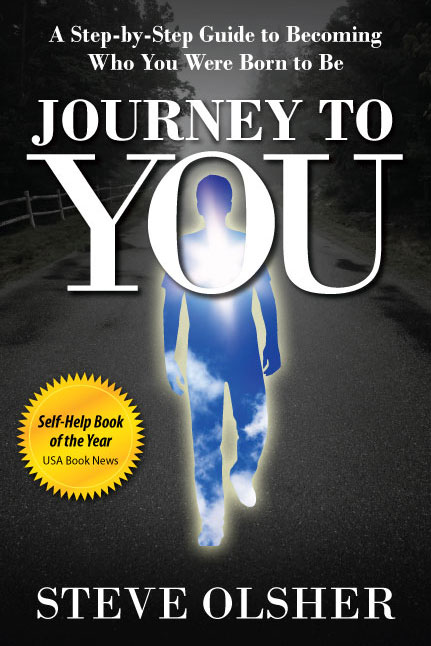
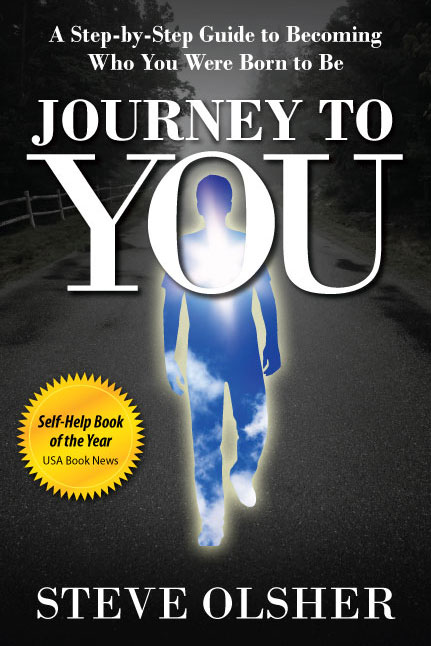
    For this reason, I felt a little reluctant when I recently received an email about Steve Olsher’s bestselling book, Journey to You: A Step by Step Guide to Becoming Who You Were Born to Be.

    Still, a part of me was intrigued. Even though I don’t personally subscribe to the idea that I was born to do one specific thing, I believe there are certain paths that will provide a far greater sense of purpose and fulfillment than others.

    I also believe it can be difficult to identify those paths when we’re out of touch with ourselves, divorced from our instincts, confused about our priorities, and overwhelmed by obstacles.

    I read Journey to You with an open mind, eager to glean insights about living a meaningful, passionate life.

    There were some parts of the book I connected with more than others, but on the whole, I found it to be a highly instructive guide for anyone who is looking to reinvent themselves. Whether you believe in destiny or not, you will likely find some useful tips and tools to help you create a life that gets you excited.

    The Giveaway

    To enter to win 1 of 2 free copies of Journey to You: A Step by Step Guide to Becoming Who You Were Born to Be:

    1. Leave a comment below.

    2. Tweet: RT @tinybuddha GIVEAWAY and Interview: Journey to You http://bit.ly/yy4YlX

    If you don’t have a Twitter account, you can still enter by completing the first step. You can enter until midnight PST on Friday, January 27th.

    The Interview

    1. What inspired you to write Journey to You?

    I wrote Journey to You because of an experience I had with my step-father a number of years ago. He was on his death bed, very sick. The illness that had consumed his body for years had finally taken over and he was in the last days of his life. As I held his hand, I had a vision of my funeral.

    Though he could no longer verbally communicate, I believe he was able to connect with me through that physical connection and was showing me my inevitable fate. I could hear the words being spoken graveside: “Here lies Steve Olsher. He dedicated his life to chasing the almighty dollar.” That’s all that was said.

    It hit me really hard because I’ve always felt like I was meant and made to do something extraordinary, but just couldn’t quite identify what it was. It was certainly clear to my step-father I was heading down the wrong path.

    I faced what I call a YaNo (pronounced YAY-NO) moment. I could choose to go in one of two directions: Either farther away from attaining congruence with who I inherently am; or, down the path that would allow me to honor my inherent blueprint and make a difference in the world not just on those who share this lifetime with me, but also on those of lifetimes to come.

    I chose the latter and began putting pen to paper to share the tips, tools, strategies and shortcuts that had worked well for me in my life with others.

    2. Much of your book is about unlocking the greatness within. Do you believe there is a connection between achievement and greatness or can one be great without pursuing professional success?

    I do not believe the two are mutually exclusive. It is absolutely possible to achieve a high-degree of success while making an extraordinary income doing what it is you’re compelled to do. That said, it does not have to be that way. In other words, you don’t have to necessarily realize what many would define as “greatness” whereby notoriety and professional “success” is achieved in order to have an inordinate impact on our world.

    Mother Teresa is a phenomenal example of this. She absolutely provided comfort, care, and healing to those in need, but was she financially and professionally successful? Certainly not by the common definition. However, I do believe that, from purely a professional standpoint in terms of representing her profession, she was extraordinarily successful.

    Again, you should be paid extraordinarily well for whatever it is you do better and/or uniquely different than anyone else and if money is not your bag, then give it away. But let’s be real—we all have financial obligations. Money is a necessity. And, if you can get by with minimal needs and don’t care for the excess cash, then great—support or start your own charity and help those in need.

    3. You outline a process to help people discover their WHAT—the one vocation we are compelled to pursue. Do you believe that everyone has just one vocation? Or, are there many possibilities that will lead to professional fulfillment?

    I do believe there is just one thing we are each absolutely compelled to do. Now, don’t get me wrong. Your skill can be applied in myriad ways. For instance, you could be a phenomenal communicator, therefore sometimes you’re a writer and other times you’re a speaker. Or, maybe your gift is music and you play as well as compose.

    It’s possible that not only do you play and compose, but you might also teach. After all, teaching leads to being a better player and composer, and also helps generate consistent income. It is certainly not necessary to be stuck within one element of the profession.

    And, as you grow, you’ll realize there are other options that complement what it is you’re compelled to do. The important thing is that it all stays within the general framework of the one area of your life that really makes your soul sing.

    So, sure, there are multiple opportunities to develop professional fulfillment; however, your life and your love for it is going to revolve around one specific area that specifically reflects your WHAT.

    4. You are known as America’s Reinvention Expert. In your experience what have you found are the main reasons people want to reinvent themselves?

    People typically seek to reinvent their lives, number one, as a result of circumstance. Either they are fired, divorced, dissatisfied with their life, realize it’s not what they bargained for, etc.

    Number two, many wake up one morning and say, “There’s got to be something more to this life.” They finally hit the wall and know they want to have a more powerful impact on this world, get paid well for what they’re good at, and may not know exactly what that is or, if they do, are unclear how to bring their gifts to fruition.

    It is often about a shift in perspective. Something happens in their life that dramatically alters their state of mind and they choose to move in a different direction.

    5. In this time of economic uncertainty, many people are struggling just to make ends meet. Do you believe anyone can reinvent themselves from right where they stand or do we need to create a sense of financial stability before we can change careers?

    Fact is, we all have mouths to feed and bills to pay. I’m not one of those people that’s going to sit there and tell you to “Do what you love and the money will follow.” That couldn’t be further from the truth.

    Run away as fast and as far as you can from someone preaching that message, because immediately pursuing your passion without having the financial wherewithal to carry you only leads to your situation becoming dramatically worse. This is not what we want.

    Bottom line, don’t quit your day job. You must be willing to enter the transition. The transition involves being clear as to where you are now, where you’re headed, and begin to take baby steps to get there.

    Think of the transition as a recipe mixture. Right now, 100% of your income is derived from what it is that you don’t want to do and 0% of your income is derived from what you do. Once you take that first step, the recipe mixture starts to shift. So maybe now, its 99.99 parts what you don’t want to do and .01 parts what you do.

    As income is derived from what it is that really stirs your soul, you begin to recognize when you can make the full-on shift. For some, it’s when they’re able to generate 50% of their typical income; for others, maybe it’s 60, 70, or 80%; and, still others won’t be able to make the complete transition until they’re at 100% of their typical income being derived from what it is they’re compelled to do.

    You can try to deny it, but everyone needs financial stability and patience. If you choose to be a brain surgeon, this may mean you’re in a state of transition for 16 years.

    6. Journey To You was honored by USA Book News as the Best Self-Help Book of the Year. Why do you think the book has been so well-received?

    I think the book has been so well-received because it provides a no-holds-barred, cut-to-the-chase, non-flowery approach to creating a life you can be proud of and teaches you specifically how to do it. Too many books out there speak in theoretical terms. Life doesn’t happen in theory. It happens right here and right now.

    Specific steps are required to reach your destination. Few other books provide a step-by-step guide for identifying specifically what it is you’re compelled to do andhow to bring it to fruition. Journey To You provides the reader with poignant, proprietary exercises that helps them discover their WHAT, create a plan of action for making it happen, and doesn’t insult the reader with flowery, woo-hoo prose. I believe this is why the book resonates so well.

    7. What is the main message you hope readers take from the book?

    The main message I hope readers take from the book is that life is organic and constantly evolving. The destination is the road and the journey is the destination. In other words, you are exactly where you’re supposed to be.

    Life starts over right now, right now and right now. It literally starts over every single second of every single day. You can choose to hang onto what’s behind you and drag it kicking and screaming into the present, or choose to move towards what’s in front of you. The key is to move in the direction of specific goals and objectives. Everything behind you is irrelevant and has no bearing or place in your life right now.

    Wayne Dyer said it best: “Everything that happens in life, no matter how painful, eventually leads us to a place of higher value.” My hope is that Journey to You is far from painful and leads the reader to a place of higher value.

    Thank you so much for your time and your attention.

    Learn more about Steve Olsher, “America’s Reinvention Expert” at SteveOlsher.com.


    FTC Disclosure: I receive complimentary books for reviews and interviews on tinybuddha.com, but I am not compensated for writing or obligated to write anything specific. I am an Amazon affiliate, meaning I earn a percentage of all books purchased through the links I provide on this site.
  • Tiny Wisdom: The Tiny Wonders We Take for Granted

    Tiny Wisdom: The Tiny Wonders We Take for Granted

    “There are two ways to live: you can live as if nothing is a miracle, or you can live as if everything is a miracle.” –Albert Einstein

    The other day I started writing in a gratitude journal again, right as I was overcoming a cold. After I wrote my boyfriend’s name, my family, and Tiny Buddha, I wrote “breathing through both nostrils.”

    A few days prior, when my right side was all stuffed up, I wasn’t doing that so well.

    It occurred to me then that when I’d kept a gratitude journal before, I never once expressed by appreciation for the ability to breathe through both sides of my nose—and yet I’ve done that on the vast majority of my days.

    In fact, I’ve likely been able to breathe through both nostrils on over 11,500 days, if you assume I’ve been stuffed up for no more than 10 days during each year of my life.

    It never occurred to me appreciate this because I took it for granted.

    Yet in that moment when I wrote it down, I truly felt a sense of relief and joy about the simple act of breathing properly.

    I wondered then: How many other outlets for gratitude and joy do I ignore on a daily basis? I asked myself:

    How often do you stop to recognize how comfortable your desk chair is? When’s the last time you stared out the sliding glass doors and appreciated that you live in a well-lit space? How regularly do you log onto the Internet and marvel at the wonders of modern technology?

    We live our lives surrounded by tiny wonders. In any given moment, there is a multitude of sounds, sights, and sensations to experience and savor.

    It’s easy to forget these things are gifts, especially when we’re caught up in our heads, dwelling on what went wrong, worrying about what might go wrong, or finding things wrong with ourselves and our circumstances instead of really being present.

    When we’re able to seep into the moment, suddenly we remember how fortunate we are to be here, breathing, sharing this great big beautiful world.

    We’re inevitably going to have dark days, when life feels more like a tragedy than a miracle. But we can trust that when we’re ready to appreciate the light, we’ll find it. It’s always there. It’s everywhere.

    Photo by Wonderlane

  • Tiny Wisdom: When Healthy Crutches Hold Us Back

    Tiny Wisdom: When Healthy Crutches Hold Us Back

    “Happiness can only be found if you free yourself from all other distractions.” -Saul Bellow

    I have had a long-standing love affair with bath tubs.

    I stayed in numerous hostels while completing a semester in Europe; I stayed in hotels in nearly all of the 50 states while touring for work; and I lived in a dozen different apartments in Spokane, Washington, NYC, and the San Francisco Bay Area before moving to Los Angeles last year.

    Through all of my travels, I had the world I dreamed of right outside my door, and yet I was often terrified of exploring it, and engaging with people within it. As a result, I felt utterly alone.

    In those moments, when I felt a deep sense of longing and internal conflict, I’d run the water, melt into the cocoon-like heat, and watch the air fill with steam as I avoided creating clarity around my feelings.

    It took me years to realize I had created a healthy crutch. This wasn’t an addiction or dangerous avoidance tactic—I had those, as well. This was something innocent and harmless, but nonetheless, a way to hide from myself.

    I know lots of people who have their own “healthy crutches.” Some people throw themselves into work or hobbies so they won’t have time to think. Some people consume themselves in helping other people so they don’t have to help themselves.

    None of these things are inherently bad. It’s great to relax and be productive, and the world is a better place when we look out for each other. But it’s our intentions that define our choices. With crutches of any kind, the intention is always the same: to indulge in something pleasant instead of acknowledging something unpleasant.

    It’s only in acknowledging our true intentions that we’re able to understand our needs—and that’s the first step to meeting them.

    I am someone who needs to explore and engage with the world. I need to be curious, and social, and active. I also need plenty of time to simply be, whether I’m meditating in a park or unwinding in the steam that feels like home.

    We all have multifaceted needs, and we all lose touch with them from time to time. This means we have to be willing to check in and ask ourselves: What do I need right now? And am I addressing it or hiding from it?

    Photo by Wonderlane

  • Tiny Wisdom: Our Mistakes May as Well Be Our Own

    Tiny Wisdom: Our Mistakes May as Well Be Our Own

    “Trust your own instinct. Your mistakes might as well be your own, instead of someone else’s.”  -Billy Wilder

    A few months ago, when I was creating my book marketing plan, an associate advised me to allocate resources to something that I felt certain was not a smart idea. He offered a detailed explanation for why I should do it, but I felt strongly that it wasn’t necessary.

    I eventually did as he recommended because he was adamant that I should. Essentially, I decided his instincts were smarter than mine—even though this was new territory for both of us—and simply followed his instructions.

    Sure enough, this investment yielded practically no return, and at first, I felt angry toward him. Why was he so persuasive, I wondered, and why didn’t he offer me additional guidance so that it didn’t end up being a complete waste of money?

    I realized then that I was trying to hold him responsible, when the reality is that I am the only person with the power to follow my instincts and make my choices.

    There are always going to be people who think they know what’s best for us—and many times, they will be well-intentioned.

    There will be family members who think they know which career paths we should pursue. There will be friends who think they know when we should walk away from our relationships. It always seems so clear from the outside, but the reality is no one knows what the future holds and where our choices will lead us—including us.

    No one can know that walking away from one job will ultimately lead to something better. No one can know that ending a relationship will prove wiser than spending time trying to work things out. And no one can change that there is an element of risk in every decision.

    We can either take our risks based on other people’s instincts; or we can take responsibility for out path into uncertainty.

    We can only ever know what feels right for us in a moment—not whether or not it’s the right or wrong choice to create our desired outcome. This means we need to dare to own our decisions.

    We can best navigate twists and turns when we’re fully in the driver’s seat—but in order to do that, we need we have the strength and courage to steer.

    Photo by sharrattsam

  • Giveaway and Interview: Aging as a Spiritual Practice

    Giveaway and Interview: Aging as a Spiritual Practice

    Update: The winners for this giveaway have been chosen. Subscribe to Tiny Buddha to receive free daily or weekly emails and to learn about future giveaways!

    The winners:

    Have you noticed there are certain things you can’t do as easily as you could when you were younger? Have you ever felt resistant to the inevitable changes that come with age? Have you put thought into your own mortality?

    And have you considered that perhaps all of this can contribute to a greater sense of spirituality?

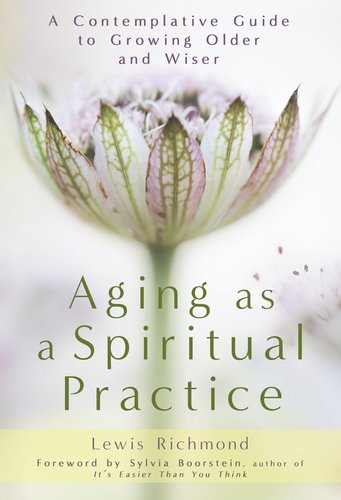
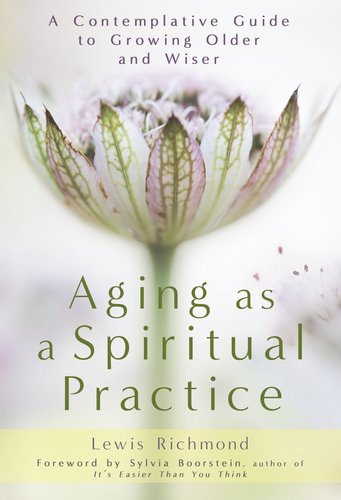
    Buddhist author and teacher Lewis Richmond tackles these questions and more in his book Aging as a Spiritual Practice: A Contemplative Guide to Growing Older and Wiser.

    Although I am in my thirties and not yet approaching my senior years, I was interested to read this book because I often feel this desire to cling to youth, coupled with a fear of what it will be like when it inevitably slips away.

    I appreciated Richmond’s refreshing perspective on the benefits of growing older, and his honesty about his own experiences with illness, aging, and transformation.

    From the book jacket:

    Incorporating illuminating facts from scientific researchers, doctors, and psychologists on aging’s various challenges and rewards; Richmond explores the tandem of maintaining a healthy body and healthy relationships infused with an active spiritual life. Using this information, we can pay attention to our own experience of aging through the lens of our emotions, and adapt accordingly, inspiring opportunities for a joy that transcends age.

    The Giveaway

    To enter to win one of three free copies of Aging as a Spiritual Practice:

    1. Leave a comment below.

    2. Tweet: RT @tinybuddha GIVEAWAY and Interview: Aging as a Spiritual Practice http://bit.ly/wgW7zs

    If you don’t have a Twitter account, you can still enter by completing the first step. You can enter until midnight PST on Friday, January 20th. (more…)

  • Tiny Wisdom: Defining Valuable for Ourselves

    Tiny Wisdom: Defining Valuable for Ourselves

    “Time is the most valuable thing a man can spend.” -Theophrastus

    There are certain things I don’t want to do that I sometimes feel I should.

    Case in point: A lot of people who run blogs similar to Tiny Buddha eventually begin coaching, running seminars, and offering eCourses on personal development.

    Many of them email me with opportunities for partnerships. I respect and admire them. They’re insightful, well-intentioned individuals who are sharing what they’ve learned to make a difference and make a living.

    But the reality is I have no interest in following their lead. I run this site because it fulfills me; and while I appreciate that it helps sustain me, I simply don’t want to spend any of my time teaching, coaching, or running self-help programs.

    I’m happiest when I spend my time writing and engaging in creative pursuits. This is what I know is right for me. Regardless of how much money I can earn by partnering with other people in the personal growth sphere, I know beyond the shadow of a doubt it’s not something I want to do.

    The only question that remains is: How willing am I to honor that knowledge?

    This, I’ve found, is where things can get complicated. It can be tempting to lose focus of what we actually want if we compare ourselves to other people, or start shifting our attention away from the activities we enjoy toward the income we could generate doing something else.

    The irony, however, is that money is not what makes our time feel valuable. It’s the sense that we’re doing what we want to do in the way we want to do it.

    That being said, money is necessary to live, and sometimes we need to take on work we don’t love to make ends meet or get from A to B.

    But once we’re in a place of enough, we’re faced with two options: base our choices on what earns the most; or based them on what feels valuable to us individually. This will be different for everyone, meaning we truly need to own our choices and resist the urge to compete or compare.

    My genuinely happy place might look like your comfort zone; your fully content might look like my inauthentic.

    These are our hours to fill. Only we know what makes them feel valuable—and only we can do something about it.

    Photo here

  • Tiny Wisdom: Someone Has to Open Up First

    Tiny Wisdom: Someone Has to Open Up First

    “Love is not love until love’s vulnerable.” -Theodore Roethke

    Sometimes people submit posts and I swear I could have written them myself. In reading their stories—learning about the emotions they’re feeling and the pain they’re healing—I feel close to them; and I also develop a better understanding of myself and what I need to do to keep growing.

    Other times, I can’t relate to their experiences, but suddenly I feel compassion for behaviors I may formerly have misunderstood.

    This, I believe is the power of vulnerability. When we open up to each other, we invite people to understand us, and let them know we want to understand them. We break down the barriers of judgment and fear and, in doing so feel safe, connected, and supported.

    I came to Tiny Buddha from a far different place. Formerly, I lived in a world where security meant solitude, and connection meant pain. I saw everyone as someone waiting to hurt me, if I didn’t keep my guard up.

    It’s easier to let your guard down when other people do the same. But the reality is someone has to go first. Intimacy doesn’t happen spontaneously. It’s something we have to create by choosing to be authentic.

    That can be a scary thing—especially since we never know how we’ll be received when we put ourselves out there, or if other people will respond in kind.

    Over the past few years, I’ve put a lot of effort into building solid friendships. This is something that’s always been challenging for me; or perhaps more accurately, something I always made difficult. Sometimes I tried too hard, or created drama, or pushed people away.

    I wanted so badly to be loved and accepted, but in my fear of not receiving that, I set myself up to be feared and rejected.

    I know now that meaningful, intimate relationships start when someone dares to be genuine; and that happiness is accepting the possibility of rejection and choosing not to reject ourselves in response.

    My genuine truth is that I would prefer to live in a world where everyone else let their guard down first.

    But if intimacy is seeing ourselves in each other, maybe it starts with understanding that other people may feel that way too.

    Today I commit to going first—both to give love and acceptance and create the possibility of receiving them. Will you?

    Photo by Christian Haugen

  • Tiny Wisdom: Asking Ourselves the Right Questions

    Tiny Wisdom: Asking Ourselves the Right Questions

    “Sometimes questions are more important than answers.” -Nancy Willard

    A friend of mine once told me she frequently asked herself, “When is the other shoe going to drop?”

    Whenever things were going well for her, she braced herself for an impending fall so that it wouldn’t be too devastating when things changed, as they often do.

    Despite her intentions, this didn’t protect her from pain; it just kept her from fully enjoying what might have been some of the most fulfilling experiences of her life.

    I realized then that I was also living my life around fearful, defeatist questions.

    What if I never find love? What if I don’t have what it takes? What if I messed up my one big chance?

    They always danced around fears of uncertainty and inadequacy—and because they frequently dominated my thoughts, I consistently acted from a tense, frightened place. These questions felt like self-preservation, when really they were emotional self-mutilation.

    And they repeatedly instigated a self-fulfilling prophecy. When you frequently look for answers to questions about worst case scenarios, you tend to find them, real or imagined.

    It reminds of this time I read about a woman who feared for years that she had cancer, even though she had no symptoms and doctors saw no medical proof to corroborate her suspicions. Many years later, when she received a cancer diagnosis, she said she almost felt relief because she finally knew she was right.

    She attached to her panic over the potential for sickness, and in doing so began suffering long before there was a physical cause.

    We can’t change that some things might not last, and things might happen that we wouldn’t have chosen. But the reality is there are just as many positive possibilities as there are negative ones.

    We get to choose where we focus our energy—whether we dwell on everything that might go wrong, or imagine everything that could go right. What we think dictates what we’ll do, and that plays a big role in what we create.

    It all starts with asking ourselves the right questions. What are those? I don’t know—I don’t have all the answers. But I can tell you mine:

    What if I let myself enjoy this moment? How can I appreciate myself and other people in action today? What’s good around me, and how can I contribute to it?

    Photo by Wonderlane

  • 3 More Days to Enter the Life’s Hard Questions Contest to Win a DSLR Camera or Kindle

    3 More Days to Enter the Life’s Hard Questions Contest to Win a DSLR Camera or Kindle

    Two months back, I thought of a fun, creative contest that I’d enjoy running in conjunction with my book promotion efforts. In case you haven’t seen the million and one links all around the site, I recently launched my first book, Tiny Buddha: Simple Wisdom for Life’s Hard Questions.

    Incorporating nearly 200 tweets from the community on pain, meaning, fate, happiness, love, and more, the book includes some of my own experiences in overcoming depression and creating joy and purpose, along with insights and suggestions from wise teachers throughout time.

    It’s a book that acknowledges that much is uncertain in life, but also offers practical ideas to live in the moment, be the people we want to be, and live the lives we want to lead.

    Since at its core, the book is about addressing the questions that don’t have concrete, one-size-fits-all answers, I created The Life’s Hard Questions photo contest to further advance this conversation.

    To make it even more exciting, I decided to offer a wide range of prizes, including:

    • 1 Canon DSLR Camera
    • 2 Kindle eReaders
    • 10 copies of my book

    The contest ends on January 15, 2012, which means there are just a few more days to get involved.

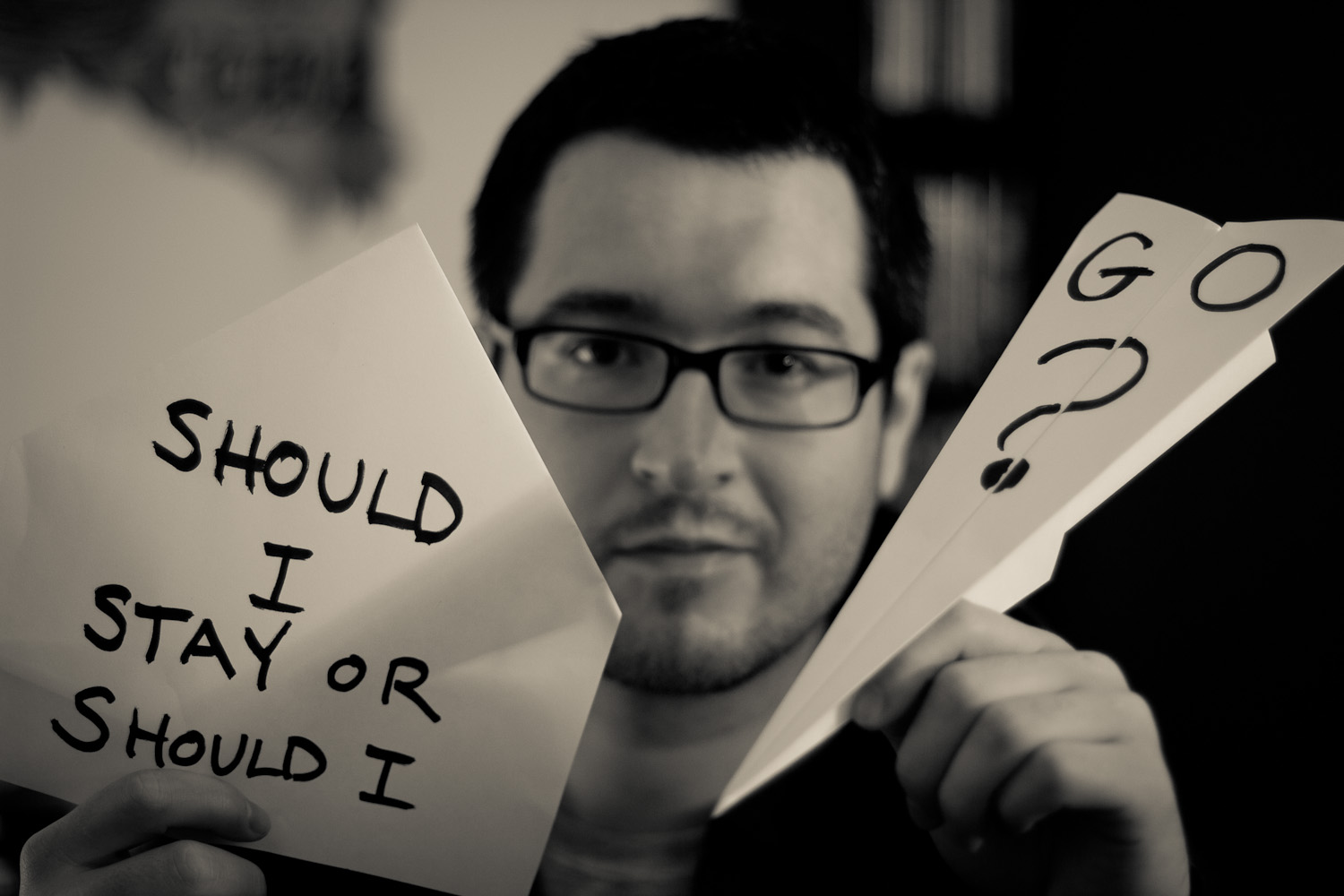
    To do that, all you need to do is share a photo of yourself somehow displaying the hardest question in your life.

    There’s a whole photo gallery with more than 100 submissions if you’d like to see what other people have done. Bonus points for anyone who thinks of a creative shot, not using Photoshop to share the question!

    You can find the official contest rules on the site, but just a few guidelines in advance:

    • The photo cannot show any people other than yourself, nudity, or profanity
    • It can only contain a question (as opposed to a statement and a question)
    • The question needs to be large and dark enough to be legible from the slideshow
    • The question cannot be sarcastic in nature
    • The photo cannot be blurred, painted, otherwise enhanced using Photoshop effects

    If you’d like to add your photo to slideshow and enter the contest, use the upload form here. One of the kindles will go to the most creative shot—the other prizes are by random drawing. I will announce the winners at the end of the month.

    Here are a few shots to get your creative juices flowing: (more…)

  • Tiny Wisdom: What You Need to Give Yourself

    Tiny Wisdom: What You Need to Give Yourself

    “Man stands in his own shadow and wonders why it’s dark.” -Zen Proverb

    I’ve recognized that I come to my computer to write for one of two reasons:

    Either I feel the need to explore something that’s relevant to my life, and in doing so, start a conversation about it; or there’s something bothering me that I haven’t fully addressed, and I’m hoping the conversation will make me feel better about it.

    Last week an old friend wrote to congratulate me on my book. She started the email by joking that she wouldn’t “sell my secrets if the tabloids called.”

    Though I doubt she was referring to anything specific, this struck a nerve with me because I’ve shared a lot of my personal experiences, but there are some stories I haven’t told.

    Some of them I’ve worked through and simply don’t want to share; others I haven’t completely addressed, and I’m still working through them privately.

    After I read her email, I started to write a post about the difference between authenticity and transparency. I realized three paragraphs in that my sole intention was to receive confirmation that I am not a fraud for keeping certain things to myself.

    So I decided to sit with this, and give myself the reassurance and acceptance I hoped you’d give me.

    I realized then that this same idea applies in everyday life, as we engage with other people and, consciously or unconsciously, look to them to give us what we’re not giving ourselves.

    If we’re feeling down on ourselves, we may look to other people to validate us. If we’re feeling drained, we might look to other people to give us permission to take a break.

    If they don’t give us what we need, we can end up feeling frustrated, and direct that at them. Ironically, even when people say what we think we want to hear, it tends to fall flat if we don’t truly believe they’re right.

    What makes it all the more complicated is that we don’t often realize we’re doing this. It’s far more comfortable to search outside than it is to look within.

    But if we want to fully feel the warmth of light, we need to first access our own. That starts with asking ourselves: What do I really need—and how can I give it to myself?

    Photo by Wonderlane

  • Tiny Wisdom: It Starts with Believing

    Tiny Wisdom: It Starts with Believing

    “Your belief determines your action and your action determines your results, but first you have to believe.” -Mark Victor Hansen

    In my early 20s, I got involved with a pyramid scheme that I mistook for an ethical company.

    I didn’t realize it at first, but most people were only pretending to make money because they believed they eventually would.

    Since the revenue came mostly from attracting new recruits, the head of my young team had rented out an office suite, largely to establish a sense of credibility. This made it look less like a risky network marketing business, and more like a lucrative career path. Of course, I didn’t realize this at the time. I wanted to believe, so I did.

    On one of my first days after joining, right before a scheduled presentation with 30 potential recruits, we got kicked out of our office because of a dispute with the rent.

    In that moment, I had this vision of our entire 40+ person team setting up shop in the tiny Starbucks downstairs. I grabbed all the marketing materials and overflowed with earnest enthusiasm as I told everyone, “We don’t need an office. We just need to bring our heads and our hearts!”

    In the movies, this kind of thing always seems to work. Things fall apart, and yet they somehow come together simply because people care, they’re determined, and they find a way.

    I learned from this scenario that we need to be discerning about what we choose to believe, and clear about why we care. But I also realized that it isn’t naive to believe we can create miracles when we recognize our passion is our greatest asset.

    In most situations, it’s not smoke and mirrors that create the magic—it truly is the people who believe in it and as a result never consider giving up on it. People run the companies. People create the brands. People change the world.

    People just like you and me. It’s not a fancy office that does it. It’s not a massive paycheck. It’s not even the best laid business plans.

    When it comes to building anything worthwhile, it starts with a willingness to believe in ourselves, each other, and what we can create when we have good intentions and keep going.

    Photo by Scottfeldstein

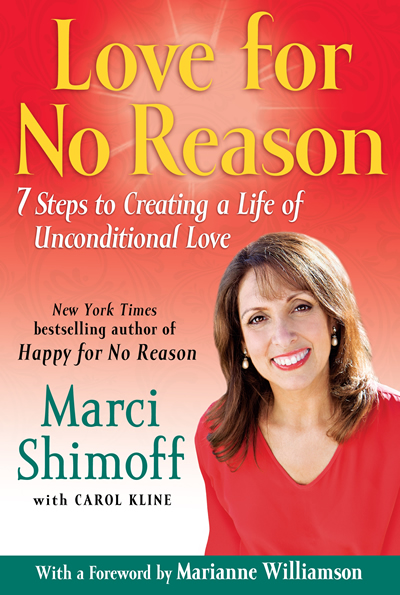
  • Interview and Giveaway: Love for No Reason by Marci Shimoff

    Interview and Giveaway: Love for No Reason by Marci Shimoff

    Update: The winners for this giveaway have been chosen. Subscribe to Tiny Buddha to receive free daily or weekly emails and to learn about future giveaways!

    The winners:

    You know that open-hearted, safe feeling of being in the presence of someone you love and trust? Have you ever wondered if you could bottle that and feel it later, when you were alone?

    What about that connected, fulfilled feeling of loving someone else passionately and unconditionally? Have you ever wondered if you could sustain that whether you were in a relationship or not?

    Bestselling author Marci Shimoff (who also wrote six books in the Chicken Soup for the Soul series) explores this possibility in her new book, Love for No Reason—and it’s not just a feel-good idea. It’s backed by scientific research, and its instantly applicable, thanks to Marci’s practical, specific guidance.

    Love for No Reason is for anyone who wants to:

    • Open their heart and become a magnet for love
    • Enjoy more fulfilling relationships with others and themselves
    • Turn off their body’s stress response and turn on their body’s love response for better health and well-being
    • Experience more success and satisfaction
    • Transform their family, community, and the world

    I’m grateful that Marci took the time to answer some questions, and also that she is giving away 2 free copies of her book.

    The Giveaway

    To enter the giveaway:

    1. Leave a comment below noting if you’ve ever felt “love for no reason,” and if so, when you felt it most recently.

    2. Tweet: RT @tinybuddha GIVEAWAY and Interview: Love for No Reason http://bit.ly/yfA8bX

    If you don’t have a Twitter account, you can still enter by completing the first step. You can enter until midnight PST on Friday, January 13th.

    The Interview

    1. What inspired you to write Love for No Reason?

    When I finished writing Happy for No Reason, I’d definitely gotten much happier. But I knew there was still something I wanted that was beyond happiness—and that something was Love.  (more…)

  • Tiny Wisdom: Learning from Pain from the Past

    Tiny Wisdom: Learning from Pain from the Past

    “Wisdom is nothing more than healed pain.” –Robert Gary Lee

    In a college acting class, my teacher had my peers surround me in a circle so that I could toss my body in various directions, while improvising a scene based on my past. She did this because I had no access to my feelings about certain events.

    I could recount the most painful events in my life without a shred of actual emotion—which meant that I was often play-acting when I got into another character’s head, because in many ways, I was shut down.

    When I’d thrust myself at another student, she’d push me across the circle to another one who would push me to someone else, and this would stir something in me. I’d start to feel angry, and agitated, and alive—things I didn’t feel very often back then.

    I’d slowly start reliving the moments that hardened me, and actually connecting with the feelings they inspired. That circle of people felt both harsh and safe, because I was both terrified and desperate to go back—to understand what hurt me so that I could heal.

    Not everyone has trauma in their past, but we’ve all been hurt before–and it can be tempting to move on without every really addressing it. It’s not always comfortable to look backwards, and many times we convince ourselves it’s smart not to do it since life happens in the now. But we can only thrive in this moment if we understand and work through the emotions we avoided to survive in the past.

    We can only address what keeps us stuck if we understand why it feels safe that way—what we gain by ignoring what happened—and then recognize that we gain far more by working through it, learning from it, and then making smart choices based on what we learned.

    We have an amazing ability to lie to ourselves—to say that we’ve moved on when we haven’t, and to say that we’re fine when we’re not. We may even convince ourselves these things are true.

    But if we want to truly let go and feel free, we need to create that circle for ourselves—to address whatever hurt us before and why and how it did—so that we don’t just forget about the past; we shape the future with the wisdom we’ve gained from having lived it.

    Photo by zeze57

  • Tiny Wisdom: When Enough Is Better Than More

    Tiny Wisdom: When Enough Is Better Than More

    “If you concentrate on what you don’t have, you will never, ever have enough.” -Oprah Winfrey

    When I’m not working on Tiny Buddha, I write for ‘tween girls, both as a contributor for a magazine and a ghost writer for a website.
    Recently, I wrote several blog posts about the holiday season. One girl commented that she was excited to have received a $50 gift card and a few clothing items.

    Everything changed for her when she read that another girl received a $500 gift card and an iPad, among other presents. Suddenly her gifts seemed completely inadequate.

    While there’s a lesson in here about our consumer culture, and its effects on our children (the collective “our” since I don’t even have pets, let alone kids), this got me thinking about the comparison game we often play as adults.

    It can be challenging to identify what we believe is enough and then feel satisfied with that if we consistently weigh our choices against other people’s.

    In my book, I referenced some research that reveals we often adjust our spending based on the earners just above us, whether we can afford to or not. When the rich get richer and buy bigger houses, the earners just below them feel the need to go bigger—and this cascades down the economic ladder.

    We end up with a lot of people buying houses farther away from work to get more value for their dollar, commuting longer hours, borrowing more, saving less, and spending beyond their means—which ultimately can decrease our overall life satisfaction. It’s largely because of that instinct to “keep up with the Jonses.” Not doing so can feel like defeat.

    But is it really? What does it mean to succeed—to fill a life with things based on what other people think they need, or to fill our time with experiences based on what we truly want?

    I’m not going to suggest we stop comparing ourselves to other people, because I prefer to work with human nature than against it. But maybe the trick is to be mindful of what we’re comparing, so it’s less about having the same things as people we imagine are happy, and more about making similar choices to people who truly are.

    Those choices rarely have to do with anxiously chasing bigger and better in tomorrow, and everything to do with peacefully creating and appreciating enough today.

    Photo by Mala Imports

  • Tiny Wisdom: The Fear of Spending Too Much Money

    Tiny Wisdom: The Fear of Spending Too Much Money

    “The use of money is all the advantage there is in having it.” –Benjamin Franklin

    I just came back from the dentist where I learned I need $1,400 worth of dental work, and it’s largely because I failed to make a $100 investment last year.

    My former dentist had informed me my teeth were worn down from me grinding them in my sleep. She’d suggested I purchase a customized mouth guard, which would run from $100–500, depending on the quality.

    I decided to spend $30 at CVS instead, because I enjoy spending as little as possible and, as a result, I often finds ways to cut corners. It’s not because I don’t have money; it’s just because I prefer saving it.

    Ultimately, wearing this ill-fitting mouth guard turned out to be an expensive decision, because it kept my mouth slightly open, which dried it out each night—and saliva is something that prevents tooth decay and protects us from cavities, of which I now have eight.

    Have you ever decided to go with the lowest cost contractor—maybe for work on your house or your website—only to find you got what you paid for?

    Have you ever opted to go without health insurance because you assumed you wouldn’t need it, only to find that health is fragile?

    Have you ever bought the cheapest possible furniture, only to realize spending just a little more would have made a big difference in your enjoyment of your space?

    Or how about this: Have you ever talked yourself out of a dream because it would require a financial risk?

    These are all things I have done—sometimes to save a little, and other times to save a lot.

    It seems contrary to conventional wisdom to suggest that not spending can be an emotional decision, but it can be exactly that—a choice to skimp on something necessary or useful in fear there won’t be enough down the road.

    This scarcity mindset can prevent us from rationally weighing the options when a moderate expense now can prevent a major one later—or even make us money in the long run.

    If you’re someone who spends freely without fear, this lesson may not resonate with you, but for those who can relate: less is not always more.

    Sometimes we need to invest in ourselves or our future. As long as we’re not spending recklessly, we can trust this truly is the wisest choice.

    Photo by sherrattsam

  • Interview and Giveaway: Six Simple Rules for a Better Life

    Interview and Giveaway: Six Simple Rules for a Better Life

    Note: This winners for this giveaway have already been chosen. Subscribe to Tiny Buddha for free daily or weekly emails and to learn about future giveaways!

    The Winners:

    It’s often occurred to me that the most important components of my peace and happiness are actually quite simple. When I start feeling overwhelmed or unbalanced, it’s generally because I’ve complicated things and lost touch with what truly matters.

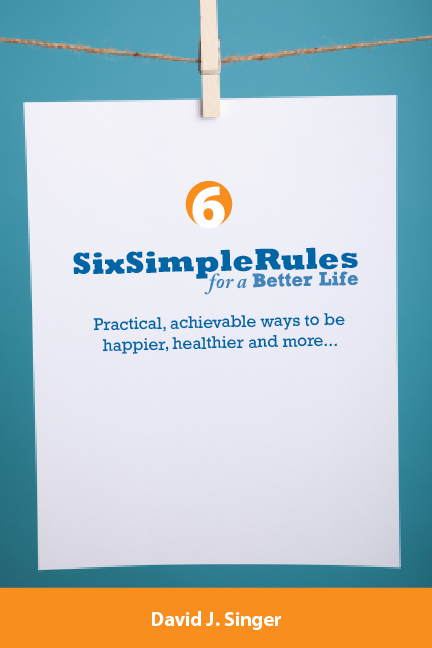
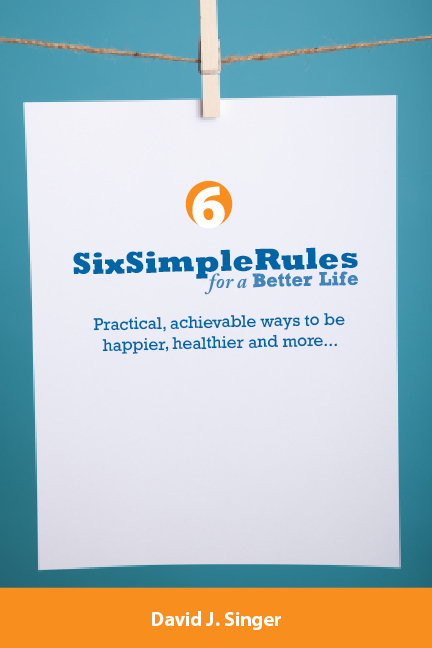
    This is precisely why I loved reading David J. Singer’s book Six Simple Rules for a Better Life: it offers practical wisdom by focusing on the simplest of ideas—which we nonetheless forget at times—and includes concrete suggestions to make incremental change across multiple areas of our lives.

    David writes in a warm, down-to-earth tone, and shares his experiences, insights, and, most importantly, his humanity with candor, which makes the book easily digestible and accessible.

    I’m excited to share a little about David and Six Simple Rules for a Better Life, and also offer two free autographed copies.

    The Giveaway

    1. Leave a comment below, noting one “rule” or guideline that you’ve adopted for your health and happiness.

    2. Tweet: RT @tinybuddha GIVEAWAY and Interview: Six Simple Rules for a Better Life http://bit.ly/x0zZM4

    If you don’t have a Twitter account, you can still enter by completing the first step. You can enter until midnight PST on Friday, January 6th. (more…)

  • Tiny Wisdom: Creating Perfect Plans

    Tiny Wisdom: Creating Perfect Plans

    “Expect the best, plan for the worst, and prepare to be surprised.” -Denis Waitley

    The other day I was watching reruns of a show I’ve recently found and now love. In one scene, the main character talked about the “perfect moment” that never came to be—an isolated point in time when things would have worked exactly as he imagined they would, and as a result, there would only be positive consequences to his choices.

    This got me thinking about my own instinct to create perfect moments according to what I’ve visualized—and also the times when I’ve been part of other people’s plans.

    In high school, I reconnected with an old friend from junior high, who’d also been bullied back then. I was going through a lot emotionally and wasn’t in a place to date him. He told me he was disappointed because he “wanted me for his senior year.”

    He had a specific vision of me being the one on his arm at the prom. It wasn’t just about being with me; it was about being with me in a very specific way.

    I’ve done the exact same thing at times. I know I want to have children—but in an ideal world, I’d have them in the next two years, and I’d have created a situation that allows me to spend equal time on the east and west coasts, to be close to family in both places. I realize, however, that in two years time, I may not have created those conditions.

    Life doesn’t always work out in the way we imagine would be ideal. We can either resist that, feeling crushed when we don’t get exactly what we wanted, or accept reality at every step of the way and adapt to make the best of what we get.

    We’re often advised to visualize the future in specific detail so that we may create it; to see in our heads the environment, the people, and the situations we want to manifest. This can be a powerful exercise because it helps us get clear about what we really want.

    It will be a far more effective practice, though, if we remember that what we really want isn’t the perfect moment—it’s happiness from moment to moment. That comes from choosing to embrace and work with what is, instead of bemoaning and fighting it.

    Photo by magical-world

  • Tiny Wisdom: What Unmet Expectations Mean

    Tiny Wisdom: What Unmet Expectations Mean

    “Anger always comes from frustrated expectations.” -Elliott Larson

    Before I left for my two-week holiday family visit, I asked my boyfriend to wash our sheets before I returned. I hoped to come home to a clean, organized apartment, with everything as I left it. That is not, however, how things panned out. Instead, I came home to a somewhat disorganized space and a pile of dirty towels—along with an empty refrigerator.

    My boyfriend told me he’d been busy, and he didn’t have time to do all the laundry or go food shopping. I translated “I didn’t have time” to mean “I assumed you’d do it when you got back.”

    At first, I felt annoyed. I thought, “I wouldn’t leave laundry for you,” “I would have bought at least some staples in case you were hungry,” and a few other righteous gripes about his domestic shortcomings.

    I was going to let him know it’s not okay to take me for granted, but then I realized something: I was assuming his actions meant that, when they may, in fact, have only meant exactly what he said—that he got backed up and didn’t have time.

    So instead of expressing my dissatisfaction with the expectations he didn’t meet, I expressed exactly what I felt: “When you say you don’t have time to do things around the house, I sometimes assume you expect that I will do them.”

    He responded, “I don’t expect that at all. I expected I would do them later tonight. I know you’re busy too.”

    This right here, I suspect, is the cause of most conflict in relationships: one person does something or doesn’t do something, and the other makes assumptions about what it means.

    I have done it many times before—assumed the worst in someone I love because they didn’t do what I would do. But this rationale fails to consider that other people have different ways of doing things, and they have no idea what meanings we’ll assign when they choose to do things their way.

    They also can’t know precisely what we expect unless we express it. I asked my boyfriend to wash the sheets, and he did. But more importantly, he’s a thoughtful, considerate person on the whole, and this one incident was not a big deal in the grand scheme of things.

    We have a right to communicate when we feel hurt or offended, but maybe love is learning to be hurt and offended less often. The people we care about are generally doing their best—love is recognizing that instead of assuming the worst.

    *I added this to the comments, and I decided to add it here: For anyone reading this who feels an overall sense of over-compromising–and as a result sacrificing their needs and losing touch with their values–please know this post is not for you.  This post is for anyone who, like me, is in a happy, healthy relationship, romantic or otherwise, but gets annoyed by little unmet expectations here and there. 

    Photo by torbakhopper

  • Tiny Wisdom: Thanking Your Former Self

    Tiny Wisdom: Thanking Your Former Self

    “Give thanks for a little and you will find a lot.” –Hausa Proverb

    Last year, someone asked me in an interview what I’d say to myself, from 10 years ago, if I could meet that person now. I said something along the lines of, “Be good to yourself—you’re doing the best you can.”

    She then asked what I’d say to myself 50 years in the future, if I could meet that version of me now. I answered that, to that Lori, I would say, “Thank you.”

    I realized after the fact that I thanked my 80 year old self because that version of me would have presumably done everything I wanted to do in this world, and using the wisdom I gave younger me, she would hopefully have done it being good to herself.

    But I recognized that it was equally important to thank myself at each step of the way—regardless of what I did, and even when I stumbled. Why? Because I was doing the best I can, and that is something worth recognizing and appreciating, not just in hindsight, but right now.

    This is the time of year when many of us look back at the 365 days past and measure how much we’ve accomplished—and then look into the next 365 to detail everything we’d like to achieve.

    There’s nothing wrong with making goals; in fact, I’m a huge proponent. But as we go into the next year, I invite you to join me in thanking the “us” from 2011—not just for the things we’ve crossed off our to-do and bucket lists, but for all the courage, passion, strength, and just plain good-heartedness we demonstrated.

    Here is my list of “Thank yous” to me:

    • Thank you for growing a little every day.
    • Thank you for forgiving yourself when you stumbled.
    • Thank you for loving fully and vulnerably.
    • Thank you for trying new things, even when you felt scared.
    • Thank you for cutting yourself some slack when you did nothing because you were scared.
    • Thank you for using the wisdom you gained, instead of just acquiring knowledge.
    • Thank you for taking care of yourself, physically, mentally, and emotionally, more often than not.
    • Thank you for loving yourself, regardless of what you achieved.

    What would you thank the “2011 you” for?

    Photo by pdxap

  • Tiny Buddha Book Giveaway and Top 10 Insights of 2011

    Tiny Buddha Book Giveaway and Top 10 Insights of 2011

    Tiny Buddha Chilling on a Cairn

    Important Note: The winners for this giveaway have already been chosen! You can purchase Tiny Buddha: Simple Wisdom for Life’s Hard Questions on Amazon.com. Also, be sure to subscribe to Tiny Buddha for free daily or weekly emails!

    The winners:

    Happy almost 2012!

    It’s been an exciting year for Tiny Buddha. For one thing, the community has grown, but what I find most exciting is that the number of people sharing their stories and engaging with other people has increased exponentially.

    During the first year, I published two posts from the community per week. In January of 2011, submissions slowed down, and I wondered if perhaps I’d need to take a new direction with the blog.

    In February, however, that all changed, and posts started coming in so frequently that I was able to publish one per day, and oftentimes had to ask people to hold off on submitting so that I could catch up.

    That has remained steady all year, and I’m excited to see that countless insightful, helpful, loving conversations have unfolded in the comments, some which included me and others that did not.

    Tiny Buddha is what it is because people are willing to be honest about their experiences, and in doing so help others and let them know they are not alone. If you haven’t already, I hope you’ll contribute a post in 2012!

    I have learned so much from everyone who has shared themselves here. So here are the top 10 insights of 2011 (based on page views and comments): (more…)