Author: Lori Deschene

  • Tiny Wisdom: It’s Good Enough

    Tiny Wisdom: It’s Good Enough

    “Good enough is the new perfect.” -Becky Beaupre Gillespie

    Sometimes we hone in on everything we think we’re lacking or doing wrong, and wonder what we need to fix or change to measure up. Then we judge ourselves at each step of the way, questioning whether or not we’re doing everything we should.

    This has been true for me, and sometimes it still is.

    Whenever I feel stressed out, it’s usually because I’m worrying about something I did or have to do, convincing myself I could have done better or I won’t do enough.

    It’s a mental soundtrack I know all too well: You could have done more. You should have done more. You need to do more. You need to be more.

    Other people may occasionally make us feel like we’re somehow falling short, but more often than not when we feel anxious, we’re suffocating under the weight or our own perfectionist expectations and fears.

    It’s exhausting, and sometimes paralyzing, but we have the power to change it.

    We have the power to stop, take a breath, and tell ourselves:

    The passion I put into my work today—it’s good enough.

    The effort I put into my dreams today—it’s good enough.

    The thought I put into my connections—it’s good enough.

    The time I took to do for the people I love—it’s good enough.

    The attempt I made at reaching outside my comfort zone—it’s good enough.

    The work I did for my own growth and healing—it’s good enough.

    And if we feel that any of this is disingenuous—like we made excuses and held ourselves back—we can still give ourselves credit for what we did right and then commit to doing a little more tomorrow.

    We’re all doing the best we can with where we are on each given day. If we’re willing to believe it, our best is good enough.

    Photo by Mark Mcwizard

  • Tiny Wisdom: Fear Is a Challenge to Be Brave

    Tiny Wisdom: Fear Is a Challenge to Be Brave

    “I learned that courage was not the absence of fear, but the triumph over it.” -Nelson Mandela

    Yesterday, after months of anticipation that included procuring pre-existing condition health insurance and finding the right doctor, I finally met with a physician who will soon schedule me for surgery.

    Though I’ve had procedures before, this will be my first major operation.

    Starting when I was 18, I got my belly button pierced on three separate occasions only to take it out shortly after each time. I loved the idea of it, but I felt a little nauseous when I thought about having a metal ring inside my stomach.

    It didn’t belong there; it was a foreign object, much like surgical instruments. What also don’t belong there are the grapefruit- and plum-sized fibroids (benign tumors) growing inside my uterus wall.

    Though they don’t pose a major risk to my health, they cause me a lot of discomfort. I would have let them saw me in half, like a magician’s assistant in a box, if it meant getting these things out.

    And yet I am completely terrified.

    I am terrified of having someone cut into one of my organs. I’m terrified of going under general anesthesia. I’m terrified of anything that could go wrong—including complications that might compromise my fertility or the possibility of contracting some kind of hospital infection.

    I am scared, and it feels liberating to simply admit it.

    It’s not something I need anyone to fix or take away. It’s not the result of ignorance, soon to be soothed by statistics and additional information. It’s not something I need to run from, hide, or transform into something more positive. It just is.

    Author Susan Jeffers wrote, “Feel the fear and do it anyway.” But sometimes there’s nothing we can do but wait.

    Whether you’re six weeks away from surgery, or six months away from losing your home, or six years away from your children leaving your house, the future contains limitless possibilities for challenges—some we can anticipate and others we don’t yet know to predict.

    Sometimes it serves us to transform our fear into something productive, when it comes to pushing beyond our comfort zone, for example.

    But sometimes the most useful thing we can do is sit with fear—to acknowledge it, humble ourselves before it, and then accept its challenge to be brave in each moment, as it comes.

    Photo by clayirving

  • Tiny Wisdom: Cling Less, Enjoy More

    Tiny Wisdom: Cling Less, Enjoy More

    “Most of our troubles are due to our passionate desire for and attachment to things that we misapprehend as enduring entities.” ~Dalai Lama

    My boyfriend and I spent a couple of days in Las Vegas for Valentine’s Day. These days I get excited about the buffets and shows, but formerly, I found the city a little depressing.

    First, I felt sad for the people who seemed a little lost, either for having lost vast quantities of money, or for having lost a part of themselves (something I know all too well).

    Secondly, I felt the inevitable crash that follows overstimulation and excess of any kind. (I had a love/hate relationship with both).

    But there was more to it than that. When I first went to Vegas years back, I felt like I was standing smack dab in the middle of a lifestyle I couldn’t afford. Amid the sea of tight designer dresses, in my cheap, modest clothes, I feared I looked out of place.

    I also found the luxurious ambiance of most casinos stressful. Every time I passed a majestic fountain, or a fancy velvet couch, or a store full of lavish spa items, I thought about how simple my own apartment was. I couldn’t simply enjoy my surroundings because I was too busy wishing I could own it all.

    During one trip, though, something occurred to me: the world is full of beauty I can take in, regardless of what I have—but I will never be able to appreciate it if I’m too busy trying to hold onto it.

    This isn’t only true of all that glitters. It’s true of all the sights, sounds, and moments we may want to bottle and carry with us forever.

    We can’t fully appreciate a picturesque sunset if we’re wishing it would never rain again.

    We can’t fully enjoy a moment of true connection if we’re wishing we’d never feel alone again.

    We can’t fully savor a relaxing day if we’re wishing we’d never be busy again.

    Maybe the key to happiness is to focus less on making moments last and more on making them count.

    We do that by choosing to fully experience them instead of wishing they wouldn’t end.

    It’s human nature to wonder if we’d be happier with more. Perhaps the key is to work with that instinct and realize we can have more joyful experiences if we’re willing to cling to less.

    Photo by {maira.gall}

  • Join the Tiny Buddha Twitter Party on Feb 21st: Win Prizes and Tweet for Charity!

    Join the Tiny Buddha Twitter Party on Feb 21st: Win Prizes and Tweet for Charity!

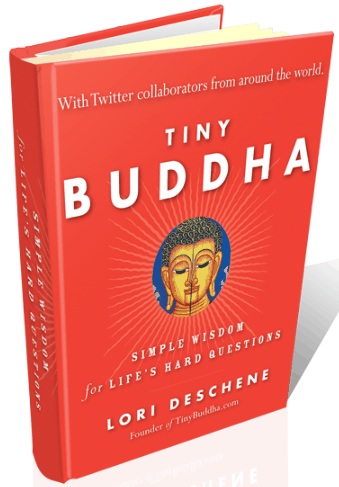
    Do you remember in December when I threw a Twitter party to celebrate the launch of my book, Tiny Buddha: Simple Wisdom for Life’s Hard Questions?

    No? You’re not the only one!

    I didn’t spread the word very well, so I’ve decided to do it again, with the help of Karl from Party Biz Connect and my friend Mastin from The Daily Love.

    This time the party will support one of my favorite charities; and to make it even more exciting, I’m going to offer the Peace and Purpose Bonus Pack (valued at more than $150) to anyone who purchases my book on the day of the event.

    Why I Am Throwing Another Twitter Party

    • It provides a second opportunity for anyone who missed the pre-order promotion to claim more than $150 in free digital bonus items
    • It’s a great opportunity to give away some cool prizes (including 2 mentoring sessions, 5 copies of my book, and 3 copies of the award-winning Project Happiness DVD)
    • It’s an ideal way to promote my book while supporting a good cause; for every tweet with the #TinyBuddhaBook hashtag during this event, I will donate 5 cents to Project Happiness, a charitable organization that brings emotional resilience-building programs to schools around the world. (more…)
  • Tiny Wisdom: The Art of Appreciating What You Get

    Tiny Wisdom: The Art of Appreciating What You Get

    “Who does not thank for little will not thank for much.” -Estonian Proverb

    Recently I’ve felt frustrated because someone I asked to help me has done less than I hoped he would. At first I felt this was unfair, because I’ve been supportive of him. Then I realized I was overlooking what he did do for me while dwelling on what he didn’t.

    This made me think of some research I referenced in my book (which I originally found in a book called Sway.)

    In a German research study, strangers were “partnered up,” though anonymously and kept in separate rooms with $10 to split between them.

    One participant in each pair got to decide how the money would be split, and the other had to decide whether or not to accept the offer. If he or she refused, neither would get to keep any money.

    You might assume that any offer would be good since some money was better than none; but most of the time, when the partner with the power decided to give himself a higher share the other person rejected the offer because it wasn’t fair. The results remained the same when the researchers repeated the experiment with $100 instead of $10.

    Researcher Joseph Henrich conducted this same study at UCLA using $160, what a student might earn in three days of work. Most students decided to split the money because it was fair, but they also admitted they wouldn’t have accepted any less than 50% if the tables were turned.

    Henrich finished his research by bringing this experiment to Machiguenga, an isolated section of the Amazon. Unlike in the other experiments, these people were willing to accept any offer because it was money they wouldn’t otherwise have—and they actually understood if the person who divvied it up chose to keep a larger share.

    Instead of assuming they were entitled to half, they felt grateful to have gotten any at all.

    We carry around a lot of beliefs about how things should work in the world, and sometimes they work against us. In assuming life is unfair for giving us 30% of what we think we deserve, we forget how fortunate we are to be given anything at all.

    We might not always get exactly what we want. We can either dwell on that, or choose instead to appreciate and do the best with what we get.

    Part of this post is excerpted from my book Tiny Buddha: Simple Wisdom for Life’s Hard Questions.

    Photo by Mcciva1

  • Tiny Wisdom: What Love Isn’t

    Tiny Wisdom: What Love Isn’t

    “Love isn’t a state of perfect caring. It is an active noun, like struggle. To love someone is to strive to accept that person exactly the way he or she is, right here and now.” –Fred Rogers

    Over the years, we form a lot of ideas about what love is, oftentimes based on unrealistic hopes and standards. We learn what we think it’s supposed to look like, and we may find ourselves frustrated when reality falls short.

    It often does. Love can be messy, confusing, and imperfect, just like us, and life itself.

    What Hallmark cards don’t always tell us is what love isn’t, but sometimes we need to strip away ideals in order to understand and appreciate what’s real.

    Love isn’t always patient. Sometimes we get short, brusque, or frustrated with the people we love the most. Love is, however, recognizing that, taking a few deep breaths, and then doing our best to see the people we care about with compassion and understanding.

    Love isn’t always kind. Sometimes we say things we later regret to the people we love the most. Love is, however, recognizing that, taking responsibility, and then doing our best to be caring and considerate in our future interactions.

    Love isn’t always selfless. Sometimes we fail to consider the needs of the people we love the most. Love is, however, recognizing that, taking their feelings into account, and then doing our best to find a balance between giving and taking.

    Love isn’t always trusting. Sometimes we doubt the people we love the most. Love is, however, recognizing that, taking a close look at where our suspicions really come from, and then doing our best to see the best in people instead of assuming the worst.

    Love sometimes envies. Love is sometimes easily angered. Love sometimes keeps a record of wrongs. Love does all these things because we sometimes do these things.

    Acknowledging this doesn’t mean condoning it; it means recognizing that love doesn’t cure us of our natural human tendency to make mistakes.

    Love doesn’t fail because we mess up from time to time. It fails when we fail to accept that we all do, and then think something is wrong instead of making things right.

    Love isn’t life without conflict. It’s about wanting and working to overcome it together.

    Photo by Alice Popkorn

  • Tiny Wisdom: Keep Your Head Clear

    Tiny Wisdom: Keep Your Head Clear

    “Keep your head clear. It doesn’t matter how bright the path is if your head is always cloudy.” -Unknown

    Some days seem to start with a proverbial rain cloud dripping above our beds.

    I had one of those days on Sunday. I didn’t sleep well on Friday or Saturday because I have a medical condition that sometimes wakes me in the middle of the night, so I woke up on Sunday feeling irritable and grouchy.

    My boyfriend’s voice sounded like nails down a chalkboard. To be clear, I love him dearly, and I also love the sound of birds chirping. But in that moment, I wished I had a mute button because everything annoyed me.

    I argued with him over something silly, and then felt horrible. Both of us work through the weekends, and despite my honest apology, I felt unhappy with myself and resistant to doing anything.

    But doing nothing was not an option, so I pushed myself. I started our laundry, opened my computer, and then pulled out my to-do list.

    Right then I realized: this is not the energy I ever want to bring to my work. Since I was feeling off-balanced and moody, the only option was to stop. To do nothing. To take a break, take a breath, and give myself space to create a better state of mind.

    Sometimes it feels like there’s no time for this. We have responsibilities, people depending on us, things that need to get done. It can be tempting to just plow through, even if we’re not in a great headspace—after all, we don’t want to compromise our productivity.

    The irony, though, is that taking 5–10 minutes for a short walk or some grounding breaths can make a profound difference in our efficiency.

    We do everything more effectively when we come to it from a place of calmness—which means making time to take care of ourselves can actually be the best thing for our work and our goals.

    But more importantly, taking time to clear our heads is a kind thing to do, for ourselves and other people. We live up there all day, every day, and whether we realize it or not, our thinking affects everyone around us.

    So today I invite you to join me in prioritizing composure. Take the time you need. You deserve it—and so do your work and your relationships.

    Photo by Wonderlane

  • Tiny Wisdom: What Else Could It Be?

    Tiny Wisdom: What Else Could It Be?

    “Uncertainty is the only certainty there is, and knowing how to live with insecurity is the only security.” -John Allen Paulos

    Sometimes it’s tempting to jump to conclusions that support our worst fears.

    Maybe you didn’t hear back from an interviewer yet, so you assume you did something to mess it up.

    Or your friend hasn’t responded to an email, so you assume there’s something on her mind that she’s not telling you.

    I’ve done this many times before, in large part because I often forget that not everything is about me—that sometimes people are slow to respond because of things going on in their own world.

    Still, despite knowing this intellectually, sometimes I fully believe my worst-case-scenario story, until, that is, I remind myself of all the other perfectly logical potential explanations.

    Case in point: Last year, a ‘tween author reached out to me about ghost writing for her site and books. Since I’ve written for girls for the last four years, and I knew this would be a nice supplement to my income, I was thrilled for the opportunity.

    It was almost two weeks before she replied to my response. After the first week, I began to scrutinize my email to her, as if she may have lost interest because I used an emoticon or didn’t ask the right questions.

    Then I asked myself: What else could it be?

    The possibilities were limitless. She could have had an overflowing inbox. She could have been behind with writing for her books. She could have needed time to put together an official offer. She could have fallen off a cliff.

    Luckily the last one wasn’t true. The bottom line was that I couldn’t possibly know why she hadn’t responded yet. I could know, however, that it didn’t necessarily mean I messed something up.

    Turns out it didn’t. I’ve been writing for her for almost a year now.

    I suspect we start grasping at negative explanations when we can’t explain something because uncertainty can be uncomfortable. It almost feels better to think something’s wrong than to accept we don’t know what happened—and we simply need to wait and find out.

    Ultimately, we find the most peace when we can embrace not knowing.

    Still feeling uneasy? Sit back and ask yourself: What else could it be? Then take a deep breath and relax. You’ll find out soon enough.

    Photo by ojbyrne

  • Tiny Wisdom: Your Feelings Are Real and Valid

    Tiny Wisdom: Your Feelings Are Real and Valid

    Screen shot 2013-04-06 at 8.49.00 PM

    “Feelings are real and legitimate.” -Unknown

    One of the most frustrating things in the world is feeling something painful and having other people tell you that you shouldn’t be upset.

    That it’s no big deal that relationship didn’t work out, or that opportunity didn’t pan out—that it’s all in your head, so you should let it go, suck it up, and move on.

    A while back, a friend of mine got fired from a new job after her first day. We were out in a group when she got the call, and several of us watched her emotions slowly build to gut-wrenching tears.

    Naturally, everyone wanted to console her, but that quickly turned into a rapid fire succession of reminders that it really was no big deal—no one died—and she shouldn’t feel so crushed.

    I understand it can be helpful to put things in perspective, and I know there were good intentions behind those words, but I found myself wondering if it ever helps to tell someone that they should be feeling something else.

    No matter what someone else thinks about our circumstances and how we should respond, our feelings are not imagined.

    If you’re mourning a loss of any kind, you don’t have to pretend you’re not hurt. Know that your feelings are real and valid.

    If you’re missing the way things were, you don’t have to pretend you’re not sad. Know that your feelings are real and valid.

    If you’ve been betrayed, disrespected, or violated in any way, you don’t have to pretend you’re not angry. Know that your feelings are real and valid.

    We are only human, and we are going to have times when we feel wounded, sometimes over events that would challenge anyone’s sense of composure, and sometimes over things that may seem insignificant to everyone but us.

    In those moments, we may feel an overwhelming surge of emotion without really knowing the words to express it. Maybe the key is to simply feel it, without stressing about whether that’s right or wrong, and then give ourselves some time to understand what’s going on in our heads and our hearts.

    We can either judge our emotions, telling ourselves we should be stronger, or accept them for what they are, and then allow ourselves space to recognize what we can think and do to feel stronger.

    Photo by The Wandering Angel

  • Tiny Wisdom: Happiness Is the Way

    Tiny Wisdom: Happiness Is the Way

    “There is no way to happiness, happiness is the way.” -Thich Nhat Hanh

    I am writing this from a plane, much like a post I wrote last week. I’ve come to believe some of life’s most joyful moments happen when we least expected they would.

    Just now one of the flight attendants came onto the loud speaker to announce there’s someone with a birthday today. After many of us sang to a man we couldn’t see, one guy yelled “Stand up!” and another hollered, “Speech!” And then we all started giggling, somehow conveying a Boston accent without uttering a single “R.”

    It was a silly little moment, and yet it seemed kind of special. It was one of those rare occasions when a bunch of people who don’t know each other come together in good will and laughter.

    I think it’s also the departure from normal conduct that makes a moment like this so engaging.

    In school, whenever everyone was sitting quietly, reading, I felt this compulsion to stand up and start singing. I felt the same thing when everyone was quiet on a bus. In retrospect, I don’t think I was fantasizing about being annoying or distracting.

    I was imagining what it would be like to break the mold of expected behavior and do something impulsively joyful. I was visualizing what it would be like to bust out of my little box, in a world where I am separate from everyone else, and create a moment that compels everyone around me to get out of their heads and smile.

    It’s obviously not advisable to belt our show tunes during jury duty or in line at the DMV, but maybe there’s something to this idea of creating spontaneous joy.

    It doesn’t require us to do anything but be present and accessible to the people around us.

    It’s saying hello to someone else on the subway instead of avoiding eye contact. It’s offering a compliment to someone in line at the bank, instead of staring at our feet. It’s making a joke in a doctor’s waiting room instead of rehashing everything that could go wrong in our heads.

    We spend so much of our lives rushing past each other, dreaming or stressing about where we’re going, and dwelling on where we’ve come from.

    Maybe happiness is really being where we are, and choosing to smile with the people around us.

    Photo by pelican

  • Tiny Wisdom: What Are You Passionate About?

    Tiny Wisdom: What Are You Passionate About?

    “Enthusiasm is contagious. You can start an epidemic.” –Unknown

    Do you ever downplay your passions and ambitions when someone asks you about your work?

    Someone asked me if I do this a while back, and at first, I said that I don’t. To know me is to know Tiny Buddha—and to hear about it often.

    I’ve recognized, however, that I can be somewhat reserved in describing what I do when I first someone new—especially if I meet them in a context that does not confirm they have an interest in personal development.

    Of course, this means I’m making assumptions. Just because I meet someone at a wisdom conference that doesn’t guarantee they’re more interested in personal growth than someone I meet in a doctor’s office.

    Still, it’s tempting to form this conclusion to avoid potential awkwardness, particularly because I write about topics that not everyone feels comfortable discussing.

    This, I’ve found, is what sometimes causes me to water down my enthusiasm: I’m too concerned with how I assume someone might respond to open up and find out for myself.

    Can you relate?

    Have you ever assumed someone would be bored by your work without giving them the opportunity to decide for themselves? Have you ever imagined someone would find your aspirations silly instead of taking a chance and letting them in?

    Or how about this: Have you ever held back when sharing your goals with someone who seems to be successful in their field in fear they won’t take you seriously because you’re not yet?

    I suspect we do these things to maintain a sense of safety, whether it’s for ourselves or our dreams.

    But we limit our potential to help and be helped, inspire and be inspired, when we minimize our interests and ambitions.

    You never know when an enthusiastic exchange might lead to a life-changing conversation, introduction, or opportunity, for you or someone else.

    We can all do a lot of good in this world we all share together, but we first we need to be willing to share the good we want to do.

    Photo by wonderlane

  • Tiny Wisdom: Life May Never Be Simple

    Tiny Wisdom: Life May Never Be Simple

    “The problem is not that there are problems. The problem is expecting otherwise and thinking that having problems is a problem.” -Theodore I. Rubin

    There are times when things get complicated and it has nothing to do with the choices we’ve made.

    Sometimes everyone around us needs us for different things, right as our work is becoming more challenging, and we’re feeling confused about what we actually want to do with our lives.

    Sometimes we receive medical or psychiatric diagnoses—and possibly both at the same time—right after being laid off and losing our health insurance.

    Sometimes we feel we’ve made headway with emotional wounds from the past, only to find ourselves feeling challenged by the smallest of triggers and uncertain if we’ve made any progress at all.

    Try as we may to eliminate the debt, responsibility, unhealthy relationships, and anything else that may cause us stress, life may never be simple.

    We may always have different challenges to address in our lives. But maybe simplicity isn’t eliminating problems; maybe it’s learning to embrace them, face them, and grow from them, instead of seeing them as something to resist.

    Perhaps “simple” has nothing to do with the circumstances in our lives, and everything to do with the mindset we foster in accepting and responding to them.

    There are certain problems that need solutions more quickly than others. There are certain events that may seem more overwhelming than others.

    We can either approach these situations with a sense of dread and anxiety, assuming we have no choice but to respond this way; or we can find our center, take it all one step at a time, and recognize that whatever happens, we can handle it and learn from it.

    We can’t change that life will be complex at times, but we can cause ourselves a lot less pain by accepting that, instead of fighting it, questioning it, and wishing we could change it.

    Life will inevitably involve challenges; and sometimes they’ll work in our favor. Problems allow us to create, innovate, and stretch both ourselves and the world we know.

    The question isn’t whether life will ever be simple; it’s whether we’ll recognize all the opportunities within the complexities and find the strength to seize them.

    What problem will you embrace today?

    Photo by Paralog

  • Tiny Wisdom: Plant Tiny Seeds for Joy

    Tiny Wisdom: Plant Tiny Seeds for Joy

    “The grass is always greener where you water it.” –Unknown

    The first time I heard the phrase “the grass is always greener on the other side,” I was 12 years old—and I heard it in song.

    I didn’t know at the time that this was from the play Woman of the Year, because two women in my theater group sang it as part of a musical review. Still, it made a deep impression on me.

    One of the characters is a housewife, and the other is a famous TV news personality—and yet they both feel certain they’re missing out on amazing experiences because of the lifestyle they’ve chosen.

    The celebrity sings, “I can see you planning picnics. That’s wonderful!”

    The housewife responds, “What’s so wonderful? Eating at the White House! That’s wonderful!”

    And the song goes on like this, with two women comparing their lives, and assuming the other has it better.

    Back then, I felt painfully envious of my sister, who frequently won starring roles and also had a boyfriend. It didn’t occur to me that focusing on everything she had wasn’t a proactive way to create the life I wanted.

    Comparing my talent to hers didn’t help me land any roles. It just made me feel inadequate—which showed in my auditions. Comparing my looks to hers didn’t help me feel better about myself. It just made me feel unattractive—which showed in the way I carried myself.

    I also didn’t realize her life wasn’t perfect, and she had plenty of her own challenges.

    I’ve since learned that there is always going to be someone else who appears to have everything we want, especially in the digital age, where many of us narrate all the fun we’re having through updates, photos, and videos online.

    But we tend to overestimate other people’s happiness and forget that in every life, there is a little sunshine and a little rain.

    No matter how perfect someone else’s life seems, they still have their own struggles. And they still deal with the natural human instinct to wonder what else is out there, and if there’s something else they should be doing.

    We can either focus on other people’s perceived good fortune, or focus our energy on recognizing and fostering our own.

    We do that by planting tiny seeds for joy, and then watering them with our attention.

    What seeds will you plant today?

    Photo by onecog2many

  • Tiny Wisdom: Challenging the Fear of Criticism

    Tiny Wisdom: Challenging the Fear of Criticism

    “The final proof of greatness lies in being able to endure criticism without resentment.” -Elbert Hubbard

    Sometimes criticism can feel like a ticking bomb that needs to be disposed.

    Case in point: I receive emails about every comment left on the site. While I’ll glance at them peripherally to be sure they’re not spam that made it through the filter, I generally let them accumulate so I can respond to many all at once.

    But sometimes, I’ll notice a harsh criticism, and suddenly feel this need to respond to it right now.

    I’m not sure if it’s because I feel vulnerable having been publicly criticized, or because I feel the need to clear up misconceptions in order to feel a sense of control, but something in me shouts, “This is bad. Do something about it, and fast!”

    Replying in a timely fashion is, of course, not problematic, but reacting with a Pavlovian fear response is a whole different story—one that raises the question: What is about criticism that feels so scary?

    Have you ever felt a sense of anxiety over someone else’s opinion, as if you feared it would somehow hurt you? Have you ever felt a strong need to defend yourself against negative feedback, as if you couldn’t relax until you cleared things up?

    Or how about this: Have you ever been so busy responding to criticism that seemed destructive that you didn’t have time to consider if there was something constructive in it?

    The reality is we all judge and criticize, if not publically, than in our heads. It’s a natural human instinct to form opinions about things. Hopefully, we have the tact to not to be cruel, but it will happen to all of us from time to time. Usually, it will only be as disastrous as we make it.

    One harsh comment on this site won’t change anything in the grand scheme of things—even if other people read it, too. One harsh comment from a coworker won’t change your talent, potential, or prospects.

    It never feels comfortable to be critiqued, especially if someone attacks your character or clearly misjudges your intentions. But we make the best use of our energy if we look for positive takeaways, and then challenge the voice inside that says, “Something is wrong.”

    Nothing’s wrong, so long as we learn, respond calmly, and move on, feeling balanced and empowered.

    Photo by Miheco

  • Book Giveaway and Interview: Rewire Your Brain for Love

    Book Giveaway and Interview: Rewire Your Brain for Love

    Update: The winners for this giveaway have already been chosen. Subscribe to Tiny Buddha for free daily or weekly emails and to learn about future giveaways!

    The winners:

    An old friend once told me that women frequently say all the men they’ve dated have been jerks; and men frequently say all the women they’ve dated have been crazy.

    You could chalk this up to gender differences, men being from Mars, women being from Venus and all that. But maybe there’s more to it. Maybe it’s actually our biology that influences how we act and interact—and why we often repeat unhealthy patterns with our romantic partners.

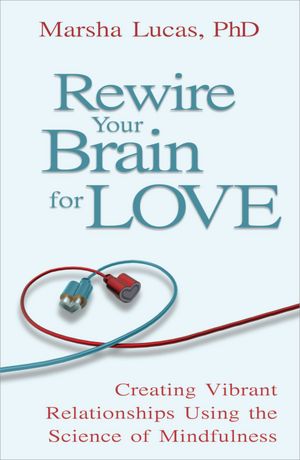
    In her book, Rewire Your Brain for Love: Creating Vibrant Relationships Using the Science of Mindfulness, Marsha Lucas explains how our inner workings can sabotage our relationships, and how we can change that through meditation.

    According to Rick Hanson, PhD, reading Rewire Your Brain for Love is “like having a best friend who is both savvy about the brain and a world-class therapist.”

    I haven’t yet finished this book; I’m publishing this interview today because this is the official launch date. Based on what I’ve read so far, I can say with absolute certainty this is the most fascinating, helpful relationship book I have ever read.

    Both educational and insightful, Rewire Your Brain for Love explains why we struggle in matters of the heart, and exactly what we need to do for healthier, happier relationships.

    The Giveaway:

    To enter to win 1 of 2 free copies of Rewire Your Brain for Love:

    1. Leave a comment below.

    2. Tweet: RT @tinybuddha Book Giveaway and Interview: Rewire Your Brain for Love http://bit.ly/yCvNBJ

    If you don’t have a Twitter account, you can still enter by completing the first step. You can enter until midnight PST on Sunday February 5th.

    The Interview:

    1. What inspired you to write this book?

    The inspiration came from seeing the changes in my psychotherapy patients when mindfulness practice was added to the mix. It was sometimes a challenge to get past the resistance some people had to meditation—my psychotherapy office is just a half-dozen blocks from the White House, so I see a lot of people who are very intellectually-driven, “show me the evidence” folks with no room for any “woo” stuff.

    It was a whole lot easier when we talked about the neurological bases of relationships, the peer-reviewed research coming out of neuroscience labs at universities they respected, and about this simple, well-documented practice that they could use to create actual changes in the brain—and that those changes support healthier, more successful relationships. Approaching it this way made it a much more empowering choice for them.

    Writing the book came out of my wish to share this with more than just the people I could see in my psychotherapy office. On the micro level, I want more people to have the healing experience that healthy relationships offer. At the macro level, my wish is to be a part of helping create a world that’s driven more by empathy than by fear.

    2. Why do we need to rewire our brains for love?

    Unfortunately, lots of us didn’t have an optimal experience of healthy, attuned attachment in that early, critical time when our “relationship brains” develop (mostly before age 2).

    By the way, it’s not necessarily about really bad experiences—it can be subtle, passed along by well-meaning parents who may not have had that optimal experience themselves.

    And because of the way our brains develop, those very early experiences aren’t readily accessible through memory or insight, so it’s difficult to get any traction just by trying to think or “will” our way through.

    If you can change that wiring, though—and mindfulness practice seems to help a great deal with that—then you can have a brain with better neural pathways that creates and supports better relationships.

    3. Your book focuses on making improvements in our relationships with other people. Can we also rewire our brains for greater self-love?

    Absolutely! I’d go farther to say that improving your relationship within yourself is the first step to being able to have better connections with others. I think of the practice of mindfulness as a way of cultivating more loving, compassionate relationships with everyone, and that includes you.

    4. Is traditional meditation necessary to rewire our brains for love, or are other mindfulness practices equally effective?

    The mindfulness practices that I’ve used to the best effect in my work (and that are in my book) are from the insight-meditation tradition. That approach has (in my view) the most compelling neuroscience research to date supporting the types of changes that I talk about and see in my work.

    Other forms of contemplative practice are also being studied. They all definitely have benefits—and I’m very interested in seeing more about their benefits to the brain.

    5. Can you talk a little about the seven “high-voltage” benefits of practicing mindfulness?

    The “high-voltage” relationships benefits get me really excited, so much so that they form the framework of my book.

    First thing to know: there are essential characteristics seen in people who had healthy, attuned childhood relationships—characteristics that bode incredibly well for their ability to have healthy relationships as adults.

    Now, add to that: Those same characteristics are seen in people who practice mindfulness.

    Then, to top it all off: the latest scientific research has increasingly been showing that these characteristics are associated with areas of the brain that change as a result of mindfulness practice.

    I’ve found that the most helpful way to think about these characteristics is to group them into a list of seven acquirable skills. (Yep: acquirable.)

    • Better management of your body’s reactions
    • Improved regulation of fear
    • Greater emotional resilience
    • Increased response flexibility
    • Improved insight (self-knowing)
    • Deeper and clearer empathy and attunement—within yourself and with others
    • Perspective shift from “me” to “we”

    Daniel Siegel, MD, a Harvard-trained psychiatrist and an expert on childhood attachment was the person who first made me aware of the connection between these documented and compelling characteristics of well-being, seen in people who grew up with healthy, attuned attachments, and the brain structures and pathways shown to change with mindfulness practice.

    I’ve been seeing the results confirmed through my psychology practice, in myself, and in the lives of my friends and colleagues. Very, very cool.

    6. I know a lot of people who stay in unhealthy relationships, constantly looking for ways to “fix” them. How can one recognize when the problem is faulty wiring and when it’s best to walk away?

    My first response is to share an anecdote from a friend of mine, Gay Hendricks, who’s also a psychologist: A middle-aged man came to his first therapy session, and talked about how lousy women were—he presented a long list of women in his life who’d just used him. Close to the end of the session he leaned in and quietly said, “But y’know… I’m beginning to wonder if it might have something to do with me.”

    We all have our relationship wiring issues—our own styles of attachment that developed early on. In part, mindfulness practice helps you increase your capacity to look at your relationship patterns with honesty and self-compassion (not excuses or blame). That’s necessary whether you’re going to stay in the relationship or end it. Otherwise, you end up staging the same play with the same script over and over again, whether it’s with the same actors or new ones.

    7. In Chapter 8, you explore empathy and how you misunderstood it when you were younger. I saw myself in your words, as I had the same experience! Can you tell us a little about what empathy is and what it isn’t—and why it’s important to our relationships to understand the difference?

    Healthy, balanced empathy is a tough one for a lot of people, especially those whose role in life leans heavily toward helping others. It’s easy to get lost in the feelings and needs of the other person, and end up not holding on to any empathy for yourself—and that often leads to feelings of burnout, resentment, depression, all kinds of un-fun stuff.

    My take on empathy is heavily influenced by the way that Frans de Waal, PhD talks about it—he’s a world-renowned primatologist and director of the Yerkes Living Links Center at Emory University, and he looks at empathy as an evolutionary advancement. As you go “up” in evolutionary terms, there are increasingly developed levels of empathic abilities, starting with the kind of “emotional contagion” that you might see in a herd of zebras, on up to through being able to take someone else’s perspective (though as Frans points out, psychopaths are good at this, too).

    Where many of us get off track is taking it to the next level, empathic perspective taking—what is s/he feeling and why might that be? And what am I feeling in response, and why might that be? If you lose sight of either one, you’re more likely to react out of old, unhealthy relationships habits—what can be called “autopilot.”

    Empathy’s not just about insight, and not just about feeling—it’s about an integration of those, happening in the space between you and your partner. Or, between you and more people in your community, however large that community may be—we’re all in this together, after all.

    Choosing to cultivate more empathy doesn’t mean losing your own integrity or point of view—it just means that you’re no longer governed by lower-order, fear-based reactivity. Now that’s empowering!


    Learn more about Rewire Your Brain for Love on Amazon.

    FTC Disclosure: I receive complimentary books for reviews and interviews on tinybuddha.com, but I am not compensated for writing or obligated to write anything specific. I am an Amazon affiliate, meaning I earn a percentage of all books purchased through the links I provide on this site.
  • Tiny Wisdom: Who Do You Love?

    Tiny Wisdom: Who Do You Love?

    “Once you have learned to love, you will have learned to live.” -Unknown

    My high school vocal teacher said that “love” is the most beautiful word in the English language, so I should let it roll off my tongue like honey to make it thick, sweet and poignant.

    So I did. I sang it deeply, slowly, and soulfully, though I never spoke the word. I came from a family that didn’t really express emotion, so I filed it away with all the things I wanted to say but didn’t.

    When I started dating, I couldn’t wait to profess my love, long before I actually felt it. I said it at every chance I could get because that’s how often I wanted to hear it.

    I wanted it to constantly roll like honey toward me, so I could feel warm, safe, and unconditionally accepted. I whispered it, mumbled it, yelled it, and even cried it, all while having no idea what it really felt like. It was my gift and my curse, wrapped in fear, insecurity, and need.

    Over the years, I’ve put a lot of effort into learning to love myself and others; and in the process, I realized I wanted to say “I love you” a lot less and a lot more often. I wanted to say it less when I didn’t really mean it and more when I actually did.

    I wanted to stop reciting it like a parrot to men who weren’t good for me, and start expressing it deeply, slowly, and soulfully to the people I really cared about.

    So often in life, we avoid expressing our feelings in fear that it will be awkward. The first time I said I love you to my eight-years-younger brother, the word felt almost foreign. I felt uncomfortable mostly because I was afraid I’d make him feel that way.

    Now I tell him every time we speak. I do the same with every other family member. And many of my friends. And even many of the people I engage with through this site. Why? Because life is too short to feel love and not express it.

    Love is the most beautiful word in the English language—when it comes from a place of genuine care, affection, and appreciation.

    Who do you love in your life, and when is the last time you told them?

    Photo by Saucy Salad

  • Tiny Wisdom: Make Your Moments Count

    Tiny Wisdom: Make Your Moments Count

    “The bad news is time flies. The good news is you’re the pilot.” –Michael Altshuler

    I am writing this from a plane with plans to publish it later. I decided less than 3 days ago to make the 3,000-mile trip home.

    At first, my mother questioned if it was necessary—after all, my grandmother will be okay, despite her recent hospitalization. My brother said it was awesome and sort of surreal to learn I’d be visiting in just a few days—not in a matter of months, as is usually the case.

    This is a big part of why I’m coming back again. I have two valid reasons: I want to visit my grandmother, and spontaneity is just plain cool.

    Since I was able to find an affordable flight, I saw no reason not to reschedule some appointments and head back east, only a month after my last trip.

    The truth is I would have come even if I didn’t find a great deal, because this, right here, is what I work for. Not shoes, or dinners out, or an excessive number of magazines—though I enjoy those things, too.

    This trip (and others like it) is one of the best uses of my time and money.

    I haven’t always thought this way. There was a time when I only visited once or twice each year, even though I said I valued family above all else. I assumed there would plenty of time for that–and it felt wisest to save my pennies.

    I am by no means wealthy, but I’ve finally realized my pennies are only as valuable as the priorities they allow me to honor. We never get to know how much time we have left; we only know we can choose what we do with the time we have now.

    We can easily let fear and a scarcity mindset talk us out of putting our money where our hearts are.

    Or we can ask ourselves: What really matters to me? And how can I best use my resources to honor that today?

    We can do a lot in this world with our time and money–but only after we decide what it means for each of us as individuals to make our moments count.

    Photo by h.koppdelaney

  • Tiny Wisdom: Take a Deep Breath and Remember

    Tiny Wisdom: Take a Deep Breath and Remember

    “Wisdom is the right use of knowledge.” -Charles H. Spurgeon

    Someone recently asked me in an interview why I choose to revisit ancient wisdom in my writing. I responded that there is very little new wisdom; there are just new ways of understanding and applying what we already know.

    That’s not always so easy to do. We have an amazing ability to drown out our inner guidance with worries, stresses, fears, and judgments.

    If you find yourself doing that today, take a deep breath and remember:

    It’s okay to be down sometimes. Once we accept and understand how we feel, we can discover what we need to do to feel better.

    It’s okay to feel lost and confused. Acknowledging this is the first step to finding direction and clarity.

    It’s okay to make mistakes. So long as we learn and grow from them, it’s the same as making progress.

    It’s okay to disagree. This is how we learn to honor our values and priorities without negating someone else’s.

    It’s okay to feel terrified. Feeling scared and uncomfortable is often a sign we’re doing what we really want to do.

    It’s okay to enjoy this moment, even if you have things to accomplish. There will always be more to do—this is much is guaranteed. Time beyond this moment is not.

    It’s okay to take time for ourselves. We are the only ones who can recharge our minds, bodies, and spirits.

    It’s okay to struggle with all of these things. Peace is accepting that we are imperfect, and doing the best we can with what we know right now.

    Photo by erix

  • Tiny Wisdom: Be Curious, Be Amazed

    Tiny Wisdom: Be Curious, Be Amazed

    “Curiosity is one of the great secrets of happiness.” -Bryant H. McGill

    The other day, as I walking to the activities center in my apartment community to write, I saw a team of men cutting down dead tree branches using truck-mounted lifts. They were tossing them into a wood chipper which shred each one in a matter of seconds.

    I’m sure this is a common practice, but it was the first time I’d ever seen this, so I decided to sit on the sidewalk and watch, even though I was on a tight schedule.

    I felt mesmerized by this mass-pruning, preparing the area surrounding me for new life; and in that moment, my interest trumped my need to get things done.

    I used to do this all the time as a kid—see something fascinating and get lost in an audience of one, preparing an array of questions to launch at the next adult I encountered. Every day there was something new to learn, and accordingly, something to get excited about.

    We now live in a world where information is far more easily accessible, but amassing knowledge through the web is not the same as opening ourselves up to discovery in the world. One is the intellectual pursuit of facts; the other is the natural consequence of presence and curiosity.

    One requires us to be searching; the other only requires us to be open.

    It’s all too easy to live our days with a tight grip on our schedules—thrusting ourselves from commitment to commitment and in the process, stifling possibilities for spontaneity and awe.

    When we live our lives in the zone of doing, we miss out on the many details we only notice through the act of being.

    We miss out on the tiny nuances of our environment changing around us. We miss out on the tiny gestures of kindness from the people we love. And we miss out on opportunities to see the world through the eyes of childlike wonder.

    I have found that the most exciting form of learning is the kind that comes from experience. The beauty is that we don’t need to plan for this. We just need to live in the moment and see what we discover.


    Photo by quinn.anya

  • Tiny Wisdom: Take This Moment and Start Anew

    Tiny Wisdom: Take This Moment and Start Anew

    “Many fine things can be done in a day if you don’t always make that day tomorrow.” -Unknown

    When I was younger, an adult I was staying with told me, “The diet starts tomorrow. Let’s eat everything we can before midnight.”

    So we did. We ate grilled cheeses, leftover Chinese food, Twinkies, and anything else that called to us from her cabinets.

    It was then or never, that was the message, and tomorrow would be different—which of course it wasn’t.

    For years, I started each morning intending to make healthy choices, and then after failing to meet my perfectionist standards, decided to turn over a new leaf the following day.

    I justified chain smoking by telling myself I’d quit tomorrow. I allowed myself to remain inert by rationalizing that the day was “ruined” because I missed my morning workout.

    It was impossible to make big change because I always had an excuse to avoid making different choices.

    I eventually gave up Marlboros and binge fests, but I still deal with all-or-nothing thinking at times, particularly when it comes to leaving my comfort zone—and if I’m not careful, it can be paralyzing.

    Perhaps you can relate. Maybe you’ve rationalized that you’ll start dieting after the holidays, instead of cutting back just a little starting now. Or maybe you’ve put off looking for more fulfilling work, assuming it would be easier next week, next month, or next year, when you feel less frustrated or overwhelmed.
    We delude ourselves when we rationalize that tomorrow we’ll excel at what we aren’t willing to start today. We may never feel fully prepared or confident when it comes to our ability to change—and that’s okay, so long as we’re willing to try, starting now.

    That means accepting we may not do things perfectly.

    We may feel like we’re making progress and then fear we’re right where we started. More likely, we will have taken two steps forward and one step back—which means we are moving forward.

    I don’t believe that life is short; most of us will have abundant opportunities to experience all this world has to offer. Whether or not we actually do that is largely dependent on how we spend our time.

    We can sabotage our days by imagining tomorrow will be better; or we can seize our moments by forgiving ourselves when we struggle and doing the best we can right now.

    Photo by zedmelody