Author: Lori Deschene

  • Giveaway and Author Interview: Choosing Me Before We

    Giveaway and Author Interview: Choosing Me Before We

    Note: This winners for this giveaway have already been chosen. Subscribe to Tiny Buddha for free daily or weekly emails and to learn about future giveaways!

    The Winners:

    We all have it: a voice inside our heads that tells us what we can and cannot do and undermines our self-esteem. Sometimes it’s cruel. Sometimes it’s condescending. Most of the time, it’s completely inaccurate.

    If we’re not mindful, it can limit our ability to live peaceful, purposeful lives, guided by our interests and passions. We need to love ourselves to love our lives, and in order to love ourselves, we need to be good to ourselves.

    Author and speaker Christine Arylo has made a career out of helping women develop self-love and silence their “inner mean girls.”

    In 2001, Christine’s fiancé (and boyfriend of 15 years) confessed that he no longer loved her, on the way to their engagement party—and that he’d been cheating on her. After realizing she’d never learned to love herself, she embarked on a spiritual journey, and in the process, transformed herself and her life.

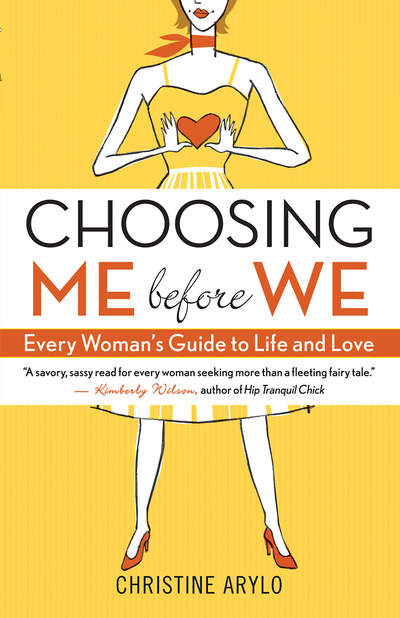
    In her book Choosing ME before WE, Christine shares stories, insights, and exercises to help women come to know themselves and learn to put themselves first.

    If you’ve ever felt stuck in an unfulfilling relationship (or recognized an unhealthy pattern  in your love life), this book may help you create meaningful change from the inside out.

    The Giveaway

    To enter to win 1 of 2 free copies of Choosing ME Before WE

    • Leave a comment below.
    • Tweet: RT @tinybuddha Book GIVEAWAY & Interview: Choosing ME Before WE http://bit.ly/KekqLh

    If you don’t have a Twitter account, you can still enter by completing the first step. You can enter until midnight PST on Friday, June 22nd. (more…)
  • Tiny Wisdom: What Makes Us Rich

    Tiny Wisdom: What Makes Us Rich

    “If you realize that you have enough, you are truly rich.” ~Lau Tzu

    In the Pixar movie Up, Carl and Ellie save all their lives to visit Paradise Falls only to realize they’re never able to save enough. Every time they build a substantial nest egg, life happens and they need to spend it.

    This is a reality I know all too well. Several months back I told my boyfriend it frustrates me that every time I come into an unexpected sum of money, a need emerges to use it.

    One time I got an extra freelance gig and suddenly needed a thousand dollars in dental work. Another time, I sold more ad space than usual and then found out I needed expensive work on my old car.

    After my apartment was broken into last month, I was excited to realize I’d receive a substantial amount in renter’s insurance. I planned to only replace the items I needed and save the rest of the money—something I was looking forward to since my taxes cost more than I’d anticipated this year.

    Then I realized that check was just enough to cover my recent surgery, my upcoming quarterly taxes, and my flight home this week.

    Almost every time I’ve gotten extra cash, I’ve needed to spend it, which has made it seem like I can never really get “ahead.”

    Recently, I took a close look at my frustration and realized I’d been seeing things all wrong. I wasn’t unlucky for always having reasons to spend unexpected money. I was fortunate for always having that money to pay for unexpected needs.

    I’ve always felt safe knowing I have a solid savings—and I’m rebuilding it slowly—but the reality is I am secure.

    Most of us are. We can pay our rent. We can afford our necessities. And maybe we can even treat ourselves to the little pleasures we enjoy, occasionally or often.

    We may not always feel like we’re getting ahead, but maybe there’s nowhere to get to. Maybe all we need to do is be grateful for our overall comfort.

    I realize there are some people who don’t have enough, and for each of us, there will be times when we’re struggling more than usual.

    That’s why we owe it to ourselves to stop and recognize what we have when we have it. No matter what that is, we could always have more. We’re only rich when we stop to celebrate that we don’t actually need it.

    Photo by slightly everything

  • Tiny Wisdom: Enjoying the People We Love

    Tiny Wisdom: Enjoying the People We Love

    “Good relationships don’t just happen. They take time, patience, and two people who truly want to be together.” ~Unknown

    In the past, whenever I heard someone say that relationships take effort, I assumed it was a person who wasn’t in a happy one.

    When it’s right, it shouldn’t feel like work; it should be effortless—or so I thought, ironically, in a time when I had few relationships.

    What I didn’t realize then is that things change over time—we change over time—and that we need to choose each day to see the people we love with new eyes.

    I’ve been with my boyfriend for three years now, and although my feelings for him have only grown deeper, there are times when I let our familiarity create a wall between us. It’s not conflict, or mistrust, or disappointment—it’s the subtle knowing that he’s always there.

    If I’m not mindful, I can use that as an excuse to not be there with him. To be physically present, but not really—not aware and connected.

    When the newness is gone and you’re part of each other’s routine, especially if you live together, it’s easy to shift the dynamic from fun, excitement, and spontaneity to habit, necessity, and responsibility.

    But it’s not just a matter of taking each other for granted. Sometimes when we’ve gotten comfortable with each other, we forget to focus on everything we appreciate about each other, and fixate instead on the little things that we might find bothersome.

    It can be instinctive to hone in on the small things that aren’t working instead of realizing just how many big things are.

    Psychologists suggest that healthy relationships have a five to one ratio of positive to negative interactions. I suspect the ratio holds true for positive to neutral interactions, as well. In other words: We need to enjoy other more often than we simply share space.

    We need to make it a priority to be silly, playful, spontaneous, generous, thoughtful, and affectionate.

    Sometimes we may not fully see the people we love because we’re too caught up in our own worries. Other times, it might be because we’re too comfortable to fully appreciate what comfort means.

    Either way, we can make a little time to smile with the people we love. It might take effort to come into the moment, but once we let ourselves enjoy each other, it rarely feels like work.

    Photo by Wonderlane

  • Giveaway and Interview: Saying Yes to Change

    Giveaway and Interview: Saying Yes to Change

    Editor’s Note: The winners for this giveaway have already been chosen. Subscribe to Tiny Buddha to receive free daily or weekly emails and to learn about future giveaways!

    The Winners:

    Have you ever formed a friendship with someone whose beliefs differ from yours only to realize you have quite a bit in common?

    This is exactly the type of friendship I’ve formed with Alex Blackwell. We’ve had many of the same experiences, and formed many of the same insights, but we’ve found peace and comfort in different understandings of spirituality.

    Alex runs The Bridge Maker, where he shares his lessons about creating meaningful change. Though Alex’s writing often reflects his Christian faith, it always comes straight from his heart and includes lessons that anyone can apply to their circumstances.

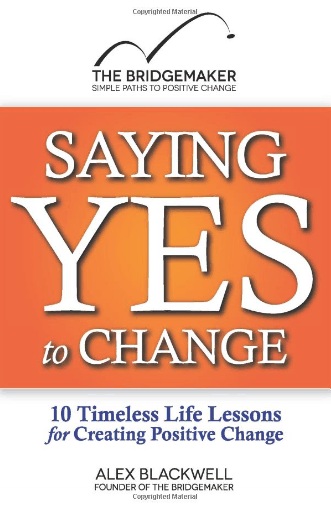
    When Alex asked me to read his first book, Saying Yes to Change, I immediately felt intrigued. While I didn’t connect with some of the parts related to faith, I felt connected to Alex in reading his stories, and grateful for his courage in sharing himself so honestly.

    Loaded with practical tips and gentle encouragement, Saying Yes to Change is an uplifting guide to transformation. It’s my honor to share with you an interview with my friend Alex.

    The Giveaway

    To enter to win 1 of 2 free copies of Saying Yes to Change:

    • Leave a comment below.
    • Tweet: RT @tinybuddha Book GIVEAWAY & Interview: Saying Yes to Change http://bit.ly/KyH40n

    If you don’t have a Twitter account, you can still enter by completing the first step. You can enter until midnight PST on Friday, June 15th. (more…)

  • Tiny Wisdom: The Relationships We Wish Would Improve

    Tiny Wisdom: The Relationships We Wish Would Improve

    “When you stop trying to change others and work on changing yourself, your world changes for the better.” ~Unknown

    There are certain relationships that we don’t want to end; we just want them to improve.

    Sometimes it might seem like that will only happen if someone else starts acting differently—with more kindness, respect, thoughtfulness, compassion, understanding, or consideration.

    Years ago, a therapist told me we can’t ever change other people; we can only change how we respond to them.

    At the time, I found this incredibly frustrating because I didn’t know what I could do differently. I only knew I wanted to be treated better because I was tired of feeling bad.

    But what do we do when we respond more calmly, or try to see things differently, but we still find ourselves getting hurt?

    Sometimes we don’t want to completely close a door, with a family member, for example; we just don’t know how to keep it open without opening ourselves up to pain.

    I’ve learned that changing our response to people means changing how we engage with them.

    It can mean seeing someone less frequently, or avoiding certain topics, or knowing when to change the subject.

    It might mean refusing to feel guilty or defensive, taking things less personally, or modeling the type of behavior we’d like to see in them.

    It might also mean accepting that not all relationships need to be close and intimate.

    As much as we might want someone to fill a certain role in our lives, they have to want to do it. And if they aren’t, it’s our job to recognize that so we don’t continually cause ourselves stress by trying to smash a square peg into a round hole.

    Little in this world is more painful than wanting to be close with someone but knowing it’s a recipe for disaster. It’s harder when we think it could be so simple if that person could just realize how much we care and try, even if a little, to reciprocate it like we deserve.

    But we generally don’t change when other people force us to do it; we change when we realize what we might lose if we don’t, and recognize that the discomfort of doing things differently is better than the pain of that loss.

    We can’t make someone else make an effort. But we can make smart decisions for our own well-being. This may inspire someone else to change; it might not. Either way, we’ve honored the most important relationship in our lives: the one we have with ourselves.

    Photo by cloud2013

  • 20 Ways to Give Without Expectations

    20 Ways to Give Without Expectations

    Gift

    “The true measure of a man is how he treats someone who can do him absolutely no good.” ~Samuel Johnson

    Some people say there’s no such thing as a selfless act—that any time we do something to help another person, we get something in return, even if it’s just a warm fuzzy feeling.

    I’ve spent a lot of time playing with this idea in my head. It doesn’t really bother me to know it feels good to help someone else. That, to me, is a completely acceptable type of selfishness. What give me cause for concern are the underlying expectations we often have when we give “selflessly.”

    We’ve all been there. You cover for your coworker because you know you’ll need her assistance next month. You give your sister $20, and then silently look for ways she can pay you back, even if not monetarily. You help your friend get leads for a job, and then feel angry when she isn’t as proactive in offering you support.

    I’ve found that these expectations cause more stress than joy. They mar the act of giving, which makes me feel slightly guilty; they lead to disappointment if the person I helped doesn’t return the kindness; and they tie my intentions to an internal score card, which places a wedge in my relationships.

    Recently I’ve been asking myself, “What is my expectation?” before I do something for another person. The answer I find most acceptable, cheesy as it may sound, is to feel good and show love. Strangely, when I release the need to control what I get for giving, I get enough, somehow.

    I’ve made a list of twenty things you can do to show you care, without needing the recipient to return the kindness—twenty ways giving is its own reward. Maybe some of these will resonate with you. Or perhaps you’ll want to write your own list to spur the spirit of giving without expectations. (Although I’ve written you, these are things I try to do.) (more…)

  • A Quick Note

    Hello friends. I’m writing this quick post from my family’s house in Massachusetts after flying home on the red-eye on Saturday night. My grandmother, who was a hero to many, including me, passed away on Monday morning. Despite being a writer, and being asked to write a eulogy, I find myself somewhat at a loss for words.

    For this reason, I may not write anything this week, though I will surely be writing about grandmother soon. I will aim to publish two posts from the community each day, but I may miss a day or two.

    If you submitted a post to the blog on June 1st, please know it may take me a couple of weeks to respond, as I received a large volume of submissions, and I will be spending most of this week with my family.

    Lots of love,

    Lori

  • Tiny Wisdom: What Are You Waiting For?

    Tiny Wisdom: What Are You Waiting For?

    “Before someone’s tomorrow has been taken away, cherish those you love, appreciate them today.” ~Michelle C. Ustaszeski

    Most of us are really good at finding reasons to wait.

    We wait to call good friends we miss because we assume we’ll have plenty of time.

    We wait to tell people how we really feel because we hope it will someday feel safer.

    We wait to forgive the people who’ve hurt us because we believe they should reach out first.

    We wait to apologize for the things we’ve done because we feel too stubborn or ashamed to admit fault.

    If we’re not careful, we can spend our whole lives making excuses, holding off until a better time, only to eventually realize that time never came.

    It sounds morbid to acknowledge that our days here limited, and it’s scary to realize that none of us can ever know how many we have.

    But we can know that in our final moments, it’s unlikely we’ll say, “I wish I waited longer,” or “I wish I stayed angry longer,” or “I wish I played it safe longer.”

    Most of us will get to the end of our lives and say, “I’m sorry.” “I forgive you.” Or, “I love you.”

    Of course, there’s another option: We can say those things right now.

    We can appreciate the people we love in action instead of distracting ourselves with everyday worries. We can be brave in expressing our thoughts and feelings instead of over-analyzing and talking ourselves out of it. We can decide for ourselves what truly matters and honor it while we have the chance.

    This is our chance to live and love. This moment is our only guaranteed opportunity to be thoughtful, compassionate, understanding, forgiving, and kind to the people we value.

    It might be terrifying. It might require humility. It might seem like it’s not a priority.

    We owe it to ourselves to acknowledge it is, and to do something about it instead of building up reasons to regret.

    What have you been meaning to do or say—and what are you waiting for?

    Photo by Jun Acullador

  • Winners for Tiny Buddha Book Giveaways

    Winners for Tiny Buddha Book Giveaways

    As you may have noticed, this was the first week I did not publish a blog post featuring two poll questions for my next book.
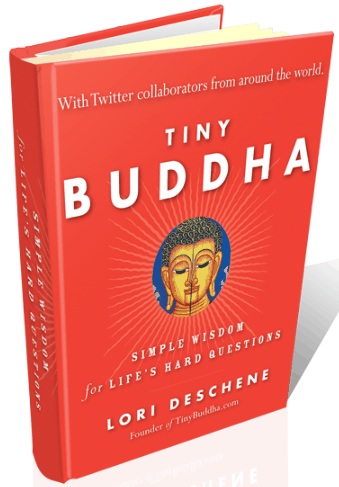
    Previously, I published 10 of these posts, each with a giveaway for an autographed copy of my first book, Tiny Buddha: Simple Wisdom for Life’s Hard Questions.

    I’m pleased to announce I’ve chosen 10 winners:

    I emailed the winners last night. If you are on this list and did not receive that email, please contact me at email(AT)tinybuddha(DOT)com.

    Although the giveaways have ended, you can still share your thoughts for my next book!

    In short, it’s going to be a book about what it means to win and lose in life—a guide for living life purposefully and joyfully, on our own terms, in a world that often promotes a one-size-fits-all version of success.

    There is no official deadline to share your thoughts (though I will likely choose the insights I’ll include in my book some time at the end of June).

    If you’d like to offer your insights, please leave them on the appropriate blog posts below. *Please note: each post contains two questions; however, each title contains only one of them.

    Thank you for being part of Tiny Buddha!

  • Tiny Wisdom: When Other People Won’t Change

    Tiny Wisdom: When Other People Won’t Change

    “I’ve discovered that you can’t change people. They can change themselves.” ~Jim Rohn

    We all want to be loved and accepted, just as we are. We want people to honor our interests, value our needs, and respect our choices in life.

    So why, then, do we expect other people to sacrifice theirs for us?

    Why do we hope people will change their goals, habits, and values to better align with ours when they haven’t given us any indication they’d be happier for doing it?

    Sometimes we think we know what’s best for others, but if we’re honest with ourselves, we’ll likely realize we want people to change when we simply don’t feel satisfied being in a relationship with them as they are.

    I’m not talking about people who are violent, dangerous to themselves and others, or in any way abusive. No one should ever feel bound to an unhealthy situation by the ideas of unconditional love and acceptance.

    I’m talking about the boyfriend who isn’t as open-minded as you. Or the girlfriend who doesn’t value fitness like you. Or the husband who isn’t as social as you. Or the wife who doesn’t take risks like you.

    I spent most of my twenties dating people who were completely incompatible with me.

    I got involved with stoic men hoping they’d become more sentimental. I pursued self-professed bachelors hoping I’d be the one to make them want to commit. I even dated men who said they never wanted kids, hoping they’d change their minds because I did.

    And why? Because those were the men who were there, and it felt safer to be with the wrong men than leave and risk not finding the right one.

    Relationships are all about compromise, and there’s no such thing as a perfect match.

    But we owe it to ourselves to recognize what’s non-negotiable in relationships so we don’t end up resentfully sacrificing our needs while secretly hoping the people we’re with will make it worth our while.

    The people we want to change—there are others out there who’d accept and even value them, just as they are. We can appreciate them for all their unique quirks, interests, and preferences. Or we can set them free and create the possibility of finding better matches.

    We deserve to be happy in our relationships. That starts with choosing to be with people we’d never want to change.

    Photo by mind on fire

  • Giveaway and Author Interview: The Misleading Mind

    Giveaway and Author Interview: The Misleading Mind

    Note: The winners for this giveaway have already been chosen. Subscribe to Tiny Buddha for free daily or weekly emails and to learn about future giveaways!

    The Winners:

    Have you ever felt like your mind was controlling you, dragging you along for a persistently bumpy ride?

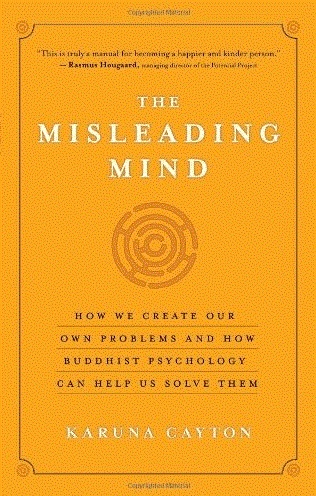
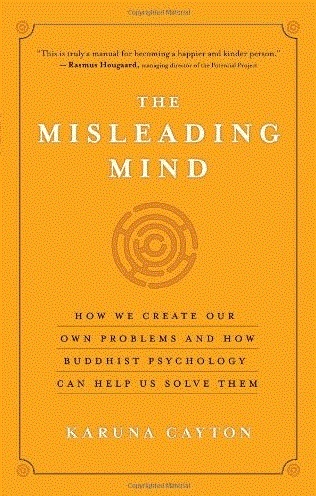
    Research shows the majority of us feel this way, but the good news is that we can do something about—and Karuna Cayton’s book The Misleading Mind teaches us how.

    A psychotherapist and practicing Buddhist, Karuna has written an easily digestible book that offers solutions to the mental anguish we often perpetuate through misguided thinking.

    Its full title is The Misleading Mind: How We Create Our Own Problems and How Buddhist Psychology Can Help Us Solve Them, and it delivers on that promise.

    I’m thrilled to share this long but illuminating interview and offer two free copies as a giveaway!

    The Giveaway

    To enter to win 1 of 2 free copies of The Misleading Mind:

    • Leave a comment below.
    • Tweet: RT @tinybuddha Book GIVEAWAY & Interview: The Misleading Mind http://bit.ly/K8UDcj

    If you don’t have a Twitter account, you can still enter by completing the first step. You can enter until midnight PST on Friday, June 1st. (more…)

  • Tiny Wisdom: When It’s Time to Move On

    Tiny Wisdom: When It’s Time to Move On

    “Relationships are like glass.  Sometimes it’s better to leave them broken than try to hurt yourself putting it back together.”  ~Unknown

    At the end of my first long-term relationship in college, when it was clear there was nothing left to salvage, I told a mutual friend that I “had to make it work.”

    The idea of moving on seemed incomprehensible. I’d invested three years. We’d loved each other, laughed together; hurt each other, grown together. I was young and I made him my everything. How could I possibly let go of us when my own identity was inextricably wrapped in our pairing?

    The friend told me I talked as if we were married with kids. I didn’t have to make it work. There was no good reason to stay other than my resistance to the pain of leaving.

    How do you ever know when it’s time to walk away from anyone? It always feels so much safer to stay—in a friendship, a romance, and especially a relationship with a family member.

    It’s hard to wrap our heads around the idea that love often means letting go. We can still have feelings for someone and recognize that the relationship is irreparable. Sometimes moving on is the best way to love ourselves.

    It’s a choice to set two people free instead of continually reliving the same arguments, denying the same incompatibility, and opening the same wounds knowing full well they’ll only heal with time and space.

    I’ve written many how-to posts about relationships. I’ve shared my thoughts of kindness, compassion, acceptance, and forgiveness, and I’ve even offered suggestions for letting go.

    But the truth is there are no simple step-by-step instructions for knowing when it’s time to move on. Surely there are signs. But the most important is that small knowing voice within that says something isn’t right, and it can’t be fixed.

    It may never be easy to admit this. Endings always lead to uncertainty, and that can be terrifying.

    But they also beget new beginnings, and new opportunities for relationships that don’t leave us feeling depleted and defeated.

    How do we know when it’s time to move on? It’s when we find the courage to be honest with ourselves and acknowledge that staying will do more harm than good.

    We’re the only ones who can admit this to ourselves. And we’re the only ones who can change our lives for the better by finding the strength to walk away.

    Photo by Paralog

  • Tiny Wisdom: The Heart in Our Homes

    Tiny Wisdom: The Heart in Our Homes

    Before I found this Flickr image, I had never read this Irish blessing before. What a beautiful idea!

    I remember in college, I spent a semester abroad in the Netherlands. My school owned a castle there—a full-on castle with a moat and towers and everything. The school gave us all three-day weekends and two full weeks off so we could maximize our Eurail passes.

    I didn’t bring as much money as other students did—I actually put a lot on my credit card and then worked extra to pay it off when I returned home—so I spent quite a few weekends almost alone in that castle.

    It was an absolutely gorgeous space, and I enjoyed reflecting in solitude (and exploring the village), but the memories I cherished the most involved new friends crammed into tiny hostel rooms.

    And it wasn’t just the adventure of being in a foreign country that made this so enticing. It was equally exciting to hang out in milk-crate decorated dorm rooms and apartments the following semester. When you’re with good people, it doesn’t matter where you are as long as you’re all together.

    Now that I live in Los Angeles, I see no shortage of amazing houses far grander than my apartment. I walk by them frequently, and sometimes I admire them for their architecture and opulence. But the most beautiful home I’ve ever seen will always be my grandmother’s.

    She has a small apartment in the housing projects where she hosted holiday gatherings for years before recently getting sick. Crammed with way too many Italian people all talking on top of each other, decorated with homemade afghans and one too many pictures of awkwardly posed grandchildren, it always feels warm and full of love.

    That’s what makes a house of home. It’s not designer décor. It’s not the perfect furniture. It’s not the sprawling living room, backyard, or deck. It’s the sometimes messy, always cozy sense of comfort and welcome. It’s where one more person is always received with a friendly, boisterous, “Heeeeey!” in unison (or maybe that’s just us Italians).

    There’s nothing wrong with having nice things, and living in a spacious, comfortable house.

    But in the end, it’s not our stuff that we value. What really matters is how much space we create in our hearts—and how comfortable we are opening them to let other people in.

    Photo by CarbonNYC

  • How to Feel More Loved: 9 Tips for Deep Connection

    How to Feel More Loved: 9 Tips for Deep Connection

    “It is astonishing how little one feels alone when one loves.” ~John Bulwer

    If there’s one thing we all want, it’s to feel loved.

    We want to feel deeply connected to other people, fully seen and appreciated by them, and secure in those relationships.

    We can have a million and one acquaintances online, but if none of our connections feel intimate and meaningful, we will ultimately feel alone.

    There’s actually some interesting research that shows we tend to value physical possessions less when we feel loved and accepted by others, because relationships can provide a sense of comfort, insurance, and protection. They truly are the most valuable things in our lives.

    I remember when I completed my last promotional tour. It’s something I used to do for work—travel around the country promoting products at sporting events, concerts, and retail locations. I chose this career partly because it seemed adventurous, and partly because it allowed me to distract myself with constant change and motion.

    Although there were more than twenty people on the tour, I frequently stayed in separate hotels because my responsibility was to care for the tour dog, and the group often stayed in places that didn’t allow pets.

    I’d just decided to leave NYC shortly before this job, after slowly climbing out of years of self-loathing, depression, and isolation. I wanted nothing more than to make real friendships, but I simply didn’t know how.

    I saw it happening all around me. I saw women forming bonds that I knew would last for years, while I frequently felt awkward and insecure. I saw romantic relationships blossoming, while I had a superficial fling with someone I hardly knew, who hardly knew me back.

    Though I was trying to open up to people and create space for them to open up as well, I still felt alone, love-deprived, and terrified that these feelings would endure. As a consequence, I frequently sabotaged myself and potential connections. (more…)

  • Tiny Wisdom: This Moment Is Worth Savoring

    Tiny Wisdom: This Moment Is Worth Savoring

    “The journey is the reward.” ~Chinese Proverb

    So much of our language about the things we enjoy in life revolves around getting ahead.

    We wonder where our relationships are going. We plan to move forward in our careers. We talk about maintaining momentum with new projects.

    None of these things are necessarily bad. We naturally crave growth to feel a sense of purpose and progress.

    But sometimes we put so much energy into pushing and striving that we miss out on the joy of being where we are.

    When we visualize ourselves taking a pause to fully absorb and appreciate our surroundings, it’s often after we’ve arrived. It’s when we’ve climbed the mountain and can finally stand proudly on its peak. It’s when we’ve made the commitment, secured the deal, or finished working on something we love.

    From a purely mathematic standpoint, it’s clear we will have far fewer opportunities to enjoy arriving than we will have to enjoy the journey.

    The question then becomes: Are we willing to relish in the many uncertain moments when we’re not sure yet where our efforts are leading?

    I suspect it boils down to belief and intention.

    If we believe we need to create massive change in order to experience joy, we will inevitably feel a sense of restlessness. This moment will feel like something we need to endure to get ahead—something painfully inadequate compared to where we’d rather be.

    If we believe that every part of the process can be beautiful and joyful, we will feel a sense of calmness and peace. This moment will feel like something we need to savor while it lasts—something unique and worth celebrating, regardless of where it takes us.

    We’re always going to want to spread our wings and fly. We crave freedom, adventure, and possibility, and we don’t want to feel stuck, bored, or limited.

    Perhaps happiness is recognizing that we are never stuck. Even if we don’t recognize it, we are always growing and evolving, and the world we know is always changing.

    There will never be another opportunity to seize the possibilities of this moment. We can limit ourselves by failing to recognize this, and in doing so, let life pass us by. Or we can realize the greatest adventure is always the one we’re in right now.

    Photo by scion_cho

  • Tiny Wisdom: The Pain of Fighting Our Feelings

    Tiny Wisdom: The Pain of Fighting Our Feelings

    “Whatever you fight, you strengthen, and what you resist, persists.” ~Eckhart Tolle

    Have you ever exacerbated difficult feelings by responding to them with resistance?

    Although I made peace with my recent burglary shortly after it happened, I started feeling down and anxious at the end of last week. In retrospect, I think there was a connection between that and the painkillers my doctor prescribed when my surgical site started hurting again.

    But I suspect I was also feeling the residual effects of everything that’s happened over these past two months. At the time, I didn’t fully understand my feelings. I just knew I wanted them to pass, especially since I was due to get my boyfriend at the airport.

    I felt guilty for greeting him under a dark cloud of sadness, frustrated for not feeling as upbeat as I had earlier in the week, and confused because none of it made sense to me.

    There were tears, and self-analysis, and self-judgment, until Saturday morning.

    I planned to work at a coffee shop I love to create a more positive state of mind. But when I got there, I couldn’t find a parking spot—despite driving around for 20 minutes.

    After that, I drove to the activity center in my apartment community where I knew I’d see some friendly faces, only to find my computer wouldn’t connect to the internet. While I repeatedly tried different approaches to fix the issue, I found myself feeling frustrated.

    I screamed internally, “Come on! I just want to get online!”

    Then I stopped, took a deep breath, and asked myself, “Is it possible I’m not getting what I want, but I’m getting what I need?”

    I’d been trying to analyze, overpower, and outrun my feelings when what I really needed to do was stop—stop trying to understand and fix them, and instead accept and surrender to them.

    That might sound like a defeatist choice, since surrendering implies giving it. But I’ve found it’s a lot like those Chinese finger traps: you can’t get out by fighting. The only way to get un-stuck is to relax and release.

    It generally works the same with feelings. When we fight them, we give them more power.

    It might not always seem like it in the moment, when we’re wading in something uncomfortable and potentially overwhelming, but no feeling lasts forever. Everything fades if we’re willing to let it.

    By mid-day Saturday, I felt a lot better. I suspect it was because I stopped feeding into the story of my sadness and instead chose to lean into it.

    As ironic as it may seem, sometimes the best way to let go of something difficult is to first choose to embrace it.

    Photo by ototadana

  • Tiny Wisdom: Share Your Beautiful Smile

    Tiny Wisdom: Share Your Beautiful Smile

    “Because of your smile, you make life more beautiful.” ~Thich Nhat Hanh

    The other day, while I was getting cash from an ATM, I smiled at an adorable toddler standing with her father at the machine next to me.

    She had this huge grin on her face, and she actually waved at me from two feet away, so I couldn’t help but smile in return.

    Just then, she pulled on her father’s leg and giggled the words, “Why does everyone like me?”

    He responded, “Because you’re a beautiful little girl!”

    It was a simple, heartwarming moment, because I could tell from her bashful yet proud expression that she internalized and believed this, as I wish all children could.

    I wondered if strangers frequently smiled at her because of her cheery cherubic face, leading her to conclude that everyone likes her.

    And I hoped she’d hold onto that simple conclusion forever, so she’d never doubt her inner light, and as a consequence, shine it often.

    For many kids, confidence and joy come so easily. They have an innocence about them—a sense of possibility and wonder. They don’t dwell on what happened yesterday. They don’t obsess over what’s coming tomorrow and worry that they can’t handle it.

    And they haven’t yet learned to question themselves, not like we do as adults.

    I wonder what it would look like to recapture that self-belief and joy. Kids make it look so simple.

    Maybe that’s the point. Maybe we could feel that same sense of self-assurance and presence if we stopped burying ourselves under the layers of everything that’s happened, and chose instead to simply be in the moment.

    Maybe we could believe in ourselves more fully if we also looked for signs to confirm our worth and beauty; if we chose to recognize people smiling at us, believing in us, confiding in us, depending on us.

    Maybe we just need to step in where our parents may or may not have left off, and remind us ourselves as often as possible that we are beautiful—and the best way to show it is to smile.

    Photo by antwerpenR

  • It Could Be Far Worse

    It Could Be Far Worse

    “If you count all your assets, you always show a profit.” ~Robert Quillen

    This weekend someone broke into my apartment and stole everything of significant monetary value that I owned.

    They stole my jewelry box, with pieces I got from my boyfriend, his mother, and my sister, after she’d gone through a break-up and wanted to unload a vast collection from her past. They stole several purses in my closet, and confusing it for another, also took my makeup bag.

    They took my laptop bag containing my new MacBook, my wallet, my passport, my glasses, and my boyfriend’s old iPhone, which I’ve been using to play games. They grabbed a stack of DVDs, though I can’t remember which.

    Lastly, they took my hamper, after emptying it on my bedroom floor, to carry all their loot. Oddly but thankfully, they took nothing of my boyfriend’s.

    That night, I’d been at a neighbor’s house with a few friends, peeling lemons to make limoncello. I was supposed to be in New Orleans with my boyfriend and others for Jazz Fest, but I’d backed out after my doctor told me it wasn’t wise, so soon after my surgery.

    When I walked into my bedroom after arriving home and saw the clothes on my floor, I wondered why I would have done that. I hadn’t yet noticed the other missing items, and I just assumed if something was awry, I’d done it and forgotten.

    Then I started looking around and realized someone had been in my home. My heart started racing, my face went flush, and the tiny hairs on the back of my neck stood up. I wondered if someone was still there, hiding, waiting, or watching.

    So I ran downstairs and called my neighbor, who came right over with the others. Thankfully, they did everything for me. They called the police. They called my apartment community’s security. And they even wrote a checklist of things I needed to do, including canceling cards and setting up credit monitoring alerts. (more…)

  • Tiny Wisdom: The Good That We Can Give

    Tiny Wisdom: The Good That We Can Give

    “We make a living by what we get. We make a life by what we give.” ~Winston Churchill

    As someone whose profession requires me to spend a great deal of time alone, I’m always trying to strike a balance between solitude and connection; so yesterday I decided to write from this courtyard outside the activity center in my apartment community.

    I ended up sitting next to two men who I overheard discussing something that sounded personal.

    I didn’t stay for long, at the risk of being intrusive, but I quickly realized one of the men was coaching the other to be more confident when meeting new people.

    He told him to close his eyes and call to mind positive things that made him feel self-assured, happy, and peaceful. Then he asked him to open his eyes and introduce himself, while mentally reinforcing that he wants something for the other person, not from him.

    This simple suggestion hit me as quite profound. It begged the question: What’s the difference between approaching someone as if there’s something you need to get and approaching someone as if there’s something you want to give?

    If we want something from people, we come to them from a place of lack, unbalance, and maybe even neediness.

    If we want something for people, we come to them from a place of wholeness, presence, and maybe even love.

    And it’s not just about self-confidence or altruism. It’s also about taking responsibility for creating positive energy around us, which inevitably multiples.

    When we give good thoughts, good vibes, and a smile, we generally get it back.

    Though I had moved to sit further away from the men, I could still overhear their conversation—and I eventually realized one was actually coaching the other to be a successful salesman.

    Turns out he would want something from the people he would meet.

    Still, I was grateful this message came to me, because I found it inspiring, and I knew upon hearing it that I wanted to give it to you.

    Inevitably we are going to want things from other people. Hopefully we’ll be able to be honest about that and simply ask for what we need.

    But when we don’t, perhaps we can share a little light by approaching each other with the intention of giving something good.

    We all have so much to give. We just need to consciously choose to access and share it.

    Photo by ganesha.isis


  • Tiny Wisdom: How We Are Valuable

    Tiny Wisdom: How We Are Valuable

    “What we must decide is how we are valuable rather than how valuable we are.” ~ Edgar Z. Friedenberg

    Just now I saw an ad on the right-hand side of my Facebook page promoting a webcast about purpose. The message reads, “Are you meant for greater things?”

    This immediately caught my eye because it essentially appeals to our deep-seated need for significance.

    We all want to feel that we’re important—that our lives matter—and that often comes down to feeling that we’re doing something special.

    When I was younger, I wrapped my identity around singing and acting, and I hoped I’d one day perform in movies or on Broadway.

    I remember one day in my high school chorus class, we were singing “On My Own” from Les Miserables. This was a song I frequently sang at auditions, and it felt like it was mine.

    There was one note that I always held for a prolonged time—so I held it, even though the entire class had stopped singing.

    From the piano, the teacher yelled, “This is not a solo!” I realized then that I’d refused to blend. In a very obvious way, I’d reinforced that I needed to stand out from the crowd. I needed to be the star more than I wanted to perform.

    Initially, I felt ashamed of this instinct, but over time I’ve learned that wanting to feel special and valued is not inherently bad.

    What’s detrimental is not being aware of that desire, and then making choices that don’t fully align with our values and priorities in the pursuit of external validation.

    The alternative is to ask ourselves: What is genuinely important to me? What do I enjoy doing for the sake of it? What’s the difference I’d like to make, whether people know I make it or not?

    We inevitably feel like our lives matter when we do something about the things that matter to us.

    In this way, we become part of something greater than ourselves, instead of focusing all our energy on doing something greater.

    I have realized I am special and important—just like everyone else.

    We all want to feel worthy. But maybe we don’t need to stand out from the crowd to do it. Maybe the greatest feeling of worth is knowing we’re all connected, and we all have the capacity to do something worthwhile for ourselves and the greater good.


    Photo by raichovak