Author: Lori Deschene

  • Tiny Wisdom: The Pain of Anticipating Pain

    Tiny Wisdom: The Pain of Anticipating Pain

    “If pleasures are greatest in anticipation, just remember that this is also true of troubles.” ~Elbert Hubbard

    The other day I had to get some moles removed after a biopsy showed they were “severely atypical.” Since they were both on my back, I laid on my stomach while the doctor’s assistant numbed the areas with lidocaine.

    He repeatedly asked me, “Are you okay?” And I repeatedly said, “Just fine!”

    Since it didn’t really hurt that much, it surprised me when he said, “Wow. You’re strong!”

    I do believe I’m strong, but I’ve always been squeamish around needles—going back to my first childhood finger prick, which I resisted with blood curdling wails.

    Still, this time the needle prodding didn’t even faze me.

    So what was different this time? One thing: I couldn’t see it. And because I couldn’t see it, I responded only to the physical sensation, not the expectation of pain and discomfort.

    How much of life’s toughest challenges would be far less painful if we didn’t anticipate the sting?

    How many difficulties would seem more bearable if we didn’t ruminate over them, stress about them, expect the worst of them, and then create a state of panic that compels us to resist and fight?

    Most things aren’t nearly as bad as we imagine they’ll be when they happen. In fact, sometimes they’re pleasantly surprising.

    Sometimes you get laid off and feel a sense of freedom, possibility, and vitality that you haven’t felt in years.

    Sometimes you end a relationship and come into your own in a way you never imagined possible.

    And sometimes when your whole world falls apart you feel grateful for the opportunity to put it back together in a way that feels more authentic.

    I realize this isn’t universally applicable. Some things hurt even when we consciously decide not to expect the worst.

    But most things burn far less when we approach them from a place of clarity instead of overwhelming ourselves with fears about the fires we’ll have to put out.

    When I originally had the moles biopsied, I told a couple of family members, one of whom asked me, “Do you think it could be cancer?”

    I responded,  “I don’t think anything because I don’t yet know.”

    As a lifelong worrier I felt proud of that moment. It was a choice not to freak out about what might be coming.

    We can’t always be certain where the paths we fear may lead us—but we can choose not to hurt ourselves as we walk toward what will be.

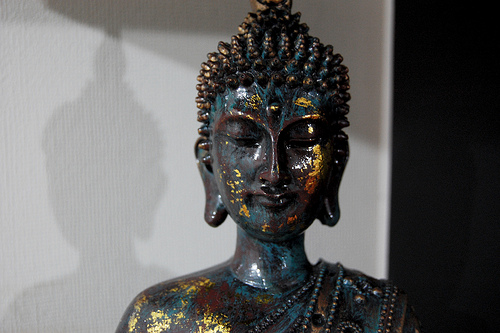
    Photo by sherrattsam
  • Tiny Wisdom: When Time Feels Constricting

    Tiny Wisdom: When Time Feels Constricting

    “An unhurried sense of time is in itself a form of wealth.” ~Bonnie Friedman

    Have you ever felt controlled by time?

    This has been a lifelong challenge for me. Sometimes it can be difficult for me to truly immerse myself in the present, because I can feel constricted by imaginary strings, tethered to an invisible clock.

    Years back, I always snapped from ease to anxiety at the end of a yoga class, tiptoeing toward the door with an eye on my watch while others melted into bliss in their final relaxation pose.

    While I now allow myself to take a full shavasana (and leave my watch at home), I still occasionally find myself being rigid with time.

    Just this weekend, I rode my bike from Santa Monica Beach to Venice Beach and back, and planned to walk around for exactly a half-hour between rides.

    But I didn’t have a good reason for that arbitrary scheduling; I had other things to do that day, but no need to limit myself to exactly 30 minutes of exploring.

    So instead of following my well-laid plan, I chained my bike and then walked along the shore for as long as I felt like doing it—which turned out to be a little shy of an hour.

    It almost felt like time stopped, just because I stopped thinking about it. And it didn’t cause any great disruption to my day. If anything, it enhanced it, because that sense of freedom and ease permeated everything else I did.

    I realize we can’t always disregard the clock, but we can liberate ourselves by expanding beyond our self-imposed restrictions—even if it only means lingering for just a little longer than usual.

    Maybe it’s choosing to sip your coffee while basking in the sunlight for a few minutes, instead of rushing to your car.

    Or chatting with someone new at the gym for a bit instead of hightailing it to the showers.

    Or simply releasing the urgency that creates haste and stress.

    Remember when we were kids, and we tried to do something difficult, like sign our names in cursive? The adults in our lives often told us to take our time—to realize there was no rush, so we could just relax and focus on the task at hand.

    Usually that only took a moment or two more than it would otherwise, but those minutes made a huge difference.

    Isn’t enjoying our lives just as worthy of that relaxed attention?

    We all have places to go and things to do, but we can only enjoy those experiences if we release the tension that binds us. Most often, we put that pressure on ourselves—which means we have the power to release it.

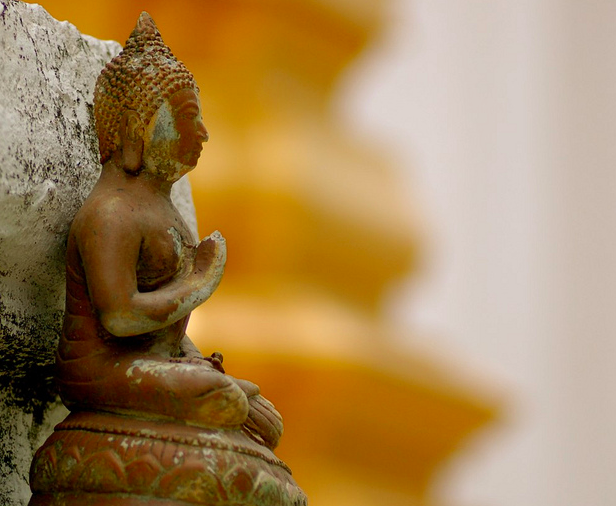
    Photo by h.koppdelaney

  • Tiny Wisdom: The Things We Don’t Want to Do

    Tiny Wisdom: The Things We Don’t Want to Do

    “If a man does not keep pace with his companions, perhaps it is because he hears a different drummer. Let him step to the music which he hears, however measured or far away.” ~Henry David Thoreau

    Every now and then, I get an email from someone telling me I should attend or speak at some conference that attracts lots of passionate bloggers or inspiring people interested in personal development.

    A part of me always feels a little conflicted when I receive an invitation or suggestion regarding an event like this because I think I should want to go, but I just plain don’t.

    I’m an introvert and I don’t love big crowds, which makes a conference environment far from appealing.

    I also don’t enjoy sitting for great lengths of time, watching back-to-back presentations. As someone whose work requires me to spend a great deal alone, caught up in my head, I prefer to spend my off time engaging with the world and being active.

    Lastly, I feel a need to create some balance between my spiritual/personal growth inclinations and the part of my life that has nothing to do with blogging or self-discovery.

    That means I’d far rather spend three off-days hiking or exploring a new city than attending some type of conference, workshop, or seminar.

    So why do I find myself questioning my instincts and trying to change my own mind?

    I do it because I think I should want to be involved in those events—because other people do, because this is my field (and there’s a lot of money to be made in speaking), and because I fear I may be somehow missing out.

    Ultimately, I end up creating mental drama just to avoid standing by my own convictions and accepting there’s nothing wrong with them. Ironically, I end up missing out on what I actually want to do when I worry about what I might be missing by not doing something else.

    I suspect this is something a lot of us do—push ourselves to do things we don’t find appealing because we think we should. I understand that sometimes we need to do things we don’t enjoy if they’re part of a larger process we’re committed to.

    But when it comes to the big decisions about where we’re going professionally, or how we spend our time, we owe it to ourselves to recognize what we genuinely don’t want.

    Every time we act against our own instincts, we reinforce to ourselves that there’s something wrong with them—and there isn’t. There are no right or wrong choices when it comes to how we want to spend our time.

    There’s just what’s right for you, what’s right for me, and the possibility of us each experiencing true joy by identifying and honoring those things.

    My “right” path may look nothing like yours, and both are completely valid.

    With this in mind, I’m now finally ready to acknowledge and respect my own interests and preferences:

    Hi! My name is Lori, and I strongly dislike conferences, workshops, seminars, and all other events of the sort.

    I think I’ll stop questioning that now, and allow myself to be drawn to what genuinely feels right.

    Is there something you’ve been pressuring yourself to want or like that you just plain don’t?

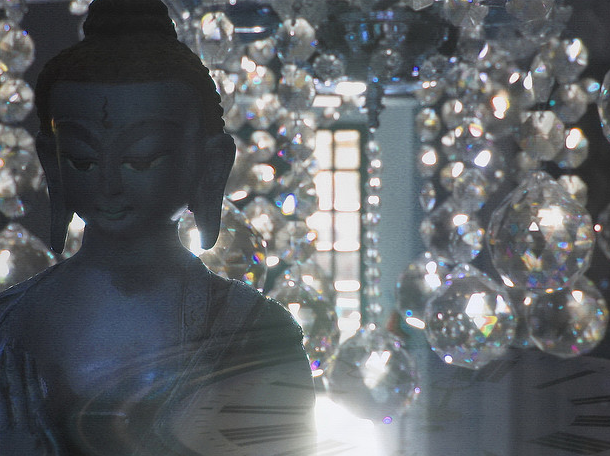
    Photo by SarahC73

  • 40 Little Things That Make a Big Difference in Your Day

    40 Little Things That Make a Big Difference in Your Day

    “Enjoy the little things, for one day you may look back and realize they were the big things.” ~Robert Brault

    I believe life is in the details. Ongoing small gestures can mean so much more than one grand display of love. Simple pleasures throughout the day can be far more gratifying that one amazing weekend. When you connect the dots between all these little joys, life seems fuller and more satisfying.

    I’ve created a list of all the little things that fill me with bliss. Here’s what I’ve got so far:

    1. Breakfast in bed. You don’t need someone to bring it to you—just make it and then curl back up with your duvet!

    2. Cuddling in bed in the morning. A body pillow isn’t quite the same as someone you love, but sometimes it just feels good to hold something in your arms.

    3. A smile from a stranger; give one and you may get one. (more…)

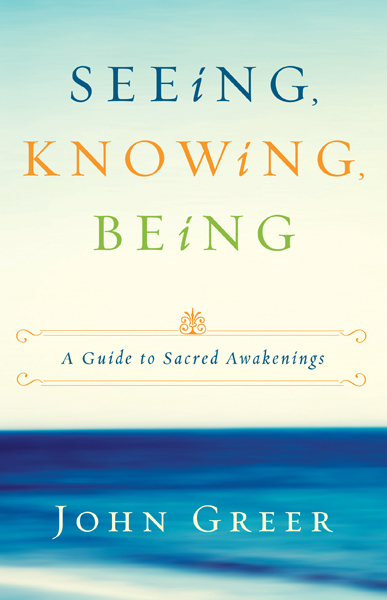
  • Giveaway and Interview: Seeing, Knowing, Being by John Greer

    Giveaway and Interview: Seeing, Knowing, Being by John Greer

    Note: The winners for this giveaway have already been chosen. Subscribe to Tiny Buddha for free daily or weekly emails, and to learn about future giveaways!

    The winners:

    Regardless of our individual beliefs, we all want to feel a sense of wholeness to experience the present moment with peace and connection.

    It’s the foundation of spiritual practice, however we define that individually: We want to stop feeling a need to fix ourselves, and instead awaken to the infinite beauty of who we already are.

    In his powerful new book Seeing, Knowing, Being, meditation teacher John Greer explores insights from a wide range of spiritual traditions, inviting us to challenge our perceptions and thought patterns to access our inner knowing and experience oneness with the world around us.

    Laden with evocative metaphors, the book breaks complex ideas into understandable parts, inviting us to challenge what we think know for a greater awareness of what actually is.

    I highly recommend Seeing, Knowing, Being to anyone looking to explore or deepen their understanding of non-duality.

    The Giveaway

    To enter to win 1 of 2 free copies of Seeing Knowing Being: A Guide to Sacred Awakenings:

    • Leave a comment below
    • Tweet: RT @tinybuddha Book GIVEAWAY & Interview: Seeing, Knowing, Being http://bit.ly/O9HQWS

    If you don’t have a Twitter account, you can still enter by completing the first step. You can enter until midnight PST on Sunday, July 29th. (more…)

  • Tiny Wisdom: Think Less, Feel More

    Tiny Wisdom: Think Less, Feel More

    “Get out of your head and get into your heart. Think less, feel more.” ~Osho

    Have you ever felt attached to your thoughts—like you knew you were thinking yourself in circles, but a part of you wanted to keep getting dizzy?

    Now that I’m healthy and energized, three months after my surgery, I’m developing a consistent yoga practice again, and I’m feeling better mentally and physically as a result of doing that.

    But sometimes, when I get to the end of the day, particularly when I know I have a lot to do, I feel resistant to making that time for myself.

    It’s not even necessarily when I’m planning to work through the evening. Sometimes I’ll think, “I have a lot on my mind—I don’t feel like it tonight.”

    But that’s actually a compelling reason to go. Yoga always helps me calm my mind.

    So the other day, I stopped and asked myself: Am I resistant to clearing my head, and why?

    I realized that I wanted to keep thinking because I felt like I was creating solutions, like I was somehow making mental progress. If I took a break to clear my head, I thought, I might miss out on discovering something useful.

    In other words, I felt like sitting around analyzing, assessing, and plotting was somehow more productive than getting out and enriching my mind and body.

    What a misguided notion. While there’s something to be said for thinking things through, sometimes it’s far more useful to let everything go, create some space, and then see what ideas and feelings emerge in that new place of clarity and stillness.

    Taking a break in any fashion can feel like losing control—at least it can for me. But releasing control often feels far better than we imagine it will.

    Creating space feels good. Connecting with our bodies feels good. Stopping the cogs in our heads—yes, that feels good, too.

    And when we feel good, we increase our odds of doing good, through our work and hobbies.

    I know quite a few people with absolutely beautiful minds. One thing they all have in common is that they make time to nurture them.

    If we want to create and inspire, we need to create room to access inspiration.

    It doesn’t come from sheer mental will. It’s from enabling a flow between our heads and our hearts so that we don’t just know our answers, we feel them, with every ounce of our being.

    Photo by torbakhopper

  • Tiny Wisdom: Remembering the Good Things

    Tiny Wisdom: Remembering the Good Things

    “Joy in looking and comprehending is nature’s most beautiful gift.” ~Albert Einstein

    As I was walking to my apartment just now, I heard the voice of a child who was walking in the same direction with an adult across the street.

    With his enthusiastic, high-pitched voice he asked, “Remember we went on a plane? And it was really, really high in the sky?”

    Then just a few seconds later he asked, “Remember we saw a baseball game?”

    And then a few seconds after that, “Remember we had spaghetti?”

    A part of me wanted to keep walking parallel from them, even when I arrived at my place.

    I wondered: What else might he remember? What else did he enjoy? And just how purely did he experience those things?

    Odds are, he could recall all kinds of little details that most adults wouldn’t even register.

    He may have remembered the long line at the airport, but he probably offset any annoyance with pure fascination over the propeller outside his window.

    He may have felt disappointed if his team lost, but he probably savored his hot dog, regardless, and couldn’t wait to describe the taste.
    He probably got messy in that spaghetti, but thought that was absolutely awesome.

    And somehow, in his childlike memory, eating that pasta was just as worthy of remembering as flying in a plane.

    Kids have an amazing ability to recall all kinds of little joys, likely because they appreciated them in those moments in a way we often don’t as adults.

    It’s partly about mindfulness; it’s hard to reminisce about simple pleasures if you weren’t really immersed in them when you experienced them.

    But it’s also about how we internalize those events in the present.

    Do we look back with excitement and wonder, remembering everything that made those moments magical? Or do we look back with disapproval and judgment, focusing instead on everything we felt was lacking?

    Maybe the key to joy is learning not just to create it, but also to recycle it—to bask in all the good that has been and realize how fortunate we are for having known it.

    In fostering this type of gratitude and awe, we increase our ability to recognize the joy that is right now.

    Photo by Jan Kromer

  • 8 Reasons to Buy the Tiny Wisdom eBook Series (Available Now!)

    8 Reasons to Buy the Tiny Wisdom eBook Series (Available Now!)

    Since Tiny Buddha launched in 2009, I’ve written hundreds of “Tiny Wisdom” blog posts. In the beginning, I kept these short and peripheral.

    Over time, I started putting more of myself into them and giving them a lot more love and attention. Suddenly, these posts became far more popular than I ever thought they’d be.

    They aren’t lengthy how-to posts with lists of action steps. They’re short reflections on the little things that make a huge difference in our daily lives. They’re reminders of what matters and how to embrace it, right now, instead of focusing on all the things that only bring us down.

    They’re concise. They’re focused. Most importantly, they’re relevant to the challenges we all face every day.

    In recent months, I’ve received countless emails from readers asking me to compile some of these posts into an eBook—so I decided to do something even better.

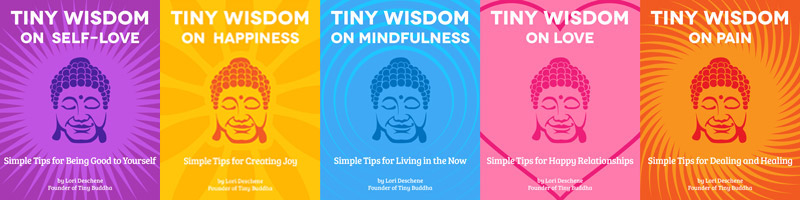
    I created 5 short eBooks with posts on the following topics:

    • Self-Love
    • Happiness
    • Mindfulness
    • Love
    • Pain

    These eBooks are all available today, individually or as a complete package. On it’s own, each eBook costs $4.97. The full package of five costs $19.97—which essentially means you get one free if you buy the whole series.

    (more…)

  • Tiny Wisdom: Caring About What Others Think (and Do)

    Tiny Wisdom: Caring About What Others Think (and Do)

    “No one can make you feel inferior without your consent.” ~Eleanor Roosevelt

    Growing up I often heard the phrase “You shouldn’t care so much.”

    Derivatives of this idea included: So what if they’re talking about you. Who cares what they think? He’s a jerk; why do you care about him? You’re your own person; why do you care about what she’s doing?

    I associated the word “care” with stress, because in all these instances, caring meant feeling bad.

    It meant being overly worried about someone’s opinion of me, or feeling for someone who didn’t feel for me, or thinking someone was somehow better than me.

    I frequently responded, “What kind of person would I be if I didn’t care?”

    I also argued that not caring could be a limiting choice.

    Sometimes someone else’s criticism contains a valuable lesson. Sometimes someone who seems like a jerk really needs someone to take a chance on him (or her). Sometimes someone else’s choices help us illuminate the path we really want to take.

    If we decide to stop caring in all instances that might push and challenge us, we risk closing ourselves off to insights, relationships, and ideas that could change our lives for the better—and potentially do the same for others.

    I’ve since realized that the real message isn’t to stop caring, but instead to recognize how we care and why so that we don’t give our power away.

    Sometimes we care with love; sometimes we care with fear. Sometimes we care with self-respect; sometimes we care with self-contempt. Sometimes we care with a sense of possibility; sometimes we care with fears of inferiority.

    The important thing is that we don’t let caring about people or circumstances detract from our ability to care for ourselves.

    A friend of mine recently told me she’s stopped caring about what people expect of her. Knowing that she values those relationships, I concluded that she really meant she stopped stressing about how well she met their expectations.

    She essentially decided to stop worrying about things outside her control, and focus instead on all the things that were within her power.

    That’s what it means to care for ourselves: to do our best and celebrate that, even as we keep learning and growing.

    Photo by Fountain_head

  • Tiny Wisdom: Loving the Process of a Passion

    Tiny Wisdom: Loving the Process of a Passion

    “Never underestimate the power of passion.” ~Eve Sawyer

    Last week, I began writing my second book. I originally intended to start a month ago, but life got in the way, as it often does.

    In order to make my September deadline, I’ll need to maintain a high level of output and adhere to a fairly rigid schedule.

    Four hours after starting my first day of writing, I felt I’d produced very little, and I wasn’t thrilled with what I’d written, so I started worrying about that.

    What if I keep rewriting but still don’t feel satisfied with the result? What if I don’t choose the best personal stories to share? What if my stories distract from my points instead of enhancing them?

    Essentially, I went into full-on neurotic writer mode, largely because I felt overwhelmed by the work ahead.

    Then I remembered two important things: For one, I felt exactly like this when I started my first book. I didn’t know entirely how it would take shape, or if I’d feel good about it when I was done, but ultimately, I did.

    I immersed myself in the process, and the process created the outcome—not my will, not my fears, but the act of showing up every day.

    That leads me to the second thing I remembered: The point is to enjoy the process—not just to finish the book, but also to really savor the experience of writing it.

    It’s bizarre how sometimes something joyful can seem like a means to an end, when really, the means is, in itself, an end.

    The process of a passion isn’t just the road to an outcome, though of course we have specific goals in mind. The process is where the love is.

    Raising a child isn’t just about setting them loose on the world. It’s about the everyday experience of nurturing and teaching.

    Creating a business isn’t just about building a moneymaker. It’s about the everyday journey of the purpose.

    It’s the same with restoring a car, or recording an album, or working toward anything meaningful with a concrete endpoint down the line: The uncertain moments that lead to completion are tiny opportunities for complete bliss.

    We will get where we’re going—or perhaps somewhere even more amazing than we knew to imagine—if we show up and put our hearts in it.

    In finding value along each step of the journey, we inevitably arrive at a valuable destination.

    Photo by Wonderlane

  • Tiny Wisdom: Help People Help Themselves

    Tiny Wisdom: Help People Help Themselves

    “Nobody can give you wiser advice than yourself.” ~Cicero

    Since I write about overcoming adversity, I receive a lot of emails and blog comments from readers seeking advice.

    When I first started this site, I promised myself I’d never tell readers not to email seeking feedback. I’d seen this type of disclaimer on other blogs, and I decided I wanted to do things differently.

    I wanted to be approachable and helpful—to offer guidance as best I could, as time allowed. After all, that’s why I do this—not to talk at people, but to make friends and be a friend.

    Earlier this year, a blog post I’d written about dealing with break-ups passed the 300 mark for comments—all from readers who were hurting over their former relationships and looking for guidance and relief.

    In seeing so much immense pain, I started feeling powerless to really make a difference—like I wasn’t qualified to tell so many people what they should do.

    One day something occurred to me: Often when I turn to someone for advice, I’m not really looking for answers. I’m simply looking to be heard. When I do receive answers, I’m not always able to utilize them.

    No matter how many times others tell us what we should think or do, we’re not fully able to follow their advice unless we’ve formed our own insights.

    All the shared wisdom in the world can’t compare to one genuine epiphany.

    So I’ve changed my approach a little, when it comes to emails and comments from readers seeking advice.

    If I have an idea that might be helpful, I put that out there—but for the most part, I answer questions with more questions to help them form their own conclusions.

    The reality is that I am no wiser than them; I just happen to publicize the things I observe and learn on a given day. And much like them, I sometimes need a little help accessing the answers within.

    Maybe that’s what it means to really help people—to help them help themselves.

    None of us has it all figured out, and maybe we never will.

    Acknowledging this, to me, is the difference being having followers and friends. With followers, you lead the way. With friends, you support them in discovering it for themselves.

    Photo by ronsaunders47

  • Tiny Wisdom: Being Both Strong and Hurt

    Tiny Wisdom: Being Both Strong and Hurt

    “Pain is not a sign of weakness, but bearing it alone is a choice to grow weak.” ~from my book, Tiny Buddha

    A while back, my friends and I dealt with a challenging situation that profoundly affected all of us, including one friend who struggles with intense anxiety.

    While I’m usually a proponent of giving specifics, I’d rather not call her out publicly, so suffice it to say it was a hard time, and everyone felt the weight of it.

    Unexpectedly, this friend emerged as a source of support and comfort for everyone else.

    In the face of tremendous adversity, something in her shifted, and she channeled a sense of strength to help everyone else cope better.

    Except, she didn’t see it that way. In a private conversation with me, she disclosed that she wasn’t strong. She was only pretending, and was secretly crumbling inside.

    She was hurting, feeling deep, overwhelming emotions, and putting them aside to help other people. In her eyes, she was weak; she was just trying to be considerate of everyone else.

    I told her she misunderstood the definition of strong. It doesn’t require us to not feel. It requires us to act in spite of our feelings, and to also be willing to share them, just as she was doing then.

    She was admitting to me that she was struggling, after helping others who were hurting, just like her.

    That isn’t a sign of weakness. It’s a sign of humanity. Sometimes we’ll need to lean on someone; sometimes we’ll be there to hold someone else up.

    In a blog post I recently read about strength, a writer suggested we tell people to be strong when we’re uncomfortable with their pain—as if this implies they should stop talking, crying, or expressing themselves.

    Maybe we don’t have to choose one or the other—sharing our feelings or accessing our personal power. Maybe the key to fostering fortitude is realizing it’s possible to be simultaneously strong and hurt.

    Even the most firmly rooted tree can break its branches in a storm. Strength doesn’t mean we’re invincible. It means we have the capacity to move through the pain and heal.

    Photo by Fuzzcat

  • Giveaway and Author Interview: Patience by Allan Lokos

    Giveaway and Author Interview: Patience by Allan Lokos

    Note: The winners for this giveaway have already been chosen. Subscribe to Tiny Buddha for free daily or weekly emails and to learn about future giveaways!

    The Winners:

    Patience is one of those qualities we aspire to possess, but sometimes struggle to embody. We associate patience with goodness—and for good reason, since patience enables us to be loving and supportive to others.

    But patience is also a fundamental building block of happiness. It just plain hurts to feel harried, stressed, rushed, and eager to get there—whether it’s a physical space or a state of being.

    This is something I know all too well, as I’ve often felt pushed by this subconscious internal need to do things quickly and perfectly, which just exacerbates my anxiety, since this translates into a lack of patience with myself.

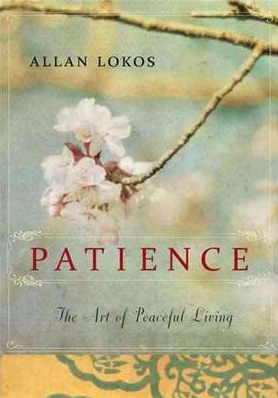
    It’s something I work at, which is why I was excited to read Patience: The Art of Peaceful Living, by Allan Lokos.

    The founder and guiding teacher of The Community Meditation Center in New York City, Allan Lokos has studied and practiced meditation for nearly two decades. In his insightful book, Lokos provides gentle encouragement and practical tools to step back, slow down, and foster a sense of equanimity.

    I highly recommend Patience to anyone who feels easily annoyed, angered, and stressed, and to those who want to deepen their existing mindfulness practice.

    The Giveaway

    To enter to win 1 of 2 free copies of Patience: The Art of Peaceful Living:

    • Leave a comment below
    • Tweet: RT @tinybuddha Book GIVEAWAY & Interview: Patience by Allan Lokos http://bit.ly/KVyQ85

    If you don’t have a Twitter account, you can still enter by completing the first step. You can enter until midnight PST on Friday, July 6th.  (more…)

  • Tiny Wisdom: Stop Fighting and Be Easy

    Tiny Wisdom: Stop Fighting and Be Easy

    “If you surrender completely to the moments as they pass, you live more richly those moments.” ~Anne Morrow Lindbergh

    There was a time when I was full of angst, and desperate to unleash it.

    Since I felt misunderstood in some of my relationships, I’d fight battles I knew I wouldn’t win and then only consider letting go after a mini emotional break down.

    I needed to tire myself out in order to surrender. I needed to fully defuse my distress to give myself some peace. Though I wouldn’t have admitted it, I was addicted to that drama. It was only when I broke down that I felt any relief.

    Most of the time, I carried my anguish in my body, like a thick layer of nerves right below the surface. I was a constantly bubbling volcano, eager to erupt.

    I no longer fight through life in this way, but there are times when I feel a pervasive sense of alarm, a low-level sense of nervousness that is lessened but not fully eliminated through meditation.

    It’s usually when responsibilities and deadlines are piling up, and I worry that it won’t all get done.

    But the thing is: It always does. And it’s not usually because of worrying, over-analyzing, or any other type of stressful mental activity.

    Things get done because I am capable—not because I fight to finish.

    What I’ve learned is that surrender doesn’t have to follow battle. It doesn’t have to be a side effect of exhausting ourselves in some way, mentally, physically, or emotionally.

    Surrender is a choice to be easy, to nurture a sense of inner calm that can carry us through even the most difficult circumstances.

    It’s choosing not create drama where it doesn’t need to be, and realizing life doesn’t have to feel like a series of conflicts and crises.

    It’s letting go of the need for control and realizing that, whatever happens, we’ll be okay.

    It’s easier to say, “Be easy,” than it is to actually do it, ironically, because it takes effort to stop expelling so much effort—to refrain from spinning in circles in our heads and simply take life as it comes at us.

    The good news is that we have countless opportunities to practice easing in the moment.

    It helps when we remember: Our power isn’t in our ability to fight life. It’s in recognizing when we don’t have to struggle.

    Photo by Rob Larson

  • Tiny Wisdom: Actions Speak Louder Than Words

    Tiny Wisdom: Actions Speak Louder Than Words

    “Actions speak louder than words, but not nearly as often.” ~Mark Twain

    A while back I wrote a blog post about giving people the benefit the doubt and suggested, as I often do, that people rarely intend to be hurtful.

    Someone wrote in the comments that I’ve obviously never encountered a sociopath.

    This got me thinking about the many times I’ve heard women refer to men they’ve dated as sociopaths and narcissists. It occurred to me that many of those men likely treated them horribly but may not have had mental disorders.

    There are sociopaths out there, but more often than not when people hurt us, it’s not because of psychiatric diagnoses. It’s because they’re hauling around pain from their pasts and crashing it into everyone they meet.

    When someone knowingly manipulates or uses others, or deliberately tries to control or intimidate them and they aren’t mentally ill, it’s rarely a happy, well-adjusted person who simply decided to be heartless and cruel.

    In understanding this, we can be compassionate, but that doesn’t mean we need to willingly accept mistreatment.

    The question then becomes: how do we know when to give someone the benefit of the doubt and when to withhold it?

    Last week a reader shared an insightful Maya Angelou quote that read, “When people show you who they are, believe them.”

    While I don’t believe any one action defines who someone is, I think there’s something to this. Actions speak louder than words. And repeated actions are what shape our character and reputation.

    If someone says they want to spend time together but repeatedly fails to show up, they are communicating that they aren’t willing to follow through on their promises.

    If someone says they’re trustworthy but repeatedly lies, they are communicating that their word can’t be trusted.

    If someone says they want to change but repeatedly fails to make an effort, they are communicating that they aren’t willing to do things differently.

    Acknowledging this isn’t forming judgments. It’s recognizing the facts so that we can make a wise choice based on how things are—not how we want them to be.

    We may recognize we’re being mistreated and choose to set and enforce a boundary. We all deserve second chances, and sometimes a third or fourth.

    But other times we need to open our eyes so that we know when enough is enough.

    It’s never our fault when someone else hurts us, but it’s within our power to stop allowing it.

    Photo by specialoperations

  • Tiny Wisdom: Treat People How They Want to Be Treated

    Tiny Wisdom: Treat People How They Want to Be Treated

    “If we are to live together in peace, we must come to know each other better.” ~Lyndon Johnson

    A while back, I told a friend that I try to follow the old adage “Treat people how you wanted to be treated.” He responded that he tries to treat people how they want to be treated. This really got me thinking.

    I’ve always tried to gauge people’s needs by relating to them—by seeing myself in them, and giving them what I would want if I were in their shoes.

    It never occurred to me consider how I differ from them, and how their wants may differ, as well.

    This friend of mine, he values connection and support, just like everyone else, but he’s not someone who likes to talk about his problems at length. In fact, he prefers to get things off his chest and then move on, instead of dwelling on things that bother him.

    A mutual friend of ours enjoys dissecting a problem from every angle. If he treated her how he likes to be treated, he may try to help her let go and move on quickly, as that’s how he does things.

    But he doesn’t treat her that way. Instead, he simply listens until she’s done talking, because he understands that she appreciates that.

    He understands that what works for him isn’t necessarily what works for everyone; and that there is no right or wrong when it comes to the support we want from other people.

    What a beautiful way to be there for someone—to try to ascertain what they value in a friendship, and then provide it, without question or judgment.

    I’m not suggesting we enable people when they’re compromising their emotional well being, or facilitate codependent relationships by giving in to unhealthy requests.

    I’m suggesting we can make the world a better place by meeting people where they are and instead of assuming that’s where we are.

    It’s recognizing when someone wants space, even if you’d prefer to be surrounded by people in a similar situation.

    It’s realizing when someone wants vocal appreciation, even if you’d feel uncomfortable with that kind of attention.

    It’s moving beyond empathy to understanding, and building stronger relationships in the process.

    We are so similar, and yet so different. Sometimes connection is seeing ourselves in each other. Sometimes it’s stepping outside ourselves, and honoring what we see.

    Photo by Alex [Fino] LA

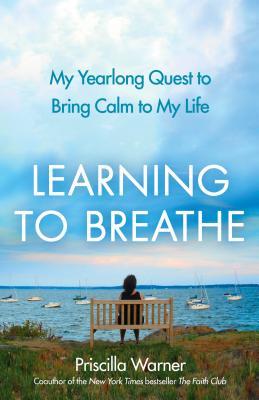
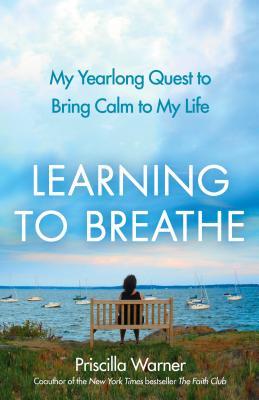
  • Giveaway and Interview: Learning to Breathe by Priscilla Warner

    Giveaway and Interview: Learning to Breathe by Priscilla Warner

    Note: The winners for this giveaway have already been chosen. Subscribe to Tiny Buddha to receive free daily or weekly emails and to learn about future giveaways!

    The Winners:

    In the past decade, I have read more than my fair share of self-help books.

    Though I’ve enjoyed the ones with countless action steps and workbook sheets to change my life, I’ve felt the most moved and inspired by honest, personal stories of overcoming adversity.

    That’s how I felt in reading Priscilla Warner’s brave book, Learning to Breathe—like I was seeing straight into the heart of someone else who’d had her fair share of personal struggles, and receiving the profound gift of her experiences and insights.

    Priscilla Warner struggled with debilitating anxiety for most of her life, and formerly self-medicated with vodka, before a doctor prescribed Klonopin. After four decades of overwhelming panic attacks, Priscilla adopted the mantra, “Neurotic, Heal Thyself.”

    In her memoir, Learning to Breathe, Priscilla chronicles her journey through various healing modalities—including meditation, chanting, and other lesser-known alternative treatments—and offers readers hope for peace and lasting change from the inside out.

    Since I hold the utmost respect and admiration for Priscilla, I’m grateful that she took the time to answer some questions about her book and offered to provide two free copies for a giveaway.

    The Giveaway

    To enter to win 1 of 2 free copies of Learning to Breathe:

    • Leave a comment below
    • Tweet: RT @tinybuddha Book GIVEAWAY & Interview: Learning to Breathe http://bit.ly/LxzDNS

    If you don’t have a Twitter account, you can still enter by completing the first step. You can enter until midnight PST on Friday, June 29th. (more…)

  • 4 Powerful Lessons from a Life Well Lived

    4 Powerful Lessons from a Life Well Lived

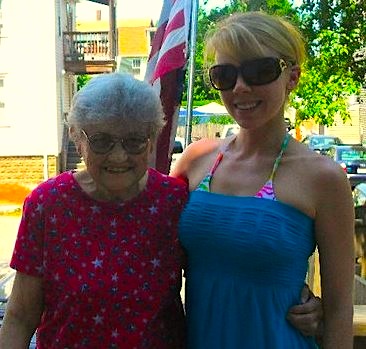
    Lori and Grammy

    “We must each lead a way of life with self-awareness and compassion, to do as much as we can. Then, whatever happens we will have no regrets.” ~Dalai Lama

    This year on June 4th, one of my greatest heroes passed away.

    I’d been planning to travel back to Massachusetts mid-month for my sister’s bridal shower, but I learned at the end of May that my grandmother was in the hospital.

    I knew she’d been in rehab since she’d fractured her hip, but I didn’t know she’d gained 30 pounds of water weight and her kidneys would soon fail her.

    After my family told me it didn’t look good, I came home on the red eye on the 2nd, hoping to hear her voice one last time. She was too medicated to speak when I arrived, but I was able to sit with her and more than a dozen of my family members for all of June 3rd.

    There were so many of us there, unwilling to leave her side, that the hospital staff opened the adjoining room, where we set up a table with cold cuts and sub rolls for lunch.

    It was exactly what she would have wanted, and a testament to the legacy she left behind: Her huge, loving family stayed there, together, offering her the love and strength she’d given us for years.

    My mother asked me to write and deliver her eulogy—which was both a challenge and an honor. She’d touched so many people’s lives, including mine, and in that moment no words seemed sufficient.

    I feared I wouldn’t do her justice, but I knew that if she were still around she’d be proud of me, no matter what I wrote.

    I am who I am in large part because of my Grammy, Jeanne Santoro (and her late husband Henry “Grandpa Joe” Santoro, to whom I dedicated my book).

    So now I’d like to share with you some of the lessons that have stuck with me the most. Grammy, you taught me that…. (more…)

  • Tiny Wisdom: Rebuilding Trust After Being Hurt

    Tiny Wisdom: Rebuilding Trust After Being Hurt

    “When mistrust comes in, love goes out.” ~Irish saying

    An old friend of mine felt betrayed by her boyfriend, but chose not to leave him. Instead, she made him pay for it over and over again.

    Through subtle digs and less subtle slights, she repeatedly expressed that she felt contempt for him. But instead of forgiving or walking away, she stayed behind a wall of resentment.

    Soon he started responding in kind, until their relationship became a container for mutual silent bitterness. It was two people sharing a suffocating space, overwhelmed by the weight of everything they didn’t say.

    I suspect many of us can relate to that feeling of clinging to a grievance. In at least one of our relationships, we’ve felt angry and indignant, and despite wanting to forgive, we just couldn’t.

    I know I’ve been there before.

    It’s not easy to forget when someone breaks your trust, especially if you fear it might be broken again, but holding onto doubt is a surefire way to suffer.

    Little hurts worse than the suspicion that someone else might hurt you.

    This isn’t the kind of thing you can just brush off through positive thinking. You can’t make yourself feel trusting by telling yourself you should be, or rationalizing away your feelings.

    The reality is it takes time and effort to trust again. It takes the courage to acknowledge how you feel and willingness from the other person to hear and honor it. It takes a mutual commitment to move beyond what happened instead of reliving and rehashing.

    But most importantly, it requires you to believe in the goodness and positive intentions of the person who hurt you.

    You have to believe someone can treat you with respect and consideration—even if it takes you a while to get there—or else you’ll never let your guard down. That’s a painful place to be.

    The thing about being defensive is that everything becomes a battle, and no one ever wins.

    Of course this doesn’t mean we can ever know for certain that someone won’t hurt us again. The only way we can know if we’re able to trust someone is by first giving them trust.

    That means we need to ask ourselves: Is this relationship worth that risk?

    Is it worth feeling vulnerable?

    Is it worth forgiving?

    Is it worth letting go of the story?

    And if it’s worth it, what would it look like to give trust, starting right now?

    Photo by Carlos Varela

  • Tiny Wisdom: What We Pay Attention To

    Tiny Wisdom: What We Pay Attention To

    “Tell me to what you pay attention and I will tell you who you are.” ~Jose Ortega y Gassett

    Have you ever suddenly stopped yourself after realizing you’d been dwelling on something insignificant for way too long?

    Maybe it was something that didn’t go right in your day, or something mildly offensive that someone said. Whatever it was, it was something you knew wasn’t a big deal in the grand scheme of things, and yet you felt a need to mentally rehash it over and over in your head.

    I’ve done this many times before. Though I know it’s draining and not even slightly productive, it sometimes it seems like a proactive way to “fix” or “solve” something that somehow felt wrong.

    I suspect it’s also a means to reinforce to myself that I am right and didn’t deserve to be slighted, because rehashing a perceived offense is essentially passing judgment over and over again.

    A while back I realized that every time I give power to the little things that might seem bothersome—when a stranger flips me off on the road, or someone doesn’t return my email right away—I am choosing to be that unproductive, anxious energy.

    Every time I get caught up in my need to feel liked and respected, and my indignation over feeling that I’m not, I am choosing to be the fear of being mistreated.

    Thinking isn’t just an activity—it manifests as a state of being.

    As the Buddha said, what we think, we become.

    Now I’m not suggesting we should swallow our feelings on events big and small in fear they may somehow define us.

    I’m suggesting that we question the thoughts that create our feelings so that we don’t let them consume us—especially when we’re creating drama and unease over something we may not even remember in a few days’ time.

    We spend so much of our time focusing our attention on things that don’t really serve us, when the thing that would serve us the most is to focus our attention inward.

    If we can observe and understand how our thoughts are impacting us, we can change who we’re being and how we’re experiencing the world.

    It starts with a simple realization: We can feel free and present—and be open, here in this moment—if we choose to release the little worries that stand in the way of that.

    Photo by uggboy