Author: Lori Deschene

  • Do You Judge the Person You Used to Be?

    Do You Judge the Person You Used to Be?

    “If you judge people, you have no time to love them.” ~Mother Theresa

    It was the second time I’d gone out to lunch with a new friend I met through this site.

    We’d experienced some of the same things in life, and I instantly admired her attitude and perspective.

    Sometimes when I meet up with people I’ve met through Tiny Buddha, I feel a sense of inner conflict. One the one hand, I want to live up to everything I imagine they expect of me.

    I want to be positive, present, and upbeat—all qualities I aspire to embody in my life and through my work.

    But I also want to be free to just be, in whatever state I find myself on that given day, without worrying about how I’m perceived.

    That’s been my lifelong journey—learning to show up as I am, without fearing whether or not other people will accept that.

    My greatest drive in my life is to be authentic. But if I’m not mindful, I can easily get in my own way.

    As we sat chatting, I found myself feeling more and more comfortable, and relieved that after all the years I’d spent isolating myself, I’d finally learned to relax and be myself in the company of new people.

    We broached the topic of crowds, something I’m pretty vocal about disliking. I made a sarcastic comment, something along the lines of “People are best in small doses.” I meant that I prefer intimate groups of people, but I immediately questioned how it came across.

    That didn’t sound very Tiny Buddha-ish, I thought. Then I reminded myself, “She’ll know what I mean. Clearly I don’t hate people.”

    I wasn’t quite so confident when she said, “Are people best from a computer screen, when you’re sitting alone in your living room?”

    This hit me like a jolt to the stomach, completely knocking the wind out of me. (more…)

  • How to Overcome Passive Aggression: Meet Your Needs by Communicating Clearly

    How to Overcome Passive Aggression: Meet Your Needs by Communicating Clearly

    A couple of weeks ago, while reading a post on a different personal development site, I found a comment from a reader who seemed to question the blogger’s intentions and integrity, as it pertains to how he does business.

    This reader was direct. She didn’t beat around the bush; she came right out and communicated how she felt. For this reason, and because the comment was based in assumptions, it read as somewhat harsh and judgmental.

    Another reader responded to that comment, starting with something along the lines of, “Wow, now isn’t this a wonderful learning opportunity for both of you!”

    In other words, this experience (of the reader offering a critical comment) provided room for the both the blogger and the reader to learn something.

    However, this reader then went on to defend the blogger with wording that seemed passive-aggressive.

    While she first wrote that it was a learning opportunity for both people, her comment then read like a list of reasons the first reader was completely out of line, albeit phrased with words that seemed positive and constructive.

    I realized that I recognized passive-aggression because it’s something I’ve experienced before—on both sides of the table.

    In our attempts to be “positive people,” we might feel a need to stifle our anger and avoid directly confronting people, as if critical thinking is always negative.

    But sometimes we may want to address something that’s bothered us, whether it’s something that pertains to us or someone else we care about.

    It’s only by having the courage to speak up, respectfully, that we can all help each other learn.

    Speaking up respectfully isn’t the same as phrasing everything positively.

    Speaking up respectfully requires us to be clear and direct with our intentions and message, and to accept the consequences of offering it—meaning, understanding that we can only control what we say, not how it is received.

    You’ve probably been on the giving and receiving end of passive-aggression at least once or twice.

    It’s the note your roommate leaves that reads, “I know you probably meant to do the dishes! Don’t worry—I’ll do them tonight, even though it’s not my turn!”

    It’s the fifth time your boyfriend “forgets” to wash your white clothes separately, and the argument he later makes for why he’s just not good at laundry.

    It’s your wife’s inexplicable hostility, when underneath that is something she wants you to do but without having to nag you to do it.

    (Or it’s your note, “mistake,” or antagonism.)

    It’s anger, suppressed and expressed indirectly—and it’s both ineffective and confusing.

    Someone can only meet our needs when they understand them, and someone can only recognize the potential impact of their actions if we’re brave enough to call their attention to it.

    When I first started trying to become more positive, I quickly squelched all critical thoughts, labeling them as “bad.” Ironically, I did this because I thought it was bad to be critical of other people—and in making that judgment, I set myself up to frequently judge myself.

    What I didn’t realize is that I needed to be more discerning between critical thoughts with some constructive intention and critical thoughts that came from my ego.

    The critical thoughts with a constructive intention served a valid purpose, whether it was to help me maintain my boundaries, communicate my needs, or honor my values.

    The critical thoughts that came from my ego usually had to do with fear, wanting to make someone else wrong to feel superior, or even projecting onto someone else the character traits I wished I didn’t have.

    The first type of critical thought is crucial, since it’s a prerequisite to taking care of ourselves. And sometimes, it may also pertain to taking care of people we love, by speaking up when we see someone mistreating them.

    So how do we recognize and avoid passive-aggressive behavior?

    The first step is to accept that you have a right to feel angry.

    You can still be a positive person and feel emotions we typically label as “negative.” And you can be a loving friend, girlfriend, boyfriend, wife, husband, mother, father, son, or daughter while feeling anger in response to something the other person has done.

    Trying not to feel angry doesn’t make anger go away; if anything, it makes it more powerful.

    The next step is to foster self-awareness about what it is you need, or want to express.

    If you don’t realize why you’re angry, it will be impossible to communicate it to someone else.

    When you’re feeling something that confuses you, step back and take the time to ascertain the deepest root problem.

    Are you really angry about a comment someone made, or does it have to do with something you assume that comment means—for example, that your friend doesn’t respect you?

    Are you really upset over one thing someone failed to do, or is it about a pattern of behavior that you think means something—for example, that your significant other doesn’t take your needs seriously?

    Ascertain exactly what’s bothering you, not just on the surface but also underneath the event itself.

    Of course, it could be just the surface level behavior—someone didn’t do what you expected that person to do, and that upset you. (It’s worth noting, once again, that other people can only meet expectations if we express them clearly.)

    Once you know why you’re angry, ask yourself: Do I have a constructive intention in expressing these feelings, or is this coming from my ego?

    The last step is to have the courage to be clear.

    This isn’t always easy, especially if you’re a recovering people-pleaser like me. Owning your opinion or directly expressing your needs opens you up to a potential confrontation. But confrontation isn’t always a bad thing.

    It doesn’t have to imply an argument or an attack. Confrontation can be direct and respectful—and even when it’s not couched with words that imply positivity.

    It’s perfectly valid to say, “When you don’t return my calls for days, I sometimes assume that means you don’t see me as a priority.”

    That’s a lot clearer than responding to a text with, “Wow, you’re alive! I thought something might have happened to you. Just kidding. I know you have a lot on your plate.” While this might seem more positive and understanding, it doesn’t communicate your feelings. And communicating your feelings is integral to addressing them.

    This is something I’ve been working on for a long time, and admittedly, I still struggle. When you’ve spent years being passive-aggressive, it can feel like a knee-jerk reaction.

    But I know one thing for sure: Every time I am clear and respectful about what I feel, I feel proud of myself for having the courage to own that. And every time I resolve an issue that might grow if left unaddressed, my relationships feel stronger.

    The woman who left that comment on the post, I know she’s a lot like me—and all of us, I imagine. We all feel strongly when we believe someone is attacking or judging us, or someone we care about.

    For me, that was the learning experience—the reminder that we’re allowed to feel what we feel, and we’re most effective when we communicate it clearly.

  • Taking Small Steps to Do the Thing That Scares You

    Taking Small Steps to Do the Thing That Scares You

    “Take that first step. Bravely overcoming one small fear gives you the courage to take on the next.” ~Daisaku Ikeda

    When I was younger I loved to climb trees, but I was always too scared to get myself down. Somehow, when standing at the base of a massive Oak, I’d forget how terrified I’d feel at the top.

    So I’d climb away, trying to prove to the neighborhood boys that I was fearless, and then stay up there, clutching the bark and crying, until someone helped me get safely to the ground.

    I knew who I wanted to be—a daredevil Tomboy who was adventurous and tough—but I was deathly afraid of feeling out of control and getting hurt.

    You can probably imagine how terrified I felt when I went skydiving several years ago. I would have sooner put hot pokers into my ocular cavities then let go and free fall from 10,000 feet in the sky.

    It was a lot higher than the tree branches—making the rise to the top a lot more terrifying.

    Still, I wanted to do it. I had a whole list of reasons:

    • I wanted to prove I could.
    • I wanted to feel alive.
    • I wanted to face a fear.
    • I wanted to impress and inspire myself.
    • I wanted to impress my boyfriend, who’d invited me for our second date.

    It would have been easy to psych myself out of going. It was the scariest thing I’d ever done. I was overwhelmed with emotion, and even slightly paralyzed. It didn’t help matters that someone tweeted me a link to skydiving fatalities an hour before my boyfriend showed up.

    In that moment, it seemed far more reasonable to back out. I knew it was unlikely I’d plummet to my death, but even the slightest risk seemed too big to take.

    As I read through the various stories of things that had gone wrong for others, wrestling with my fear of facing a similar fate, I reminded myself that the part of me that wanted to do it was greater than the part of me that was afraid.

    I realized the only way I’d follow through was to stop thinking and focus on doing. I had to start moving toward it, one inch at a time. (more…)

  • The Tiny Buddha Book Is Now Available in Dutch

    The Tiny Buddha Book Is Now Available in Dutch

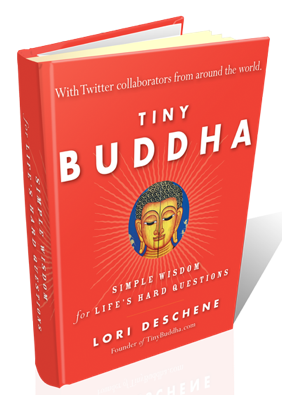
    Today is an exciting day for me, as I’m announcing the first international edition of my book, Tiny Buddha: Simple Wisdom for Life’s Hard Questions.

    If you’ve already learned about the book or purchased it, this post will be redundant for you! For those who haven’t read it, or are interested in the Dutch version, here’s a little information about it:

    This is the first book of its kind—with tweets woven throughout.

    I asked @tinybuddha followers a number of the most challenging questions in life, like:

    • Why is there suffering in the world?
    • What’s the meaning of life?
    • What does it take to be happy?
    • Why are relationships hard?

    Since there are very few concrete answers to the big questions, I wanted to explore many varied perspectives to create a guide of possibilities for joy, purpose, and connection.

    Although these tweets shaped the book, I also included a great deal of my own struggles, successes, and insights—far more than I’ve ever revealed on the blog. From my former battle with depression to my struggles with relationships, I shared how these questions have played out in my own life—and what I’ve learned at each step of the way.

    Through this book, you’ll learn a few ideas to:

    • Let go of pain from the past that’s been weighing you down and holding you back
    • Create a sense of purpose, starting right now, even if you’re not doing what you want to do professionally
    • Change habits that have not served you well and open up to new, better ways of being
    • Experience happiness right now, regardless of your circumstances
    • Improve your relationships
    • Seize the moment to live more mindfully, passionately, and fearlessly
    • Find a sense of control and empowerment in an uncertain world

    You can find the English version of Tiny Buddha: Simple Wisdom for Life’s Hard Questions here. You can find the recently released Dutch version here.

  • 10 Ways to Be Great Today

    10 Ways to Be Great Today

    Earlier this week I wrote a post about the pursuit of greatness. I highlighted how it can sometimes create stress when it manifests as fear that we’re not good enough and might never be.

    In reviewing the reader comments, I felt a sense of deep appreciation for knowing so many truly great people. And I imagined there were far more of them who didn’t comment—some who may not realize just how great they are.

    I decided to put together this list based on some of my favorite related quotes. If you’re looking to nurture greatness, these tips may help you do just that—or they may help you recognize the extraordinary impact you already have on the people around you.

    1. Be a source of kindness.

    “Men are only as great as they are kind.” ~Elbert Hubbard

    We all want to live in a world where people are compassionate, understanding, and kind. Every time we treat someone this way, we do our part to create that kind of world.

    2. Treat everyone equally.

    “The true measure of a man is how he treats someone who does him absolutely no good.” ~Samuel Johnson

    There’s another saying that suggests we should be nice to people on the way up because they’re the same people we’ll meet on the way down. But there’s a more important reason to treat people well: We all thrive together when we stop fixating on “up” and “down” and choose to stand beside each other.

    3. Remember that actions speak louder than words.

    “Great thoughts speak only to the thoughtful mind, but great actions speak to all mankind.” ~Theodore Roosevelt

    Most of us have ideas to make a difference in the world—and we can do these things if we’re willing to act as much as we think and talk. Take your plans out of your head and off the page, even if with just one small step. Wherever you are in the process, that’s the opportunity to be great. (more…)

  • 50 Cheap, Creative Ways to Have Fun

    50 Cheap, Creative Ways to Have Fun

    “Never let lack of money interfere with having fun.” ~Unknown

    Back when we were young we may have asked our parents for money to do things, but more often than not we found creative ways to have fun without spending a dime.

    At least I know I did.

    My cousins and I turned their bulkhead cellar doors into a slide—and the main attraction of our DIY amusement park.

    We turned cardboard paper towel rolls and rice-filled soda bottles into instruments, and entertained ourselves for hours on end. Okay, maybe not hours, but you get the point.

    We didn’t wait for overtime or vacation weeks to have fun. It didn’t really matter what we did. All that mattered is that we were together, and we were fully committed to enjoying ourselves.

    I highly doubt I’d spend one of my adult Saturdays banging on a homemade coffee can drum, but there’s something to be said for getting a little creative with your downtime—especially since a lot of us spend a great deal of time immersed in routines and technology.

    If you’re looking for some cheap, creative ways to enjoy the weekend—or perhaps an upcoming weekday you’ve chosen to liberate—I recommend:

    Have Fun Outside

    1. Take a “flip the penny” hike in the woods. Assign each side as right or left, and then when you come to a fork in the road, flip to see which way you go. (Just make sure you keep track of where you’re going so you don’t get lost.)

    2. Host a modern scavenger hunt, using technology.

    3. Have a picnic in the park and ask everyone to make something from scratch.

    4. Make your own kite, then head to the beach to fly it.

    5. Take up urban foraging—the act of picking free fruits, vegetables, and edible plant life around your city, where sanctioned.

    6. Start a nature collection—collect interesting shaped rocks or shells—and spend the day getting it started.

    7. Start a garden on the cheap using some clever ideas from TheStreet.com.

    8. Download a bike map app for your iPhone and explore a new area.

    9. Have a nostalgia hunt at a flea market. Look for GI Joes, My Little Ponies, Cabbage Patch Kids, or anything else you loved as a kid.

    10. Go geocaching—a “high-tech treasure hunting game played throughout the world by adventure seekers.”

    Have Fun with Food

    11. Swap family recipes with a friend and make each other’s to enjoy together.

    12. Make ingredients gifts for upcoming birthdays and events—get a jar, decorate it, and then layer cookie ingredients inside.

    13. Have a cookie swap party. Everyone makes a dozen and goes home with a dozen of all different types of cookies.

    14. Take turns hosting dinners with friends. It’s much less expensive than going out to eat, and it gives everyone a turn to host.

    15. Host pot luck dinners based on food themes. Everyone brings something Italian, and the next time Thai, and the next time Chinese.

    16. Have a food art party—everyone needs to bring something that’s both edible and creative.

    17. Have a budget food contest. Everyone has to cook a dish spending no more than $5 or $10. Eat and vote on the best budget dish!

    18. Start your own Julie and Julia project—grab a cookbook, start working your way through it, and blog about it as you go.

    19. Make a recipe book of all your favorite dishes to give to someone you love.

    20. Have an ugly cake contest. Have all of your friends make a desert, and then before you enjoy them together, vote on which is the ugliest!

    Have Fun with Entertainment

    21. Have a karaoke night using the YouTube karaoke channel.

    22. Look on Craigslist for your area to see if there are any free concerts going on in nearby parks.

    23. Have a movie marathon with one or two friends where everyone brings their favorite DVD.

    24. Have an independent-film marathon, watching free indie videos online.

    25. Spend a day looking for free street performances in the nearest big city. In the summer particularly, there’s a ton!

    26. Host your own open mic night and invite all your most talented musician, comedian, and poet friends.

    27. Have a culture day—visit a museum on a free day, listen to classical music on the way, and watch a classic movie in the evening.

    28. Call your local theater to see if they take volunteer ushers. Many theaters give free tickets to volunteers who either seat guests or clean up post-performance.

    29. If you have children, host a family barbecue where the adults catch up while the kids come up with a little show to perform later in the evening. (My favorite childhood memories all involve a show with the cousins!)

    30. Use Facebook to get a group together for a flash mob. You’ll need a lot of people—and undoubtedly, this requires work—but it can be a ton of fun to prepare and carry out! Here are 15 flash mob videos to get the creative juices flowing.

    Have Fun by Trading

    31. Host a clothes swap day where everyone brings clothing and accessories they no longer want, and everyone goes home with something new. (This may be more for the ladies.)

    32. Exchange homes for a night. When you’re staying at your friend’s high-rise condo and she’s decompressing in your claw-foot tub, a relaxing night in will have a whole new sense of excitement.

    33. Trade gear—let your friend use your bike while you learn to rollerblade.

    34. Trade books with a friend and then get together to discuss the most insightful, helpful, or entertaining parts.

    35. Have a board game night where everyone brings their favorite game. (Okay, so this is more sharing than trading).

    36. Trade your services for someone else’s. Offer to help your painter friend set up a website in exchange for painting your bedroom. It will be a fun, free, productive afternoon!

    37. Have a no-money garage sale on a sunny afternoon. List on Craigslist everything that you have that you’d like to get rid of, and include a list of everything you want in exchange.

    38. Trade ideas. Ask your friend to share his or her favorite way to spend a day off, then you share yours. You can either do them separately and report back to each other, or do them together on two respective off days.

    39. Trade videos with a loved one who lives far away. Each of you plan a day of fun, without telling each other what it will entail. Then go through the day with the intention of creating a joy-filled video to send the other one later that evening.

    40. Trade blogs. You host your friend’s blog for a day and let him or her host yours. If you both write about different niches, this is an incentive to try something new so that you can write about it.

    Have Fun by Giving Back

    41. Create a digital product about something you enjoy and donate the proceeds to charity.

    42. Host a free webinar sharing something that you’re passionate about.

    43. Sign up to be a volunteer dog walker through the SPCA. (You can also help organize fundraising events, provide general animal care, and assist with grooming, among other things.)

    44. Call your local children’s hospital and see if you can host a sing-a-long or come dressed up as a clown to spread cheer. (Contributor Harriet Cabelly did something similar through Patch Adams international clowning trips.)

    45. Volunteer to help with events at your local zoo. Some zoos require an extensive time commitment, but others take short-term volunteers for specific events.

    46. Be an unofficial park volunteer for a day. In between relaxing and reading books on the grass, pick up litter to keep the area clean.

    47. Use Charity Navigator to find a local charity that you can trust, and then get involved starting today.

    48. Help an elderly neighbor with her garden, or with another chore that you generally enjoy doing.

    49. Lead or participate in a midnight run to help the homeless.

    50. Have a bake sale with friends in your neighborhood, then donate the proceeds to your favorite charity.

    Have anything to add to the list?

  • When the Pursuit of Greatness Does More Harm Than Good

    When the Pursuit of Greatness Does More Harm Than Good

    “Seek not greatness, but seek truth and you will find both.” ~Horace Mann

    You’re destined for greatness. Don’t settle for mediocrity. You can be extraordinary.

    Have you ever heard one of these motivating statements? I see them all the time around the web, and while I understand the intention, I sometimes have mixed feelings about the implication.

    We all want to make a difference in the world. We all want to make some kind of impact, both to contribute to mankind and to feel that our lives mean something.

    It’s a great, big world out there, and at times it can feel like we don’t matter unless we’re doing something huge. We might even be tempted to label our lives as unworthy if we’re not doing something that garners attention and admiration.

    This was the foundation of my early interest in performing. It wasn’t just that I loved expressing myself creatively, though I did; I’ve always had a wellspring of emotion that craved some type of artistic outlet.

    It was more that I needed that feeling of standing above a crowd that was fixated on me. I desperately craved their approval and applause, their confirmation that I was a valuable person—that I was someone with talent.

    Talent made me special. It made me stand out. When I held a microphone or moved center stage, I felt good about me.

    But when the house lights came on at the end of the night, that feeling depended on whether or not I received verbal confirmation of my greatness. If another actor received more flowers or compliments, I feared that I wasn’t good enough.

    This, right here, is what I dislike about the implication we can and should strive for greatness—it seems to imply that where we are right now isn’t already great.

    And the race to be extraordinary, to me this just feeds into the type of thinking that suggests we need to stand out, to prove we’re somehow better than ordinary.

    Now I’m not suggesting we shouldn’t try to make an impact on the world, or that we should stifle our energy or efforts in order to play small. (more…)

  • More Peace and Connection: Recreating a Simpler Time

    More Peace and Connection: Recreating a Simpler Time

    “Enjoy the little things, for one day you may look back and realize they were the big things.” ~Robert Brault

    Yesterday, as my boyfriend and I were driving home from a quick trip to Vegas, we saw a sign for a ghost town and decided to do some exploring.

    I’ve always loved the idea of a ghost town—a place left untouched for years, still reflecting the people who once inhabited it, as if they’d just picked up and left mere moments ago.

    Though aged with cobwebs, marred by neglect, and long since deprived of life and laughter, it would seem like time had stood still. I imagined it would feel a lot like Thoreau’s cabin in the woods: minimal, modest, and quaint.

    In our high-tech, fast-paced world, very little feels simple. And while I love my home and environment in Los Angeles, I often long to find places that feel charming and uncomplicated.

    We quickly found it wasn’t a village left untouched for exploring, though much of it looked how it once did; it was a small slice of the land commercialized with little tiny shops, as is the American way.

    Still, I enjoyed roaming through the surrounding mountains and seeing nostalgic pieces within and outside the cottages—a few wooden carriages, an oil burning stove, and a deep claw foot tub.

    While walking around, I asked my boyfriend if he’d ever fantasized about living in a small village, with a self-contained community of people who all knew and supported each other.

    It’s something I’ve always romanticized. Instead of living in the hustle and bustle of our modern world, always consuming and pushing for the next big thing, we’d create with our hands and spend more time enjoying life’s simple pleasures together.

    We’d have access to everything we need within close proximity, and the vast world made seemingly larger through the web would shrink in feel and yet expand in possibilities.

    Not possibilities for earning money and succeeding professionally; possibilities for childlike joy and meaningful connection—the human wealth our tribal ancestors once enjoyed, before everything got bigger, faster, and automated. (more…)

  • The Top 25 Excuses to Wait on Your Dreams and How to Overcome Them

    The Top 25 Excuses to Wait on Your Dreams and How to Overcome Them

    “The best day of your life is the one on which you decide your life is your own. No apologies or excuses…The gift is yours—it is an amazing journey—and you alone are responsible for the quality of it.” ~Bob Moawad

    If we try, we can always find a reason not to do what we want to do, and it can seem perfectly valid. We can convince ourselves that we’re being smart, realistic, or safe, or that we don’t even really want it.

    We’re great at justifying the status quo, because we know exactly what that’s like, even if it’s dissatisfying.

    The unknown can feel terrifying. But somewhere in that same realm where anything could go wrong is everything that can go right.

    So many times in my life I’ve finally pushed myself to do something and then wondered, “Why did I wait so long?” If I had known the benefits would far outweigh my fear and discomfort, I would have pushed myself sooner.

    But we can’t ever know that in advance. We can only know that our reasons to do something are greater than our excuses not to.

    In my efforts to keep moving beyond my comfort zone, I’ve compiled the top excuses not to go after a dream, along with a few reminders to help us overcome them.

    (more…)

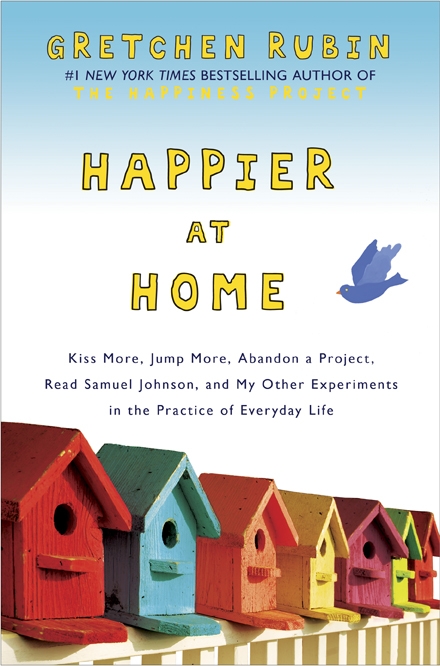
  • Giveaway and Interview: Happier at Home by Gretchen Rubin

    Giveaway and Interview: Happier at Home by Gretchen Rubin

    Note: The winners for this giveaway have already been chosen! Subscribe to Tiny Buddha for free daily or weekly emails and to learn about future giveaways!

    The Winners:

    There are certain people who become part of the fabric of our culture. Their work touches something primal in all of us, and compels us to think and act differently in a way that improves life for us, and the people around us.

    Gretchen Rubin created such a phenomenon with The Happiness Project, her account of the year she spent test-driving ancient wisdom, current scientific research, and lessons from pop culture about increasing happiness.

    At the core of all our desires is the desire to be happy, and yet it can seem so elusive. The very act of searching or striving for it can negate it, if we focus so intently on creating happiness in the future that we distract ourselves from happiness in the present.

    That’s part of what I appreciate about The Happiness Project. It’s not about making major life changes, pushing for a better life tomorrow. It’s about tuning into the little things that make life better today.

    In her latest book, Happier at Home, Gretchen follows the same formula from her first happiness book, focusing on relationships, possessions, and issues that pertain to life at home.

    What I most respect most about Gretchen is that she’s fearless in sharing herself honestly—quirks, weaknesses, and all. She acknowledges that this is crucial to her happiness, since she can build a happy life only on the foundation of her own nature.

    I find this type of self-awareness and self-acceptance admirable and inspiring.

    I’m grateful that Gretchen’s offered to give two free copies of Happier at Home to Tiny Buddha readers.

    The Giveaway

    To enter to win 1 of 2 free copies of Happier at Home:

    • Leave a comment below
    • Tweet: RT @tinybuddha Book GIVEAWAY & Interview: Happier at Home http://bit.ly/O85F4p

    If you don’t have a Twitter account, you can still enter by completing the first step. You can enter until midnight PST on Sunday, September 22nd. (more…)

  • Develop Self-Awareness and Improve Your Relationships

    Develop Self-Awareness and Improve Your Relationships

    “Our greatness lies not so much in being able to remake the world as being able to remake ourselves.” -Gandhi

    The other day I got upset over something silly that triggered difficult feelings with deep roots from my past.

    In short, someone I love made a reasonable request that, for various reasons, I didn’t want to honor, partly because I felt this person wasn’t taking my feelings into account. But I had no good reason to suspect this.

    I thought this because it’s a pattern for me.

    For most of my young life, I believed my needs wouldn’t be met if I didn’t push and fight for them.

    I saw everything as a battle—it was everyone else against me. Though I’ve learned to see others as on my side, and I know that I’m on theirs, I still worry that people aren’t looking out for me at times.

    In the aftermath of this recent altercation, I talked through my feelings with my boyfriend.

    I told him I understood my emotional response, and I knew where it came from—when I first felt this way and why and how it’s been a pattern in my life.

    Then I posed a question: In recognizing where and how I learned this behavior, am I blaming people and circumstances from my past or merely being self-aware? What, exactly, is the difference?

    I think it’s an important question to ask, because we’ve all been wronged before.

    We do ourselves a disservice if we sit around blaming other people for our maladaptive reactions and behaviors, but sometimes we’re better able to change when we understand how we developed in response to former relationships and prior events.

    I’ve spent a lot of time learning to let go of victim stories, which is a big part of why I don’t write about some of the most painful events of my life. Still, for better or for worse, they shaped who I am.

    When I allow myself to look back and acknowledge wrong-doing, I reinforce to myself that I did not deserve to be mistreated, and that it’s not my fault that I struggle in certain ways as a result.

    I know, however, that it is my responsibility to change my responses and behaviors. And that, right there, is the difference between self-awareness and self-victimization.

    Self-awareness allows us to understand what’s going on in our heads and why; self-victimization prevents us from accepting that we’re responsible for it, and for what we do as a result. (more…)

  • How to Deal with Unfairness and Change the Things You Can

    How to Deal with Unfairness and Change the Things You Can

    “If you don’t like something, change it. If you can’t change it, change the way you think about it.” ~Mary Engelbreit

    Many times in the past, I’ve complained that things weren’t fair.

    Sometimes I was legitimately wronged—like when I was a kid and an adult in my life regularly told people lies about me, seemingly to justify her disdain and mistreatment.

    Other times, I victimized myself to avoid taking responsibility—like when I didn’t prepare well and bombed at a community theater audition but attributed my failure to favoritism.

    As an indignant adolescent, I blamed many of my difficult early experiences for the perpetual chip on my shoulder. I bemoaned the injustices of the world because I felt so many befell me.

    It wasn’t my fault that I was angry all the time; there was just a lot to be bitter about. At least that’s what I thought back then.

    One day, when I was commiserating with a friend who was upset about a seemingly unfair situation in her life, I wondered: What good does this do us?

    Grumbling about injustice doesn’t make things just, and the ensuing hostility doesn’t help us effectively address things that need fixing.

    You can’t create positive change from a negative mindset. You have to heal your pain before you can set out to heal the world. And you have to stop seeing yourself as a victim if you want to access your personal power.

    Still, despite knowing this and making a conscious effort to change, I still feel an instinctively strong and irate response to perceived unfairness at times.

    If a friend gets passed over for a promotion because it went to the boss’s daughter, I feel outraged for that friend.

    If I see someone hit a parked car and speed away, I seriously consider following them and issuing a citizen’s arrest.

    If I believe someone is earning boatloads of money unethically, I ruminate on how it’s not right, and wish I could do something to stop it.

    I think it’s wrong when someone cuts in line; it’s wrong when someone bucks a system; it’s wrong when systems don’t do what they’re supposed to… the list goes on and on.

    I’m learning to understand my strong emotional response so that I can challenge the feelings and thoughts that disempower me. If you’d like to do the same, you may find this post helpful.

    Our Biological Response to Unfairness

    While we all learned about fairness in childhood, scientists have proven we’re actually hardwired for it.

    Studies have shown that the reward centers of our brains activate when we recognize fairness, even when it pertains to someone else. When we witness unfairness, it triggers our amygdala, the primitive part of the brain that controls fear and anger.

    This means that when we feel like we’ve been treated unfairly, we go into fight-or-flight mode, with its resulting sense of anxiety.

    Psychologists suggest that when we fight for fairness for others, it’s actually self-interest in disguise, meaning we’ve recognized it provides us with some type of advantage to be fair.

    No matter how you slice it, we experience a strong, instant physical and biological reaction to perceived injustices, and this can limit our ability to think rationally and respond proactively.

    Life Isn’t Always Fair

    Every day, we have abundant opportunity to recognize injustice, on scales large and small, in our own lives and the lives of people we love.

    You could find out you make less than someone else in the same job.

    You could lose a promotion to someone else who is far less qualified.

    You could lose a court case when it feels obvious someone else was in the wrong.

    You could discover that a friend of yours is losing her savings because her accountant mismanaged her money.

    You could learn that someone you trusted to care for your mother took advantage of her good nature.

    You could find out that your sister’s losing her home because of predatory lending.

    And this doesn’t even touch upon the massive injustices happening all over the world, far outside the scope of our everyday experience.

    Life isn’t always fair. Whether it’s self-preservation, basic human decency, or a combination of both, we want to change that.

    In some cases, we can. We are not powerless, and we don’t have to simply accept every injustice as an unavoidable part of life.

    We do, however, need to accept that our response to perceived wrongs affects our ability to right them.

    Dealing with Unfairness

    Those people who don’t let unfairness make them bitter aren’t somehow better than others.

    They aren’t necessarily people who haven’t experienced severe injustice or inequality, and they also aren’t people who simply accept whatever happens without ever taking a stand.

    The people who handle unfairness well possess three things in common:

    • They think rationally before they act.
    • They recognize the difference between what they can control and what they can’t.

    Stopping Obsessive Thinking

    Dwelling on unfairness doesn’t do anything to change it; it actually affects our ability to do that since obsessive thinking drains our energy, magnifies our emotions, and keeps us more focused on problems than solutions.

    This has been the biggest challenge for me, as I’ve found it almost satisfying at times to think about things that seem wrong, as if this is productive.

    If you struggle with this as well, recognize when you start fixating on blaming thoughts, and visualize a stop sign in your head. Then repeat an affirmation along the lines of, “This isn’t productive. It is what it is, and I can either accept it or try to change it.”

    Thinking Rationally Before Acting

    In order to think rationally, we need to recognize that our biological reaction is just that, and consciously choose not to let it dictate our actions.

    According to psychologist and author Marcia Reynolds, when we feel slighted or cheated, and react emotionally, we then use our logical brain to rationalize that response. For example, we may tell ourselves, “I snapped, but he deserved it!”

    We can be far more effective if we use our logical brain first, before we do something we’ll later regret.

    In some cases, when we think rationally, we may realize an unfair situation is not a big deal in the grand scheme of things—when someone cuts us off and runs a red light, for example.

    It’s annoying, but is it really worth fuming during a car ride that could otherwise be pleasant?

    Other times we’ll still feel strongly that we need to fight for justice, but this doesn’t require us to act with aggression. It requires calm, careful planning and acting… if it’s something we can, in fact, control. This leads to the last step.

    Knowing What We Can Control and Doing Something About It

    We can’t change mistreatment that happened in the past. We can address mistreatment that’s happening now.

    We can’t change someone else’s decision or behavior if they aren’t willing to change. We can change how we respond to them (and choose to help educate and positively influence them).

    We can’t change that tragedies have occurred, in our own lives or in places across the globe. We can support causes that seek to prevent future tragedies, or even spearhead our own.

    And we can’t guarantee specific outcomes for our actions, but we can increase our odds of making a difference by being clear-headed, patient, and consistent.

    Sometimes there will be unfair things that we simply need to accept, and it might feel instinctive to fight that. We’re only human, and we will sometimes give in to our emotional responses.

    What’s important is that we try to move beyond them so we don’t let the things we can’t control take control of us.

  • 33 Things to Accept and Embrace

    33 Things to Accept and Embrace

    “Letting go gives us freedom, and freedom is the only condition for happiness.” ~Thich Nhat Hanh

    Today is my 33rd birthday, and at this very moment I am likely sipping a fruity drink by a pool in Las Vegas.
    My boyfriend and I go there often on his Monday and Tuesday off days because it’s not too far from LA; the weekday hotel rates are great; and we’re both huge fans of buffets, shows, and (occasional) poolside day drinking.
    Since I’m writing this in advance, I can’t speak to how I actually feel right in this very moment, but I imagine (and hope) it will be a little something like this:

    I’m wearing a bikini, not a one-piece, like I did for years when I was younger—and I’m rocking it with confidence because I’ve finally decided my imperfect 5’1″ figure is flawsome.

    I’m fully lathered in sunscreen, despite my pasty, almost transparent complexion, because I’ve realized I need to take care of my body if I want it to be healthy.

    I’m mesmerized by the sun and the water, and easing into the moment, despite having a ton of work to do and even more professional uncertainty.

    And I’m grateful for a million and one things worth loving—smiling strangers, free WiFi, enjoyable work I do through it, and time to disconnect from it.

    Looking back over the years, I realize my biggest challenge has always been learning to let go. I put so much energy into trying to control my body, my relationships, and my future that I wasn’t able to relax and enjoy the moment.

    This is something I still work at, but I’ve made a lot of progress.

    So in honor of this day, I decided to share with you 33 things I’ve learned to accept and embrace:

    1. Beauty cannot be defined. Beauty is a reflection of what we deem valuable. For me, it’s an inner radiance and bliss that transcends judgment and fear, or at least makes an effort to.

    2. Perfection cannot be obtained (and it’s boring anyways). Trying to be perfect makes us feel inferior and desperate to change; owning our uniqueness makes us feel worthy and excited to evolve.

    3. Love will be messy at times. Sometimes love looks nothing like the ideal. Unless you’re in an unhealthy relationship, lean into the messiness. That’s where the intimacy is. (more…)

  • Tiny Wisdom Buy One Give One eBook Sale

    Tiny Wisdom Buy One Give One eBook Sale


    In case you didn’t just read my post 33 Things to Accept and Embrace, today (August 28th) is my 33rd birthday, so I decided to run a fun promotion as a way to celebrate.

    For today only, if you purchase the Tiny Wisdom eBook series (5 eBooks for $19.97), I will send a free set to a friend of your choice. Weekly email subscribers, this offer is valid for you on August 31st.

    All you need to do is order your set, forward your confirmation email to me at emailATtinybuddhaDOTcom, and include your friend’s name, email address, and any note you would like to include.

    If you’ve already purchased the series and would like to take advantage of this offer, you can purchase another set today and I will send sets to two of your friends. Just follow the instructions above for both friends and note in the email that this is your second purchase.

    I will be away until late tonight, so please note you will not receive a response from me (and your friend will not receive his or her set) until Wednesday.

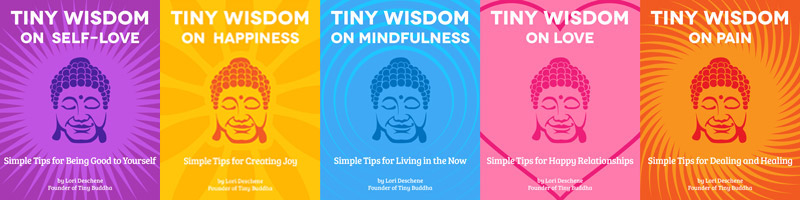
    The Tiny Wisdom eBook Series

    Earlier this year, I created 5 short eBooks with posts on the following topics:

    • Self-Love
    • Happiness
    • Mindfulness
    • Love
    • Pain

    They aren’t lengthy how-to posts with overwhelming lists of action steps. They’re short reflections on the little things that make a huge difference in our daily lives. They’re reminders of what matters and how to embrace it, right now, instead of focusing on all the things that only bring us down.

    They’re concise. They’re focused. Most importantly, they’re relevant to the challenges we all face every day.

    These eBooks are available individually or as a complete package. On it’s own, each eBook costs $4.97. The full package of five costs $19.97—which essentially means you get one free if you buy the whole series (and for today only, you receive a second set to send to a friend).

    Buy the Tiny Wisdom eBooks 

    Note: You can purchase the eBooks individually for $4.97 each, or scroll down to buy the whole series for $19.97. Today’s promotion is only for the full set. (more…)

  • 6 Tips to Help You Apply What You’ve Learned

    6 Tips to Help You Apply What You’ve Learned

    “A little knowledge that acts is worth infinitely more than much knowledge that is idle.” ~Kahlil Gibran

    Have you ever read a book or a blog post and felt a profound sense of clarity—like you knew exactly what you needed to do—only to find yourself feeling paralyzed by the same old struggles hours or days later?

    Have you ever listened to advice and felt certain you could apply it, only to find your resolve weakening when you were left to your own devices?

    I have had these experiences many times before.

    I remember when I was going through my hardest break up, many years back. After a long pep talk with a friend, I’d feel confident that I could get past it—and committed to taking care of myself to for my healing and overall well-being.

    Mere hours later, I’d be curled up in bed with dirty, matted hair, drinking a mixed drink that was as strong as lighter fluid, sitting around feeling sorry for myself.

    When I was overcoming my darkest depression, a few years after that, I stocked my shelves with self-help books (along with Ramen Noodles and Marlboros).

    I must have had at least a dozen journals with exercises and notes, representing hours of self-reflection and analysis, yet days would go by when I wouldn’t do a single thing I wrote about.

    I’d find excuses to stay alone, or stay bitter, or stay scared, or stay safe. Though I made some efforts to make changes in my life, I struggled to do anything positive regularly.

    While I’ve made major progress with some of my biggest demons, I still go through times when I’m inconsistent with the things that I know serve me well.

    In recent years, I’ve put a lot of effort into becoming more patient, and yet I still find myself rushing people and situations when I start to feel that familiar sense of anxiousness.

    I know I feel better about myself when I’m more easy going—and that it’s kinder for the people around me—but I still struggle to apply what I’ve learned at times.

    Since I want to continue making progress, I’ve put some thought into why it’s so hard to act on our knowledge, and how we can overcome internal resistance for lasting positive change. (more…)

  • 10 Reasons to be Okay with Being Disliked

    10 Reasons to be Okay with Being Disliked

    “If your number one goal is to make sure that everyone likes and approves of you, then you risk sacrificing your uniqueness, and, therefore, your excellence.” ~Unknown

    We all know at least one hardcore people-pleaser.

    You know the signs: She sleeps out in the rain and gets a cold so her friend’s dog can fit in the tent. He lends money to his friends, knowing they won’t pay him back, then struggles to pay his own bills. If a friend calls her stupid, she whips up a batch of cookies and makes a card that reads, “Sorry for disappointing you.” And despite all their efforts to be liked by everyone, many people disrespect them.

    Maybe that’s you, maybe it’s not—but odds are, you can relate at least a little to the desire to be well-liked. Who doesn’t want to feel accepted, respected, and appreciated?

    For most of my life, my need to be liked overshadowed all my other needs. I was always trying to manipulate perception, adapting myself to receive validation. It was draining and counterproductive, since very few people actually knew me—the real me—which is a prerequisite to liking me.

    I’ve since learned it’s actually a good sign if there are some people who don’t accept or agree with me.

    I’m not suggesting we should be rude, inconsiderate, or disrespectful. This post isn’t about disregarding other people’s feelings.

    This is about releasing our stress about other people’s opinions.

    When you’re comfortable not being liked by everyone:

    1. It allows you to be true to yourself.

    The biggest disservice you can do yourself is shapeshifting to please your “audience” of the moment. It’s exhausting (even to watch) and, more importantly, pointless. No one will get to know who you really are, which will leave you feeling empty.

    2. It gives you the power to say no.

    I believe people are good at heart. Still, it’s human nature to test each other’s boundaries. When you’re willing to risk being disliked, you’re able to say no when you need to. Your yeses and nos shape your future, so choose them wisely. (more…)

  • Tiny Steps to Overcome the Fear of Judgment

    Tiny Steps to Overcome the Fear of Judgment

    “Courage is not the absence of fear, but rather the judgment that something else is more important than fear.” ~Ambrose Redmoon

    A couple weeks back, I had my first singing lesson in over 15 years. I’ve been hoping to get back into musical theater, so this seemed like a perfect compliment to the acting classes I planned to start soon (which I began this past weekend).

    Unlike in in my childhood voice lessons, the instructor did not play piano, opting instead to use instrumental music from an iPad.

    This meant he looked right at me while I sang On My Own from Les Miserables—a vastly different experience than singing in the shower, or at a karaoke bar after a couple of drinks—and he even took notes, since his hands were free.

    I felt like my vocal cords were gripped in a vice. The experience of singing, while sitting alone, with someone I just met staring at me, made me feel far more vulnerable than I ever feel when I press publish here.

    It felt even more intimidating because I knew he was an accomplished singer. He was better than me.

    He was watching, focusing, assessing—and that felt terrifying.

    Then I asked myself, “Why is this terrifying?”

    He may have been watching, but that is, in fact, what happens when you perform. He may have been focusing, but would I really have preferred my teacher to be distracted? And he may have been assessing, but that didn’t mean he was judging.

    He was taking notes so he could help me, not tear me down. It simply wasn’t his intention.

    And he wasn’t conveying a sense of superiority. In fact, when we exchanged emails before the lesson, he made a point to compliment me on this site. We each had different strengths—and he was willing to share his to help me hone mine.

    This was an eye-opening experience for me, because in that moment, that song was everything I tell myself not to do or say in fear of how it may be received. And he was everyone I worry about impressing in fear they won’t accept me.

    He was the potential friend who I sometimes worry may not recognize my worth.

    He was the potential employer who I sometimes fear may not recognize my ability.

    And he was everyone I may fail to fully see while stressing about how they’re seeing me. (more…)

  • 40 Ways to Feel More Alive

    40 Ways to Feel More Alive

    “I don’t believe people are looking for the meaning of life as much as they are looking for the experience of being alive.” ~Joseph Campbell

    As I write this, I am two hours away from my first weekly acting class in Los Angeles. I’ve been here for almost two years now, and though I loved community theater as a kid, I never so much as researched acting classes until a couple weeks back.

    I frequently said I wanted to do it, along with painting classes, which I’m starting next week, but I always made excuses not to start either.

    I was too busy. I didn’t have enough money. I didn’t have the time. I wouldn’t be good enough. I’d feel uncomfortable. I might not enjoy it. I don’t like commitment. It wouldn’t lead anywhere.

    The list went on and on, but I realized the last two were the big ones for me. I chronically avoid commitment because I associate that with hindering my freedom. (What if I decide last-minute I want to go somewhere or do something else?)

    Also, I hesitate to give large amounts of time to hobbies I have no intention of pursuing professionally.

    I realized last month, however, that I want to prioritize more of the things that make me feel passionate and excited—and not just occasionally, but regularly.

    I don’t know if these classes are “leading” anywhere. I just know I feel in love with the possibilities I’m creating—not possibilities for growth tomorrow; possibilities for joy today.

    That’s what it means to really feel alive—to be so immersed in the passionate bliss of this moment that you don’t think about yesterday or tomorrow. You just enjoy what you’re doing and love every piece of it.

    If you’re looking to feel that sense of exhilaration but don’t know where to start, you may find these ideas helpful: (more…)

  • Giveaway and Interview: The Practicing Mind by Thomas M. Sterner

    Giveaway and Interview: The Practicing Mind by Thomas M. Sterner

    Note: The winners for this giveaway have already been chosen. Subscribe to Tiny Buddha for free daily or weekly emails and to learn about future giveaways!

    The Winners:

    Have you ever feared you’ll never excel at a skill or reach a goal you set? Have you ever judged yourself or your efforts as “not good enough,” creating a sense of paralysis? Or how about this: Have you ever felt so eager to excel that the process became stressful and unsatisfying?

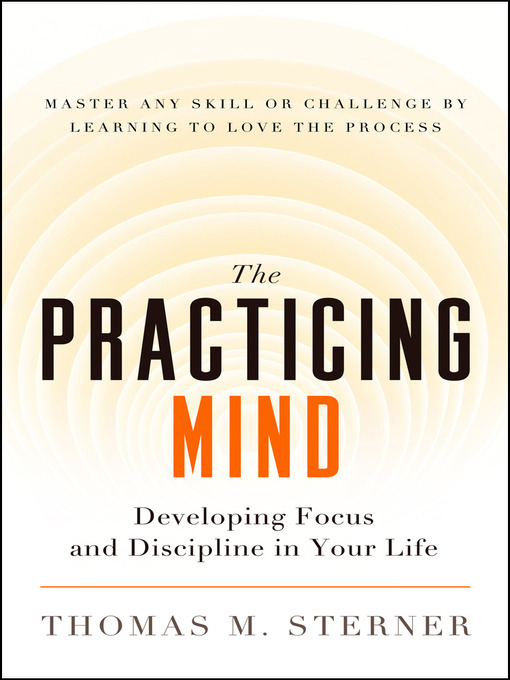
    In his book The Practicing Mind: Developing Focus and Discipline in Your Life, Thomas M. Sterner explores how to “master any skill or challenge by learning to love the process,” as the cover reads.

    Sterner has mastered quite a few challenges; he’s a concert piano technician, an accomplished musician, a pilot, and a golfer—and he’s learned how to practice each skill with a focus on the present.

    Sharing personal anecdotes, insights, and lessons, Sterner teaches us how to simplify and concentrate on the task at hand; break goals into smaller, more manageable steps; and slow down so that we can give our full attention to each step along the way.

    I highly recommend The Practicing Mind to anyone who wants to find more joy in the process of working toward their goals, and in doing so increase their effectiveness.

    The Giveaway

    To enter to win 1 of 2 free copies of The Practicing Mind:

    • Leave a comment below
    • Tweet: RT @tinybuddha Book GIVEAWAY & Interview: The Practicing Mind http://bit.ly/R5EnKh

    If you don’t have a Twitter account, you can still enter by completing the first step. You can enter until midnight PST on Sunday, August 12th. (more…)

  • Overcoming the Fear of Loss: 5 Steps to Get Unstuck

    Overcoming the Fear of Loss: 5 Steps to Get Unstuck

    “Death is not the greatest loss in life. The greatest loss is what dies inside us while we live.” ~Norman Cousins

    Of all the things that scare us, loss can seem like the most terrifying. At times, I’ve thought about it with such dread that it’s felt overwhelming.

    Whenever I quit a job I hated in that past, I felt stuck between two loss-related fears: the fear of losing my passion by staying, and the fear of losing my financial security if I walked away and didn’t find something else.

    Whenever I considered leaving a bad relationship, I felt paralyzed by two similar fears: the fear of losing my chance at fulfillment by staying, and the fear of losing the comfort of companionship if I walked away and didn’t find someone else.

    I haven’t only worried about the potential for loss as it pertains to big decisions. I’ve worried about losing people I love, pleasures I enjoy, and circumstances that feel comfortable. I’ve dreaded losing my youth, my health, and my sense of identity.

    And then there are the everyday losses: If I don’t do this, will I lose someone’s respect? If I don’t do that, will I lose my own? If I don’t go, will I lose some as of yet unknown opportunity? If I don’t stay, will I lose my sense of comfort and security?

    I might even go so far to say that whenever I fear something, loss is at the root of it. I suspect I’m not alone.

    Loss Aversion

    Economists have identified loss aversion as a major factor in financial decision-making, in that most people would rather avoid losing money than acquire more. The psychological impact of losing is thought to be twice as powerful as the pleasure of gaining. (more…)