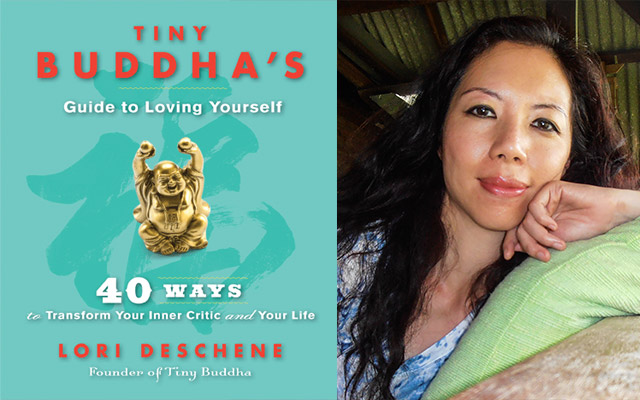
Author: Lori Deschene

  • Tiny Buddha’s Guide to Loving Yourself Interview: Amyra Mah

    Tiny Buddha’s Guide to Loving Yourself Interview: Amyra Mah

    amyra-mah

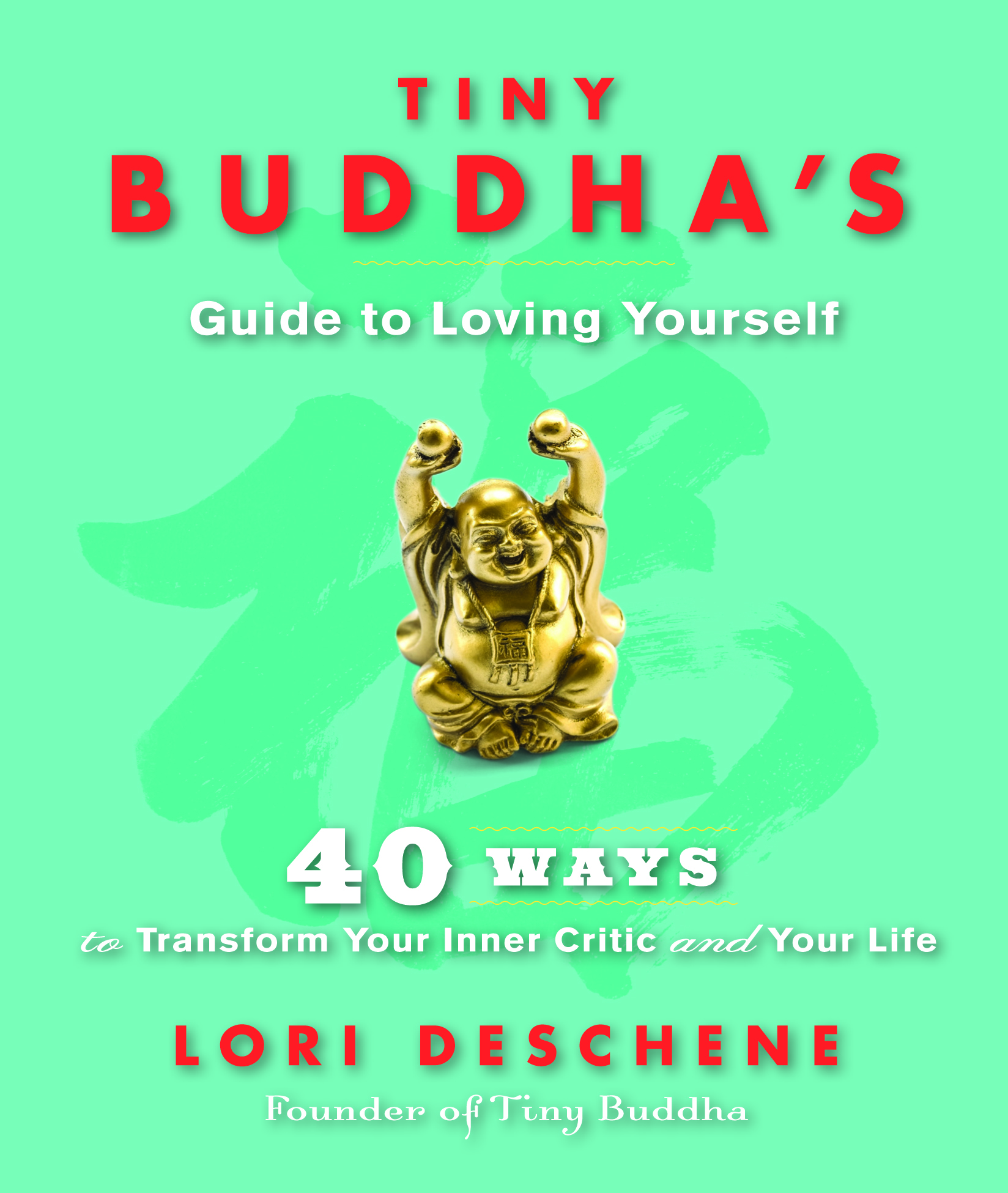
    It’s day four in the pre-order promotion for Tiny Buddha’s Guide to Loving Yourself, a book about taming your inner critic that features 40 stories from Tiny Buddha contributors. 

    Over the next month, you’ll have a chance to meet some of them through daily interviews here on the blog.

    Today’s featured contributor is Amyra Mah of unusualwisdom.com. Having formerly struggled with depression, addiction, and body image issues, she now works as a spiritual coach, addiction therapist, intuitive counselor, writer, and blogger.

    Her contribution for the book focuses on feeling our feelings instead of running away from them (and ourselves).

    A little more about Amyra…

    1. Tell us a little about yourself and your self-love journey. 

    Loving myself was a perplexing concept, since I had spent most of my life believing that I was unworthy of anyone loving me. I saw myself as “damaged goods” and spent many years abusing myself through self-destructive thoughts and behaviors.

    When I first came across the idea of self-love, I really struggled to understand where this love was to come from. My entire journey of healing and spiritual growth has been about finding this source of love within myself.

    Through trials and tribulations, as well as unexpected miracles, I met different aspects of myself and discovered, bit by bit, my worthiness.

    Years ago, I reached a point where I wasn’t driven so intensely to sabotage myself anymore. Today, I’m still finding new aspects of myself in my ongoing journey of coming home to wholeness.

    2. Have you ever felt there’s “something wrong with you”? If so, why, and what’s helped you change your perception?

    I remember as a child being very creative and expressive. I saw colors, energies, felt connected to nature, had an expanded understanding of life. At some point, I received the message that it was not okay to be myself, and I started to judge all that I was to be bad.

    One of the processes that really helped me in my recovery from depression and addictions is reconnecting to those qualities. In reclaiming them as part of my innate self, I learned to stop rejecting myself.

    I realized that in denying my natural traits, I had become someone I was not; that misalignment with my natural self had translated into feeling there was something wrong with me.

    3. Have you ever thought something was a flaw only to realize that other people actually appreciate that about you? What was the “flaw”?

    When I was a teenager suffering from depression, I felt trapped in a world I couldn’t escape from. So I escaped into my mind, where I pretty much lived for the rest of my childhood. I developed an introspective, deep-thinking ability as I sought alternative ways to perceive the world.

    I had a knowing that somehow we are limiting ourselves as people and that what we see isn’t the full picture. In other words, there must be more to life than what we’re putting up with.

    Mentally, I became very creative in exploring the philosophy of life, challenging what most people have accepted as the truth. It became my default throughout most of my adult life, as well.

    Since it was borne out of the bleakness of my depression, I associated this tendency with being dark, depressing, and too intense. I saw it as a flaw that needed to be eradicated.

    It wasn’t until I started being a writer and a therapist that I realized how much people appreciate that about me. It gave me the ability to write good material and create many innovative processes that have allowed me to help many people.

    4. What was your biggest mistake (that you’re willing to share), and what helped you forgive yourself?

    In earlier years, I was so afraid of people getting close to me that I hurt a lot of people who cared about me. I remember a few of my colleagues organized a small party for me after I had resigned and was about to relocate to another country.

    I was so entrenched in my feelings of inadequacy that I couldn’t bring myself to go out and be around people. So I didn’t show up; I didn’t even tell them that I wasn’t coming.

    I felt so guilty that I couldn’t bear to talk to them again. Several years later, I was told that my friends were very hurt and disappointed. They’d even bought a cake for me.

    For a long time after that, I couldn’t get the image of my friends sitting around a cake waiting for me out of my mind. In time, I allowed myself to feel the full remorse of my actions, and heal myself from the guilt of this and many other events.

    I realized that in those days, I simply did not have the resources to act otherwise because I was crippled by pain. Learning to accept this fact helped me to forgive myself.

    5. Complete this sentence: When other people don’t like me, I…

    …no longer get angry. I used to feel so much rage in me whenever I perceived people to judge me and I would act out harshly toward them. But it only intensified my self-hatred and I ended up beating myself up over and over.

    I’ve learned to be calmer about what people think about me. I try to see everything from a spiritual perspective these days, which helps me to recognize the spirit in everyone, no matter how we’re operating in the physical world.

    Whenever I find myself reacting internally to others, I know it points to somewhere in me that needs more healing. So I use that as a “gateway” for more healing and transformation.

    6. What are some areas in your life where you’ve compared yourself to other people, and what’s helped you let go of these comparisons?

    I used to envy others who appeared to be relaxed, light-hearted, and free in expressing themselves in social situations, whereas I would battle constantly with self-berating thoughts, even as I put on a performance outwardly.

    The conflict between the anguish I felt inside and how I wanted to be made me perceive other people superficially.

    As I learned to accept myself, I began to relate to people on a deeper level and saw that everyone comes with their own pains and struggles. I learned to appreciate them for their “flaws” as much as their strengths, which in turn helped me to accept myself more.

    7. What’s one thing you would tell your younger self about looking to other people to complete you?

    Looking to other people to complete you is dangerous. If you rely on others to validate you and make you feel good about yourself, the wounds in you are still there.

    They are begging to be healed and your soul will bring you opportunities to return to more wholeness. So if you’ve been covering up your inadequacy with external validations, you’ll come to a point where you’re stripped of the false, quick-fix cover-ups.

    It could come in the form of people abandoning, deceiving, or betraying you, which are ultimately a loving gift from your soul, but you can avoid ending up in that soul-directed “last resort” by addressing and healing your deep inadequacy before such painful events become necessary.

    8. Have you ever felt afraid to show people your “real” self? Why—and what’s helped you move beyond that?

    In my mind, I was flawed, and didn’t fit in. It was a lonely place to be in. I wanted to fit in, yet didn’t want to fit in. It made me awkward, being pulled by two opposing forces.

    I didn’t know how to be in this world. I didn’t even know who the “real me” was.  Nothing felt authentic about me, so I covered up my insecurity with an image of perfection, decked up with materialism.

    For some time, I tried to convince myself that I was happy and secure living this way. But there was a strong drive in me to break out of this false self I had constructed.

    Within a relatively short period of time, I managed to deconstruct this life, and I began a journey of discovering who I really was. But what was underneath the façade was all the pain I’d been trying to cover up.

    So my “real self” then was really just a person in a lot of pain. It was challenging for me to show my vulnerability: that I am far from perfect, that I haven’t figured it all out yet, that I am still wounded and capable of behaving in stupid ways.

    I am still learning, and ironically, it is through this process that I’ve been able to connect with my true beauty and worth.

    9. What are the top three things you personally need to do to take good of yourself, mentally and emotionally?

    • Taking time out, no matter how busy I am, to sit in silence, meditate, still my mind, connect with my emotions, bring in positive energies.
    • Getting together with friends.
    • Physical exercises.

    10. What’s something you do regularly that makes you feel proud of the difference you’re making in the world?

    I am constantly looking for new, creative ways to help people transform their experience in life and grow spiritually.

    My passion to help liberate people from their suffering has come out of my own struggles. Thus, it’s usually easy for me to respond with compassion and empathy whenever I see people in need of some guidance. Being in a position to make a difference in someone else’s life is both humbling and moving for me.

    *Note: I edited this post to remove info about the pre-order promotion, which ended on October 8, 2013. You can learn more about Tiny Buddha’s Guide to Loving Yourself here.

  • Tiny Buddha’s Guide to Loving Yourself Interview: An Bourmanne

    Tiny Buddha’s Guide to Loving Yourself Interview: An Bourmanne

    an-bourmanne

    It’s day three in the pre-order promotion for Tiny Buddha’s Guide to Loving Yourself, a book about taming your inner critic that features 40 stories from Tiny Buddha contributors. 

    Over the next month, you’ll have a chance to meet some of them through daily interviews here on the blog.

    Today’s featured contributor is An Bourmanne of ownyourlifecoaching.com. Born in Belgium, she now lives in Brussels where she works as a consultant-coach in a financial services company and mentors people pleasing perfectionists so they can do their thing, unapologetically.

    Her contribution for the book explores how we often get stuck by stressing about everything we think we should be doing—and what we can do to both relieve that pressure and live up to our potential.

    A little more about An…

    1. Tell us a little about yourself and your self-love journey.

    Well, if I would describe the me I was about 15 years ago, I’d describe her as a chameleon, always adapting and blending in, striving for perfection and working hard to be a good girl, living the life she was supposed to live, doing the things she was supposed to do, forgetting what she wanted and needed, evaluating herself through the eyes of others, analyzing their every move for signs of approval or—oh, drama!—disapproval.

    And the interesting thing is, I didn’t realize that I was being a chameleon.

    It was only when lightning struck (as in being seriously ill), that I started to question the way I lived my life.

    And no, I didn’t turn my life upside down—on the outside, very little changed in those first few years, but on the inside, things started shifting.

    I read every self-development book I could get my hands on (after I managed to overcome my Everest-high resistance against anything that even remotely looked like self-help). I absorbed blogs.  And most of all, I started seeing things from a fresh perspective—an empowering, nurturing one instead of that exhausting people-pleasing-perfection-driven one.

    I allowed myself to do things that fascinated me (even though my mind screamed “silly!”). I allowed myself to do things that made me lose track of time (even though my mind screamed “waste of time!”). I allowed myself to do new things, make mistakes, and fail.  I allowed myself to not being liked by everyone. I allowed myself not getting approval from everyone.

    And gradually, things started shifting in my outside world too. I took photography classes, I reconnected with my long-lost love for writing, I took loads of personal development classes, I started mentoring and teaching.

    2. Have you ever felt there’s “something wrong with you”? If so, why, and what’s helped you change your perception?

    Oh my! I sure have! That’s what that sneaky voice of people-pleasing perfection tends to do with us—finding flaws everywhere.

    Don’t like the books they like? You are such a failure. Haven’t been to that hip restaurant yet? What’s wrong with you? Haven’t got those bigger-than-life stories to tell? You are so boring and ah, well, let’s just face it—there is something wrong with you.

    What changed my perception were the self-loving, compassionate, empowering perspectives I read in books and blogs.

    It was embracing some harsh, yet undeniable truths—you will fail, not everyone will like you, you will be judged.

    It was questioning my crappy thoughts—seeing how they were (most of the time) not true and (all of the time) not helpful. It was taking lots of teeny tiny actions that brought clarity, confidence, and the quiet trust that I got what it takes to do my thing.

    3. Have you ever thought something was a flaw only to realize that other people actually appreciate that about you? What was the “flaw”?

    Ah, reconnecting with my writing has been a real struggle. I believed I was no good and that writing was just a waste of time and not something worthy and valuable. But I allowed myself to start playing with it nonetheless.

    The beginning of my writing journey looked a lot like a game of “attract and repel”! I’d start writing a thousand times, I’d stop a thousand times, only to be pulled toward the writing again so much that I’d pick it up time and again.

    And gradually, I started uncovering my voice (if you’d have asked me upfront, I never ever would have thought I’d be writing poem-styled perfection busters—that is the magic of allowing yourself play!) and owning that I am a writer. And that feels so good.

    4. What was your biggest mistake (that you’re willing to share), and what helped you forgive yourself?

    Did you know I am an engineer? No? Well, I am, even though engineering is not my thing.  Yet, engineering felt like logical thing to do. I was good at math (and you need a lot of that!), got good grades, and sailed smoothly through the one week of entry exams. So what’s a girl gotta do? Right!

    Am I angry with myself or anyone else for having done these five year-long intense studies only to find out it was not my thing? No, I am not.

    Do I forgive myself for making that choice so many years ago? Well, the funny thing is that I don’t tend to argue with the past, but rather focus on creating what lies ahead of me.

    And so I actually don’t feel any need to forgive as I feel there’s nothing that needs to be forgiven. It was part of my journey and I fully accept and honor that. And there’s so much I gained—a bunch of good friends, loads of skills, and a ton of maturity and persistence.

    5. Complete this sentence: When other people don’t like me, I…

    …accept that they don’t.

    6. What are some areas in your life where you’ve compared yourself to other people, and what’s helped you let go of these comparisons?

    Oooh, I used to be in comparing mode quite often, even though I didn’t realize it back then.  I was always looking at others, and, most importantly, falling short in comparison. Not fast enough, not good enough, not creative enough, not funny enough, not serious enough…

    It was when I started to see how draining and exhausting and unfulfilling it was to live in constant comparing mode that I promised myself to start doing my thing, at my pace, with my voice and my style.

    Does that mean that I don’t look at others, ever? Sure I do. But instead of using their achievements and unique style as a reason to bring myself down, I use it to get inspired, to ignite fresh ideas, to learn from their stories and wisdom.

    Instead of seeing them as a measure of my worth, I started to see them as an example of what is possible. And that is much more fun and helpful!

    7. What’s one thing you would tell your younger self about looking to other people to complete you?

    Looking at other people to complete you just depletes you and makes you less of you. You are complete and you don’t need anybody else to complete you, nor can you complete anybody else.

    Let more of your unique you out, so others can genuinely love you for you.

    8. Have you ever felt afraid to show people your “real” self? Why—and what’s helped you move beyond that?

    Sure! I was afraid that they might not like what they saw, that they would walk away and that I would end up alone.

    But the irony is that I when I don’t show my real self, but some manufactured version of myself, I still feel alone, even though I’m surrounded by other people. I just find myself working hard to get a conversation going on some topic that doesn’t really interest me, and I don’t feel that genuine sense of connection and belonging.

    Now the amazing thing is that when I talk about something that genuinely interests me, and they get me, that is where the magic of genuine connection happens.

    And yes, as I started sharing more of me, some people disappeared from my life or connections just faded out, because all of a sudden it showed that they were never the nurturing connections I pretended and hoped they were.

    But there are also old connections that have gotten deeper and better, because we now really see each other. And there are new ones that feel like “home.”

    9. What are the top three things you personally need to do to take good of yourself, mentally and emotionally?

    • Writing (I just love it!)
    • Resting (I often need to remind myself! though)
    • Hiking (I love soaking up the fresh air and the beauty of nature!)
    • And – sneaking in a 4th one 🙂 – taking pictures (I love Instagram!) 

    10. What’s something you do regularly that makes you feel proud of the difference you’re making in the world?

    Writing my weekly poetry-style blog posts. Sharing nurturing, self-loving, and empowering perspectives to inspire brilliant women (that forgot how brilliant they are) to do their thing in the world (because they are so much more than they give themselves credit for!).

    *Note: I edited this post to remove info about the pre-order promotion, which ended on October 8, 2013. You can learn more about Tiny Buddha’s Guide to Loving Yourself here.

  • Tiny Buddha’s Guide to Loving Yourself Interview: Alison Hummel

    Tiny Buddha’s Guide to Loving Yourself Interview: Alison Hummel

    alison-hummel

    Today marks day two of the pre-order promotion for Tiny Buddha’s Guide to Loving Yourself, a book about taming your inner critic that features 40 stories from Tiny Buddha contributors. 

    Over the next month, you’ll have a chance to meet some of the book’s contributors through daily interviews here on the blog.

    Today’s featured contributor is Alison Hummel of the thedreamadventure.com. Formerly an alcoholic who felt like an outsider looking in, Alison now works offers “Dream Catchers Sessions” to help people live their own “Dream Adventures.”

    Her contribution for the book focuses on accepting ourselves and finding gifts in our struggles.

    A little more about Alison…

    1. Tell us a little about yourself and your self-love journey.

    I have come a very long way, but I’m definitely still on my way.

    One of the ways I have learned to accept and love myself is through being in service to others. When I see another person struggling with a similar problem—low self-esteem, anger, anxiety, or some other form of negativity—I find it easier to love them through it than I would if I were just trying to love myself through the same thing.

    By developing compassion for others, I have learned to apply that to myself.

    2. Have you ever felt there’s “something wrong with you”? If so, why, and what’s helped you change your perception?

    Yes, absolutely. I believe that is one of my greatest lessons to learn: I am completely fine just the way I am. I think this feeling that there is something wrong with me stemmed from looking outside of myself for validation and acceptance.

    When I look to others to validate and accept me and I see other people with different, perhaps better “stuff” or a better body or job, I subconsciously believe I need to have that in order to feel loved.

    Acknowledging that this is happening helps me defuse it.

    Also, being in nature has been a great tool to accept myself because in nature there is beauty in all things, not just the perfect flower or tree, or perfect sunny day. The best trees for climbing don’t stand straight up and the coziest days happen when it rains.

    3. Have you ever thought something was a flaw only to realize that other people actually appreciate that about you? What was the “flaw”?

    Probably my ability to speak up for myself and others. At times I fear that I am saying “too much” by speaking up, but I know that other people appreciate it because they have thanked me for my honesty and energy. They have said that it gave them the courage to speak up for themselves, too.

    4. What was your biggest mistake (that you’re willing to share), and what helped you forgive yourself?

    My biggest mistake was definitely hurting the people I love the most throughout my active addiction to alcohol. I am still working through completely forgiving myself. I have heard people say that forgiveness is a journey, not a destination. And I can really agree with that.

    I have begun to forgive myself by being there for my family now. By staying sober. By accepting other people’s flaws. By talking to myself in a kinder way about my past.

    If I have a memory of something that brings up shame, instead of running away from it through shopping, eating junk, or lashing out at someone else, I do my best to just sit with the uncomfortable emotion and practice present moment awareness.

    5. Complete this sentence: When other people don’t like me, I…

    Must be getting better at being myself, because we are all unique and some people might not like me. I can’t please everyone.

    6. What are some areas in your life where you’ve compared yourself to other people, and what’s helped you let go of these comparisons?

    Oh goodness—every area of my life. I have actually been able to let go of those comparisons through actively trying to be someone I am not. That is very painful. And through that pain, I have had to look for other answers. Being myself is the only show in town these days.

    7. What’s one thing you would tell your younger self about looking to other people to complete you?

    You will learn your greatest lessons through experience, so if you need to look outside of yourself for completion, do it with complete fervor. This way, you will always have your own experiences to draw upon to make better choices in the future.

    I’ve seen a lot of people flounder in just crummy situations because they were trying to make their life decisions through other people’s mistakes. It’s okay to make your own mistakes.

    8. Have you ever felt afraid to show people your “real” self? Why—and what’s helped you move beyond that?

    Yes, absolutely. I talk about this in my article in the book. The therapy I had for my OCD helped me deal with anxiety and general discomfort. In reality, I don’t fear what others think of me; I fear being uncomfortable. Because that is really the worst that could happen. Learning tools to deal with feeling uncomfortable has helped me the most.

    9. What are the top three things you personally need to do to take good of yourself, mentally and emotionally?

    • Stay connected to my sober brothers and sisters.
    • Meditate.
    • Work out.

    10. What’s something you do regularly that makes you feel proud of the difference you’re making in the world?

    I would have to say staying sober. I don’t necessarily feel “proud,” because I believe sobriety is truly a gift, but I will say without it, I would have nothing. My family is so important to me. With it, I can accomplish anything I set my mind on.

    *Note: I edited this post to remove info about the pre-order promotion, which ended on October 8, 2013. You can learn more about Tiny Buddha’s Guide to Loving Yourself here.
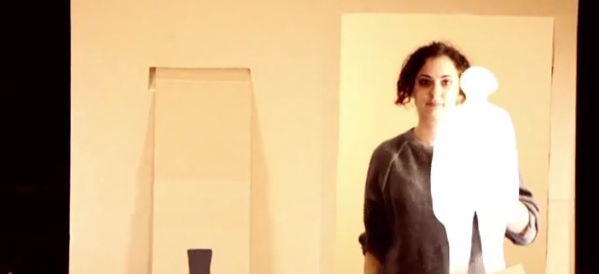
  • Fitting in Cardboard: A Short Film About Being Yourself

    Fitting in Cardboard: A Short Film About Being Yourself

    If you’ve ever tried to fit in based on what you thought you’re supposed to be, you know how exhausting it is. But there’s another reason it doesn’t “work.” Even though there’s a thing called “fitting in”…

  • Tiny Buddha’s Guide to Loving Yourself (and the Self-Love Bonus Pack)

    Tiny Buddha’s Guide to Loving Yourself (and the Self-Love Bonus Pack)

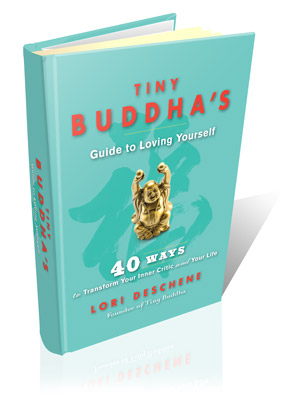
    Tiny Buddhas Guide Cover 3D

    10/9/13: The pre-order promotion is now over. You can learn more about Tiny Buddha’s Guide to Loving Yourself here!

    Two years ago I surveyed the Tiny Buddha community to crowdsource wisdom for my second book, which was going to break apart the idea of success.

    Around the same time, I experienced a series of life-altering events, including a major surgery, financial hardship, a break-in, and the death of my grandmother.

    Within the following months, I dramatically decreased the amount of time I devoted to blogging. After almost three years of regularly sharing my feelings, I wanted space to explore my conflicting emotions without having to put them into words.

    Despite having chosen to do this, I felt immense guilt in seemingly “abandoning” the community. I also felt embarrassed and disappointed in myself.

    After not only announcing my book but also soliciting insight from others, I realized I wasn’t in the right headspace to work on the project. Even though I knew I’d had a tough few months, this inability to deliver deeply distressed the perfectionist in me.

    I planned to work on this later in the year, but when the time came I wanted to work on something different—a book that felt more personally relevant in light of my recent challenges, and extended naturally from the philosophy of this site.

    I wanted to create a collaborative book about self-love, for a few reasons.

    For one thing, it’s something that many of us struggle with, which makes it difficult, if not impossible, to fully love others and life.

    Secondly, my former lack of self-love was the foundation of all my greatest struggles. I once thought my life was a mess because I struggled with depression and an eating disorder, and didn’t have purpose, money, or a relationship, but at the heart of all those troubles was my unwavering self-loathing.

    Lastly, it tied into an unexpected consequence of making, what seemed like, a massive public mistake: announcing a plan and then not following through reinforced that I need my empathy the most when I feel most resistant to giving it.

    It also reminded that sometimes mistakes are opportunities to do something good—and I believe I have with this book.

    Including 40 blog posts from tinybuddha.com, Tiny Buddha’s Guide to Loving Yourself offers more than just advice; it offers in a window into our shared human experience, and universal lessons we can all apply to feel happier with ourselves and our lives.

    These posts have reminded more than 1.5 million monthly readers that we are never alone, and we don’t have to live life controlled by our inner critic. They touch upon ideas that will help you:

      • Release shame about your past and the limiting beliefs that keep you stuck
      • See yourself as beautiful and valuable, with all your flaws and weaknesses
      • Accept yourself more and judge yourself less
      • Forgive yourself for your mistakes and stop being hard on yourself
      • Minimize the need for approval to feel more confident
      • Let go of the comparisons that keep you feeling inferior
      • Feel complete so that you no longer look to others to fill a void within yourself
      • Find the courage to share your authentic self for deeper connections with others
      • Learn to take care of yourself instead of putting everyone else’s needs first
      • Believe that you’re valuable so you can start creating a life you love

    The stories are categorized into 10 chapters, connected to each of these themes.

    At the end of each chapter you’ll find four tips—one from each of the four posts in that section. They’re ideas you can turn to whenever you need help changing your thoughts, and consequently, your feelings and experience of the world.

    Tiny Buddha’s Guide to Loving Yourself launches on October 8th. Over the next month, I’m going to run a pre-order promotion that will involve daily self-love interviews with some of the book’s contributors.

    During the month of September, anyone who pre-orders the book will receive instant access to the “Self-Love Bonus Pack,” which includes 8 digital resources, valued at more than $150.

    Those items include:

      • From Coping to Thriving: How to Turn Self-Care into a Way of Life, by Hannah Braime
      • Flowing Through the Void: Creating Miracles Out of Struggles by Activating Presence, Power, and Passion, by Amyra Mah
      • Complete Confidence eCourse, by Emma Brooke
      • An Awakened Life: A Journey of Transformation, by Julie Hoyle
      • Create a Brilliant Vision for Your Life and Business, by Margie Beiswanger
      • 5 Days of Self-Compassion, by Joanna Weston
      • Be You, Unapologetically by An Bourmanne
      • Tiny Wisdom: On Self-Love, by Lori Deschene (me)

    You can pre-order a copy of Tiny Buddha’s Guide to Loving Yourself here.

    Please note that you will not receive your copy of the book in the mail until October. You will, however, will receive instant access to the bonus items once you forward your sales confirmation email to the address listed on the sales page.

    Thank you to everyone who’s involved with this book—which is all of you. You make this community what it is. You make a difference, and you’re appreciated.

  • Tiny Buddha’s Guide to Loving Yourself Interview: Alesha Chilton

    Tiny Buddha’s Guide to Loving Yourself Interview: Alesha Chilton

    alesha-chilton

    Today is an exciting day here at Tiny Buddha! It’s the pre-order launch day for Tiny Buddha’s Guide to Loving Yourself, a book about taming your inner critic that features 40 stories from Tiny Buddha contributors.

    Throughout the September, I plan to publish 21 “self-love profiles,” introducing you to some of the book’s contributors.

    I’m excited to start with an interview with Tiny Buddha member Alesha Chilton, a mother and MBA graduate whose contribution for the book focuses on believing that we’re good enough.

    A little more about Alesha…

    The Interview

    1. Tell us a little about yourself and your self-love journey.

    It has taken a while to dig down deep and love myself just as I am. And it didn’t happen magically, miraculously, or suddenly. It happened a little at a time, slower than a snail it seemed, over the course of many years.

    I battled bulimia, bullying, and self-belittling. My eyes are still being opened every day—and that’s the joy of life. We get to have revelations and light bulb moments in the midst of enshrouding darkness, just when we have almost given up hope.

    Through the bad and good, realize that this too shall pass.

    2. Have you ever felt there’s “something wrong with you”? If so, why, and what’s helped you change your perception?

    Of course I have felt—and sometimes still feel—like there is something wrong with me. Being a perfectionist doesn’t lend or cut you any slack. However, I’ve learned to lower my expectations about my body, my time, and my abilities.

    So what if I don’t look like a supermodel in a bikini? What’s important is that I am healthy, which I am. And I’m not supermom by any means, but my child is happy and healthy. That’s all that really matters at the end of the day.

    3. Have you ever thought something was a flaw only to realize that other people actually appreciate that about you? What was the “flaw”?

    I used to think that being short was a flaw because I couldn’t reach the dishes on the top shelf or play the hitter position in volleyball. But I practiced a lot and did a lot of conditioning, becoming the fastest player. Soon my coaches appreciated my hard work ethic and my quickness, and so did I.

    4. What was your biggest mistake (that you’re willing to share), and what helped you forgive yourself?

    My biggest mistake was getting into and being involved in an abusive relationship. I felt so ashamed, hurt, confused, and guilty.

    I forgave myself in many different ways as I learned more about why people get into abusive relationships. I realized that I was young and insecure. I thought that I could “fix” or change him if I was loving and caring enough. I didn’t know what red flags to look for when dating. I didn’t truly believe that I could find a “soul mate.”

    5. Complete this sentence: When other people don’t like me, I…

    …do some self reflection to see if the problem lies in my attitude, tone, words, or actions. Sometimes other people can shed light on our not so attractive qualities, and thus help us become a better person.

    I try to be understanding and compassionate with others, even though I fail sometimes. I don’t let someone not liking me ruin my day. Often the problem lies within themselves.

    Whenever I’m annoyed or don’t like someone, I try to do some self-reflection as to why. Once you understand why you dislike someone, you can learn and grow into a better, less judgmental person.

    6. What are some areas in your life where you’ve compared yourself to other people, and what’s helped you let go of these comparisons?

    I’ve compared myself to the strong, independent woman traveling around the world. I’ve compared myself to the mom with perfect abs, who still finds time to make organic meals. And I’ve compared myself to the summa cum laude Harvard lawyer graduate earning six figures.

    I’ve learned to let go and not compare myself to these people in varying ways. They are on a different journey than I am. That doesn’t make my journey less valuable, less successful, or less meaningful.

    I judge my success on happiness and being able to provide the basics for my family. Recently, I have become enlightened enough to take more risks. Taking risks is scary, but taking healthy risks—like applying for jobs and calling potential employers—is good for the soul.

    If we doubt our capabilities, we doubt ourselves. Although you may encounter many failures, you can also encounter great success! Idleness will keep you on the same boring road.

    7. What’s one thing you would tell your younger self about looking to other people to complete you?

    I would tell myself that it’s nice to have someone by your side, but it’s more important to learn to be happy on your own. You have to be with yourself every single day. There is no escaping yourself.

    8. Have you ever felt afraid to show people your “real” self? Why—and what’s helped you move beyond that?

    I was bullied for being “weird” when I was younger and I let that define me. I was afraid of revealing my whole true self for fear of rejection. But I’ve learned that the world has a place for everyone and that people appreciate confidence, even if you are a little strange compared to others. You just have to accept yourself first. There are lots of people like you, but it’s up to you to see the similarities, not only the differences.

    9. What are the top three things you personally need to do to take good of yourself, mentally and emotionally?

    I need sleep, intellectual stimulation, and reflection.

    Getting a good night’s sleep allows for clearer thinking and deeper reflection. I need intellectual stimulation so that my mind doesn’t focus on trivial worries and negative things. I need reflection in order to become a more mentally stable and happy individual.

    10. What’s something you do regularly that makes you feel proud of the difference you’re making in the world?

    Lately I have been making and putting anonymous love letters in random public places (see www.moreloveletters.com). It helps me feel good knowing that my letter can help inspire someone, give them hope in humanity, and help them have a better day.

    The smallest differences are sometimes the biggest in the end. I try to smile and be friendly with people, even if I’m feeling grouchy myself. People need to know that others care about and appreciate them.

    *Note: I edited this post to remove info about the pre-order promotion, which ended on October 8, 2013. You can learn more about Tiny Buddha’s Guide to Loving Yourself here.
  • Never Give Up: An Inspiring Transformation

    Never Give Up: An Inspiring Transformation

    This video has already been viewed more than nine million times since it was posted last year, but I just saw it for the first time today. If you’ve never seen it, I highly recommend taking a few minutes. It will challenge your understanding of what’s possible, in general and for you personally. And if you have seen it, perhaps this is coming at just the right time to inspire you again. It moved me to tears, and action.

  • To Reach the Sun

    To Reach the Sun

    To Reach the Sun

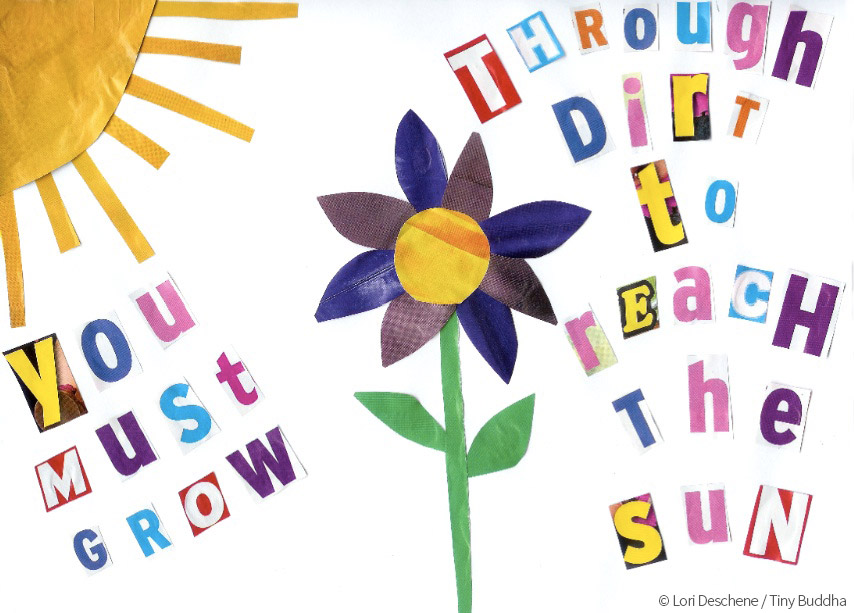
    This is the first artwork I created myself, using magazine letters and pages. It’s something I’ve been wanting to do for a while now, since it allows me to combine my love of magazines with my passion for quotes and childlike art. What do you think? Should I make more of these? Feedback is greatly appreciated!

  • Book Giveaway: Chicken Soup for the Soul 20th Anniversary Edition

    Book Giveaway: Chicken Soup for the Soul 20th Anniversary Edition

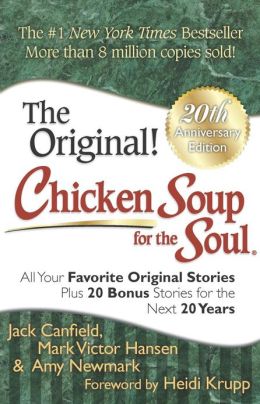
    Chicken Soup for the SoulUpdate: The winners for this giveaway have already been chosen. The winners:
    If you enjoy touching, uplifting stories, you’ve likely stumbled upon the Chicken Soup for the Soul series at one time or another.

    What started with one book two decades ago has expanded to more than 200 titles, providing motivation and inspiration to millions of people of all ages, from all over the world.

    The newly released 20th anniversary edition includes all of the original stories from the first book and 20 new ones from writers including Deepak Chopra, Dr. Mehmet Oz, don Miguel Ruiz—and me!

    When publisher Heidi Krupp-Lisiten contacted me with this opportunity, I was honored and beyond excited. And now I’m excited to share it with you.

    The Giveaway

    To enter to win 1 of 5 free books:

    • Leave a comment on this post sharing the most inspiring thing you’ve heard lately. It can be a quote, something a loved one said to you, something you saw on TV or heard in a song—anything you found inspiring.
    • For an extra chance to win, tweet: Giveaway: Chicken Soup for the Soul 20th Anniversary Edition – RT & comment on the @tinybuddha post to win! http://bit.ly/18GFU0F

    You can enter until midnight PST on Friday, August 23rd.

    Learn more about Chicken Soup for the Soul, the 20th Anniversary Edition, on Amazon.

  • Music and Life, by Alan Watts

    Music and Life, by Alan Watts

    Have you ever stopped and asked yourself what it is you’re chasing, and if it will really feel like success when you get there? If you feel like you’re missing everything, take a few minutes to hear what Alan Watts has to say on music and life.

  • Draw My Life: Michelle Phan

    Draw My Life: Michelle Phan

    She’s a YouTube sensation, with popular make-up tutorials that have received millions of hits. But what I’m most fascinated by is her personal story, and the empowering message she shares in her engaging “Draw My Life” video. We all have a story to tell, and we are part of something beautiful…

  • Landfill Harmonic: Beautiful Music Made with Trash and Passion

    Landfill Harmonic: Beautiful Music Made with Trash and Passion

    Most of us know we should open our eyes and appreciate what’s around us, but sometimes it may seem like there’s nothing of value there. That’s when we need to open our eyes further and ask ourselves, “How can I use this to make something beautiful?”

  • My Shoes: A Short Film About Wanting to Be Someone Else

    My Shoes: A Short Film About Wanting to Be Someone Else

    We are more fortunate than we think. What blessing can you recognize and celebrate today?

  • Inspiring Graduation Speech from a Sixth Grade Boy with Autism

    Inspiring Graduation Speech from a Sixth Grade Boy with Autism

    In his sixth grade graduation speech, Eli Rosenberg shares what he’s learned about overcoming obstacles and making a difference, and offers a challenge that every one of us can meet. What a beautiful and inspiring message!

  • What Matters Is the Choice You Make Right Now

    What Matters Is the Choice You Make Right Now

    “Life is 10% what happens to you and 90% how you react to it.” ~Charles R. Swindoll

    When I read this for the first time, I realized I didn’t have to define myself by my circumstances. That was huge for me, because my circumstances felt pretty shameful.

    It was around midnight and I was curled up in the fetal position, mostly alone in my 7’x7’ dorm-style Manhattan apartment. It was me, countless bed bugs, dozens of cockroaches, three bottles of liquor, two packs of cigarettes, and one overwhelming mind.

    I’d always felt drawn to New York City, largely because I grew up doing theater, but that’s not what eventually brought me there. For more than a decade before that move, I’d lived a life defined by starving, binging, drinking, fighting, and a persistent need to numb myself.

    All my relationships revolved around my sadness, partly because I saw pity as a form of love, and partly because I didn’t know who I was beyond my victim stories.

    I’d blamed other people for everything that hurt in my life, and in the process hurt other people. After that, it felt best to move away and keep to myself. It was safer that way—for everyone.

    I felt stuck in every way possible—stuck in my fearful isolation; stuck professionally, since I had a degree in acting and writing, but no confidence to pursue either; and stuck in a dangerous week-to-week living situation because I couldn’t afford anything better.

    Worse, I felt convinced I deserved the life I created. And I wasn’t sure it was worth the effort to work toward something better. If the past were any indication, I’d find a way to mess it up.

    Depressed, despondent, and dramatically reclusive, I couldn’t foresee a future that didn’t involve self-loathing and self-destruction.

    Then I found that quote: “Life is 10% what happens to you and 90% how you respond to it.”

    When I read that, something shifted inside me.

    I realized I’d lived my whole life responding with anger to things that happened when I was young, and feeling ashamed of that. I considered that maybe I could respond better from that point onward and feel proud of myself for doing it.

    Maybe my life wasn’t the sum of my hurts and mistakes. Maybe instead of judging myself for where I’d been and feeling down on myself for where I stood right then, I could empower myself to create something different from that moment forward.

    Maybe all that really mattered was the choice I made right then.

    I didn’t make any major changes in the following months, but I did make one big commitment: I found a nearby yoga studio where I could volunteer behind the desk in exchange for free classes.

    Suddenly, I had a reason to smile—and I don’t mean an experience that brought me joy (although it was that). My smiling face was the last thing people saw before they entered the studio to take care of their minds and bodies.

    In some small way, I was part of something positive, and I felt good about that. I also felt good about coming to my mat day in and day out, no matter what else had happened.

    Now I was piling up tiny reasons to feel proud. It might not have been a huge, dramatic change, but it was definitely big.

    Those reasons snowballed into others—quitting smoking, writing a series of personal essays, finding a low-income efficiency studio to sublet, and eventually, securing a travel job that took me away from NYC after two-and-a-half years of stumbling and growing.

    Though I’ve since transformed my external world by moving to California, falling in love, and starting this website, those changes aren’t the result of waking up in one moment and doing everything differently ever after.

    Those changes are the result of changing my inner monologue from, “Why did I make such bad choices?” to “What’s the best choice I can make now?”

    The biggest difference between me now and me then is that I no longer sit alone in shame, compounding negative feelings with self-judgment, which only keeps me feeling stuck.

    I accept that I am human, and that a part of that is going through highs and lows. I know I will go through tough times, and I know I can bounce back when I do, even if it takes a while.

    I have learned that we are not powerless. It may not always seem like it, but we have a say in what happens—and when events seem beyond our control, we have a say in how we respond to them.

    That’s all we can ever control, and that’s what really matters: the choice we make right now.

    *This post is part of my first ever eCourse, launching today: Recreate Your Life Story: Change the Script and Be the Hero.

  • Tiny Buddha’s Recreate Your Life Story eCourse Launches Today!

    Tiny Buddha’s Recreate Your Life Story eCourse Launches Today!

    Recreate Your Life Story Logo

    If you’re new to the site, you may be wondering who I am. Hi there! I’m Lori, and I’m the founder of Tiny Buddha.

    If you’re not new to the site, you may be wondering where I’ve been, since I haven’t written much lately.

    There are a few reasons for that. For one, I’ve focused a lot more on curating and editing blog posts from other community members. Secondly, I’ve been traveling, as I mentioned in a post in April.

    But aside from that, I’ve spent the last several months working on my first ever eCourse, Recreate Your Life Story: Change the Script and Be the Hero, with my partner Ehren Prudhel.

    The last time I remember feeling this excited was September 9, 2009. It was the day tinybuddha.com first appeared on the web—then a site with just a few pages, a handful of quotes, and only two other blog contributors.

    After spending more than a decade depressed, isolated, and anxious, and several more years in a process of self-discovery, I felt that unique blend of exhilaration and fear that comes from finally trying something new and putting yourself out there.

    Now, nearly four years later, the site has grown into a community of more than 650 writers and millions of readers—all connected by a common intention to embrace wisdom and growth.

    I believe this course I’m presenting to you today can be a powerful tool to support those intentions.

    It’s a fun, creative course blending self-help and film that can help you let go of the past so you can feel free, happy, and unlimited in the present—and confident about creating the future.

    There’s a whole lot more about the course at recreateyourlifestory.com, including the brand new trailer:

    Interested in learning more? Visit me at recreateyourlifestory.com!